Sainsbury’s Argos Sale: £120m Deal Agreed With SWIFT Partners
 Published By
Henry
Published By
Henry
Published:
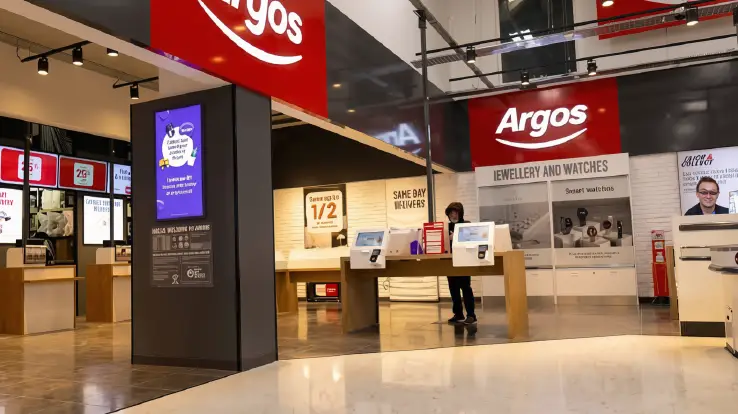
Sainsbury’s has agreed to sell Argos to a new company backed by three retail veterans. The deal is expected to complete in February 2027, but customers in London and across the UK have been told there will be no immediate change.
Sainsbury’s has agreed a sale of Argos worth at least £120 million, ending a decade of ownership as the supermarket group concentrates its investment on its food business.
The buyer is Swift Partners, a newly created company whose principal shareholders include former Co-op chief executive Richard Pennycook, former Morrisons executive Trevor Strain, retail investor Matt Truman and Truman’s investment firm True Capital.
The transaction remains subject to regulatory and other completion conditions. It is expected to be completed in February 2027, with the full separation of Argos and Sainsbury’s anticipated by February 2029.
For London shoppers, Sainsbury’s said there would be no immediate change following the announcement. Argos will continue operating online, through standalone branches, in-store outlets and collection points, while Nectar benefits and Habitat sales will be protected through long-term commercial agreements.
The company described the arrangement as “business as usual” for customers, employees and suppliers. Its official announcement did not identify any store closures or redundancies resulting from the sale.
How Will The £120m Sainsbury’s Argos Sale Work?
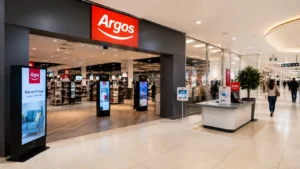
Sainsbury’s expects to receive at least £70 million when the deal completes, including proceeds from the sale of an Argos distribution centre. A further £50 million is due to be paid over the following three years.
However, the supermarket warned that the proceeds are expected to be offset by the costs of separating the two businesses. The agreement will also trigger an estimated £350 million non-cash impairment charge.
Sainsbury’s expects its lease-adjusted net debt to fall by about £250 million, largely because Swift will assume most leases in the Argos property portfolio. Sainsbury’s will retain responsibility for the Argos defined-benefit pension scheme, which reported an accounting surplus of £143 million at 28 February 2026.
The group said the transaction should have a broadly neutral effect on underlying operating profit. Argos contributed £9 million of underlying operating profit in the financial year to February 2026, but Sainsbury’s expects lost earnings to be balanced by income from its continuing agreements with Swift and lower lease interest costs.
Sainsbury’s acquired Argos through its takeover of Home Retail Group in 2016, paying more than £1 billion for a business intended to help it compete with online and general-merchandise retailers.
Argos now operates 667 stores, including 466 inside Sainsbury’s supermarkets and 201 high-street or standalone locations. It also has more than 1,100 collection points, while approximately 80 per cent of its sales begin online.
The retailer has faced pressure from subdued consumer spending and intense online competition. Argos sales fell by 0.5 per cent in Sainsbury’s first quarter to 20 June 2026, despite the number of products sold rising by 2.2 per cent as shoppers moved towards cheaper goods.
Sainsbury’s chief executive Simon Roberts said the sale would allow the company to direct its resources towards its grocery operation. The disposal follows the previous sales of its banking business, ATM operation and Argos Financial Services card portfolio.
Swift said it intended to invest in Argos and strengthen its digital services, customer proposition and national network. Pennycook will become executive chair, while Strain and Truman will join the Argos board and work with the company’s existing management.
Until the deal completes, Argos and Sainsbury’s will continue operating under their present ownership structure. Transitional agreements are then expected to remain in place for up to two years while the businesses are separated.
About the Journalist
Henry is the editorial head and lead author at Londoner. He oversees the publication’s editorial direction, article quality, source verification and corrections process. He also reviews major stories before publication to ensure they meet Londoner’s standards for accuracy, fairness and transparency.