Donald Trump UK Trade Deal Loses Tariff Edge in Key Sectors
 Published By
Henry
Published By
Henry
Published:
Updated:
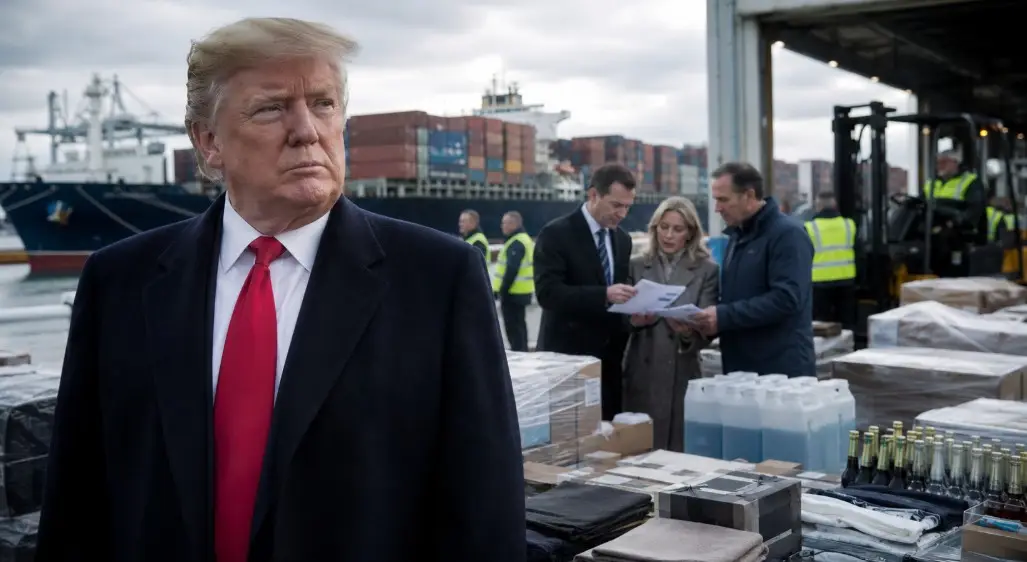
British exporters still face the 10% US levy agreed under the Economic Prosperity Deal, but new treatment for EU goods means some UK clothing, chemical, drinks and gift businesses now face higher effective charges than continental rivals.
The Donald Trump UK trade deal has lost part of its competitive advantage after Washington introduced a new tariff system that treats British and European Union exports differently.
The UK’s headline rate remains unchanged at 10%, meaning the Economic Prosperity Deal negotiated with the US has not formally been weakened.
However, the British levy is generally added to the standard US “most-favoured-nation” tariff already charged on a product, while the EU’s new 10% rate includes those existing duties.
That difference could leave British manufacturers paying substantially more than EU rivals in sectors that do not have special exemptions.
The new duties took effect at 12.01am eastern time on 24 July 2026 as part of President Trump’s action against 60 trading partners accused by Washington of failing to prevent goods made with forced labour entering their markets.
Why the 10% Headline Rate Does Not Tell the Full Story?
The US Trade Representative placed the UK among economies subject to a 10% Section 301 tariff. EU products, by contrast, are generally charged enough additional duty to bring the combined tariff to 10%; where the normal US duty is already 10% or more, no extra Section 301 charge is applied.
Londoner trade calculator
How Much Could the Tariff Difference Cost?
Compare the estimated customs duty on a UK shipment with the duty on an equivalent product exported from the European Union.
Estimated tariff comparison
The estimated UK tariff bill is higher than the equivalent EU bill.
On a £10,000 shipment, the estimated UK duty is £2,250 compared with £1,000 for an equivalent EU shipment—a potential difference of £1,250.
William Bain, head of trade policy at the British Chambers of Commerce, said the change could remove the UK’s advantage in industries including clothing. One example cited by the organisation is a British knitted jumper carrying a normal 12.5% tariff.
Adding the UK’s 10% charge produces a total levy of 22.5%, while an equivalent EU jumper can enter at an all-inclusive 10% rate.
Chemicals, bicycles, beverages, clothing and gift products are among the other areas where UK businesses could face tougher European competition. The precise cost will depend on the product’s US tariff classification and whether it is covered by one of the exemptions published by Washington.
The UK government said there had been “no negative change” to the tariff rate directly facing British businesses and stressed that the wider agreement remained in force.
That position is technically correct, the UK rate has not risen. The disadvantage comes from the improved treatment secured by EU exporters, whose previous 15% all-inclusive ceiling has effectively fallen to 10%.
For London, the direct exposure is likely to be concentrated among fashion labels, specialist manufacturers, drinks companies and other goods exporters rather than the capital’s dominant service industries.
The latest government figures show goods accounted for £59.7 billion, or 29.5%, of the UK’s £202.7 billion of exports to the US in 2025. Services made up the remaining £143 billion.
London nevertheless has significant exposure to international trade and accounts for about 29% of all UK exports, according to GLA Economics.
Its service-led economy limits the immediate reach of goods tariffs, but weaker client demand, disrupted supply chains and lower exporter confidence could still affect logistics, finance and professional services businesses based in the capital.
Whisky and Medical Technology Secure Zero Tariffs?
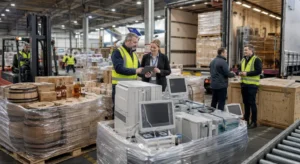
The UK agreement continues to provide valuable protection for selected industries. Pharmaceutical exports have been tariff-free since April 2026, aerospace products have preferential treatment and qualifying car exports face a 10% rate under a 100,000-vehicle quota.
Tariffs on British whisky and medical technology were also reduced to zero on 24 July. The government said UK whisky exports to the US were worth £1 billion in 2025, with the first tariff-free Scotch shipment due to travel from Manchester to Philadelphia within 48 hours of the change.
Goods already loaded and in transit before the new duties began can avoid the additional charge when entered into the US before 12.01am eastern time on 28 July.
Beyond that limited transition period, affected British exporters will depend on further UK-US negotiations to recover the broader advantage the original deal was intended to provide.
About the Journalist
Henry is the editorial head and lead author at Londoner. He oversees the publication’s editorial direction, article quality, source verification and corrections process. He also reviews major stories before publication to ensure they meet Londoner’s standards for accuracy, fairness and transparency.