Princess Margaret Champagne Dislike Reason: Why She Avoided The Royal Favourite?
 Published By
Olivia
Published:
Updated:
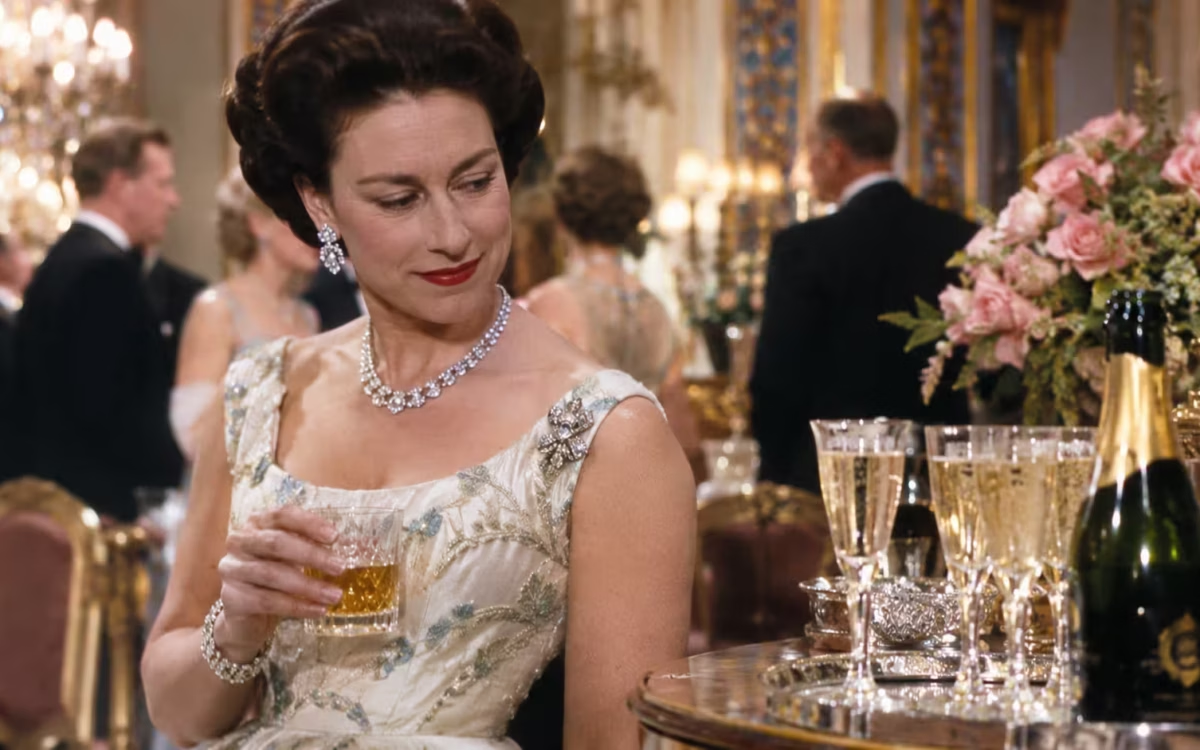
Table of Contents
Princess Margaret disliked champagne because she believed it left an unpleasant smell on other people’s breath, according to her former lady-in-waiting, Lady Anne Glenconner.
The striking explanation has emerged in Glenconner’s latest memoir, offering a surprisingly down-to-earth detail about a princess famous for glamorous parties and high-society friendships.
The revelation appears in Trunks & Tiaras: Journeys through life with friends, family and a Princess, published in the UK on 8 October 2026.
It brings fresh attention to an eccentric preference that had already surfaced in historical documents, although the earlier records did not identify a reason.
Margaret, who died in 2002 aged 71, spent much of her life surrounded by formal royal entertaining. Yet the drink closely associated with receptions, celebrations and luxury was apparently never her first choice.
The contrast between her public image and private preferences helps explain why this small recollection has attracted renewed interest.
Lady Glenconner Reveals Margaret’s Unusual Explanation
Lady Glenconner knew Margaret for decades, first as a childhood friend and later as one of the women responsible for helping her navigate royal engagements and overseas travel.
Her new memoir recalls the practical questions that hosts would ask before a visit, especially when they wanted to get the princess’s hospitality arrangements right.
The answers were specific. Margaret liked gin and tonic at lunchtime and whisky with soda in the evening, preferably Famous Grouse. Champagne, despite its association with royal celebrations, was not a welcome substitute.
Glenconner recalls Margaret saying that champagne made people’s breath “smell of poo”. It was an unusually blunt remark for someone whose public appearances were governed by ceremony and careful manners.
The former lady-in-waiting also observed that a person drinking champagne might not notice the smell themselves. To someone nearby who was not drinking it, however, Margaret believed the effect was obvious.
Crucially, this is an account of Margaret’s personal opinion, not evidence that champagne necessarily causes a distinctive type of bad breath.
The memoir records the explanation she reportedly gave, rather than providing a medical or scientific finding.
Nor does the recollection establish that she never drank champagne at any point in her life. It shows that she disliked it and that people organising her visits were advised to offer alternatives.
That distinction matters when an anecdote about one particular drink risks becoming an exaggerated claim about a lifelong ban.
The glimpse of her humour also fits accounts of a woman who could be witty, demanding and direct in private.
Royal formality did not prevent Margaret from making observations that would have surprised guests expecting only polished conversation.
Other members of the family could be equally forthright. A recollection of Princess Anne’s exchange with Earl Spencer at a royal dinner similarly shows how a few candid words at a formal occasion can linger in someone’s memory for decades.
Her Drink Preferences Were Already Recorded in Royal Archives
The October memoir is not the first evidence that Margaret favoured other drinks over champagne.
Documents released by the National Archives in April 2013 described detailed preparations for her visit to Mauritius in 1956, when she was one of the monarchy’s most recognisable younger figures.
Correspondence sent ahead of the trip gave the island’s governor, Sir Robert Scott, guidance on what the princess would enjoy.
Sir Martin Gilliat, private secretary to the Queen Mother, conveyed instructions covering meals, drinks, leisure interests and the kind of reception she would find comfortable.
Those letters stated that Margaret preferred red or white wine to champagne.
They also identified gin and tonic and whisky with soda as drinks she enjoyed.
Read alongside Glenconner’s recollection, the records demonstrate that her preference was established long before it became a modern royal talking point.
Her attitudes towards food were similarly unpretentious.
Officials explained that she wanted meals kept relatively simple and did not particularly enjoy caviar or oysters, even though such delicacies were standard symbols of fashionable entertaining.
Simple, of course, was relative to royal standards. The correspondence suggested three or four courses for lunch, including cheese or fruit, and five for dinner.
The message was less about rejecting fine dining than avoiding excessively long and elaborate occasions.
The instructions also reflected the attention paid to royal visitors in the mid-twentieth century.
Hosts needed to consider everything from menus and transport to the princess’s preferred activities, ensuring the visit proceeded smoothly without drawing attention to personal inconveniences.
Although these arrangements might seem exacting, they were part of the machinery surrounding an official royal tour. Advance knowledge of a guest’s tastes helped local organisers avoid awkward surprises.
The papers indicated that Margaret appreciated the arrangements made for her Mauritius visit.
Her dislike of champagne, then, was not evidence that she rejected hospitality altogether. She simply wanted hosts to understand which refreshments and routines suited her.
What the Story Reveals About Princess Margaret’s Private Life?
Princess Margaret’s reputation was built partly on glamour. Born in 1930, she became a much-photographed royal figure whose clothes, friendships and social life attracted attention well beyond Britain.
Her marriage to photographer Antony Armstrong-Jones in 1960 and their later divorce added to the public fascination surrounding her.
That image can make her dislike of champagne seem contradictory. Yet enjoying fashionable company is not the same as enjoying every fashionable drink.
Margaret could appreciate a lively evening while remaining particular about what was poured into her glass.
Her family relationships were just as complex as her tastes.
The close but occasionally difficult relationship between Princess Margaret and the Queen Mother reveals how affection, routine and strong opinions existed together behind palace walls.
Glenconner’s accounts are valuable partly because they describe such everyday details rather than relying entirely on the spectacle of public appearances.
The new anecdote also highlights a contrast with Margaret’s older sister, Queen Elizabeth II. The late Queen was photographed drinking champagne at formal occasions and appeared more comfortable with its ceremonial role.
That does not tell us exactly what Elizabeth thought of her sister’s complaint, and no evidence suggests it caused any disagreement between them.
Both women understood the expectations surrounding public appearances, even if their personalities differed.
The enduring interest in Queen Elizabeth’s apparent correction of Prince William on the Buckingham Palace balcony shows how brief, human moments can reveal a less formal side of a family usually seen through carefully staged events.
Glenconner’s memories offer a similar perspective, but from much closer quarters.
She witnessed the practical preparations that preceded official engagements and knew the princess as a person whose preferences could be sharp, amusing and unmistakably her own.
There is also a limit to what any memoir can prove.
Recollections written many years after events deserve attribution to the person telling them.
In this case, however, the archived 1956 correspondence strengthens the central point: Margaret really did prefer other drinks, even if her colourful explanation survives through Glenconner’s account.
The reason behind Princess Margaret’s champagne dislike is therefore more personal than political or ceremonial. She reportedly found its effect on other people’s breath objectionable.
For a royal remembered for sparkling social occasions, the irony is considerable: the princess could enjoy the party without sharing everyone else’s enthusiasm for the bubbly.
About the Journalist
Olivia covers London life, culture and lifestyle for Londoner. Her work includes food, shopping, neighbourhood trends, attractions, local experiences and practical guides for residents and visitors. She focuses on engaging stories that reflect everyday life across the capital.