Prince Harry Ukraine Veteran Visit: Duke Of Sussex Praises Wounded Soldiers As Heroes During Surprise Trip
 Published By
Lucy
Published:
Updated:
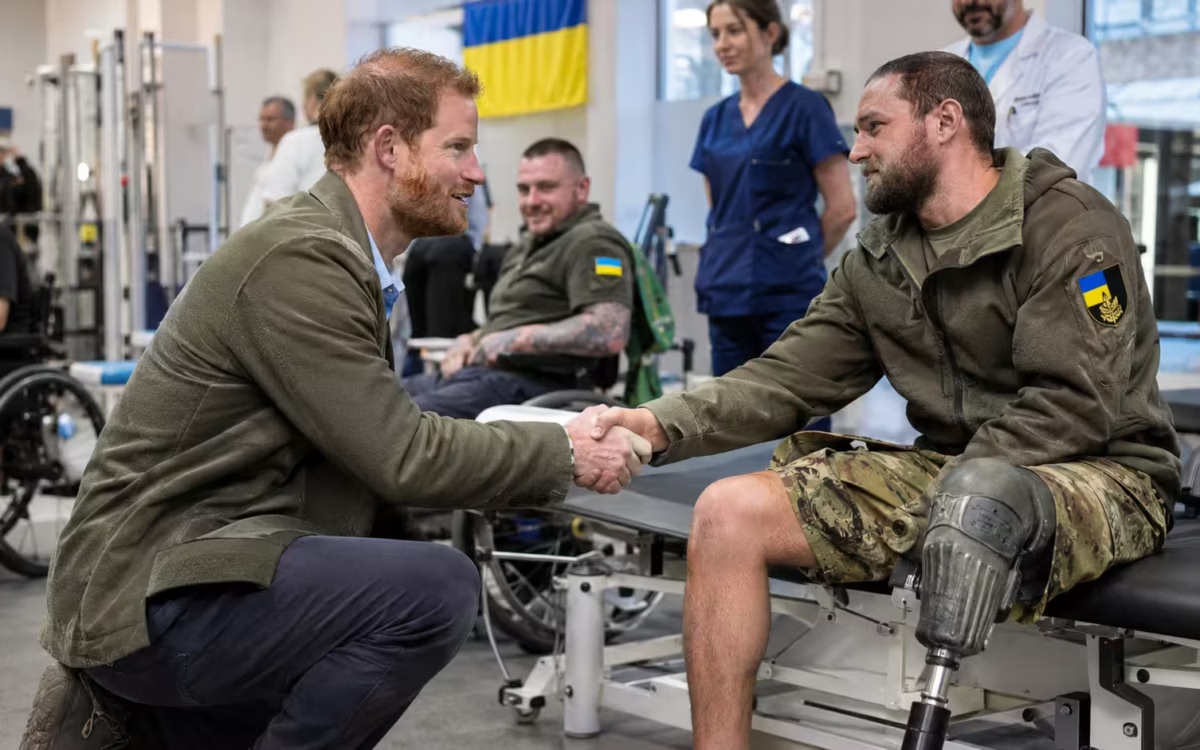
Table of Contents
Prince Harry has made a surprise visit to Ukraine, meeting wounded soldiers, medical professionals and military veterans while delivering a powerful message of hope and resilience amid the continuing war with Russia.
The Duke of Sussex travelled to Lviv in western Ukraine on 14 and 15 November 2026, marking his fourth visit to the country since Russia launched its full-scale invasion in February 2022.
During the two-day visit, Harry met injured servicemen receiving rehabilitation, attended a major international medical conference and joined Ukrainian veterans competing for places at the 2027 Invictus Games in Birmingham.
The 42-year-old former British Army officer also expressed confidence in Ukraine’s future, declaring during a speech to medical professionals: “You’re going to win the war and then you’re going to be set up for success.”
His comments came as Ukrainian soldiers continued to face the physical and psychological consequences of the conflict, with rehabilitation centres experiencing sustained demand for prosthetic treatment, reconstructive surgery and long-term recovery support.
The visit was initially kept confidential for security reasons, with details becoming public after Harry had left the country.
Prince Harry Meets Ukrainian Veterans and Medical Teams in Lviv
One of the most significant engagements of Prince Harry’s Ukraine veteran visit took place at the Superhumans Center, a specialist rehabilitation facility helping soldiers and civilians recover from severe war-related injuries.
Prince Harry met patients undergoing treatment for amputations and other life-changing injuries, speaking directly with veterans about their recovery, military experiences and hopes for the future.
Among those he encountered was Kostiantyn Vlasenko, a 49-year-old Ukrainian soldier whose remarkable survival story has attracted international attention.
Vlasenko was seriously wounded in February 2026 and remained near the front line for 232 days before being evacuated by an unmanned ground vehicle in October. His injuries resulted in the loss of both feet, including one he had been forced to amputate.
The soldier was subsequently awarded the Hero of Ukraine honour by President Volodymyr Zelenskyy.
During their meeting, Harry praised Vlasenko’s extraordinary determination. When the veteran described himself as stubborn, the prince acknowledged that such determination had helped him survive.
Another emotional encounter involved Artem, a Ukrainian drone operator who lost both arms during an artillery attack.
The 31-year-old has been learning to use advanced prosthetic arms while adapting to everyday activities following his injuries. Harry sat alongside him as they discussed the difficulties associated with rehabilitation and adjusting to prosthetic technology.
The meetings illustrated the enormous challenges facing Ukraine’s injured military personnel, particularly those requiring extended medical treatment, psychological support and assistance returning to civilian life.
Harry also attended the first international Superhumans War Trauma Conference, held in Lviv on 13 and 14 November.
The conference brought together Ukrainian and international medical specialists to exchange knowledge about battlefield injuries, reconstruction, pain management and rehabilitation.
The event highlighted how Ukrainian healthcare professionals are developing expertise in treating complex injuries caused by modern warfare, including drone strikes and prolonged battlefield exposure.
Olga Rudnieva, co-founder and chief executive of Superhumans, previously explained the organisation’s founding ambition during a September 2026 interview with Devex.
She described its mission as helping injured people regain the ability “to walk, to hug their kids”.
That objective has become increasingly important as Ukrainian medical providers face the long-term consequences of the conflict.
According to the organisation’s September figures, Superhumans had treated more than 5,000 patients across its facilities in Lviv, Dnipro and Odesa.
Prince Harry Joins Invictus Games Veterans Ahead of Birmingham 2027
Away from the medical conference, Harry spent time watching Ukrainian veterans participate in wheelchair rugby and pickleball competitions as part of the selection process for the 2027 Invictus Games.
Ukraine is preparing to send approximately 60 competitors to Birmingham, potentially its largest delegation in the event’s history.
The Invictus Games, founded by Harry in 2014, provide opportunities for wounded, injured and sick serving military personnel and veterans to participate in competitive sport while rebuilding confidence, independence and community connections.
In Lviv, Harry watched wheelchair rugby players compete before embracing Valery Odainyk, a Ukrainian veteran who participated in the 2025 Invictus Games in Canada.
Odainyk, 41, uses prosthetic legs and remains an active serviceman.
Speaking afterwards, the veteran credited his sporting journey to the Invictus movement, saying it “all started and continues with the Invictus Games”.
The prince also joined veterans for a game of pickleball, participating alongside athletes who had undergone amputations.
Oleksandr, a 49-year-old veteran from Odesa who has lost a leg, described Harry’s willingness to participate.
“I asked him to play and he didn’t refuse,” Oleksandr told reporters.
For those involved, the appearance offered more than a high-profile royal encounter. It provided an opportunity to demonstrate the importance of adaptive sport for people rebuilding their lives after serious injuries.
Ukrainian veteran Volodymyr Fatkiv, who has a paralysed arm following a combat injury, emphasised the practical benefits of participating in sporting activities.
“Sport is very helpful for rehabilitation and now I help other veterans,” he said.
His experience reflects a central principle of the Invictus movement: recovery involves more than physical treatment, extending to social inclusion, confidence and continued participation in everyday life.
Harry praised the competitors for their determination and contribution to their communities, describing the athletes as role models rather than simply recipients of assistance.
“That room is full of role models for society,” he told reporters.
The Duke of Sussex also called for continued investment in veterans after their military service ends, arguing that societies have a responsibility to support people who have served in uniform.
His comments carry particular significance in Ukraine, where more than 1.4 million combat veterans were registered at the beginning of 2026, according to figures cited during reporting on the visit. More than 10% were reported to have disabilities.
For the Ukrainian government and rehabilitation organisations, helping these individuals return to employment, education and family life represents a substantial long-term challenge.
Harry suggested that Ukraine could eventually host the Invictus Games itself once the war is over, expressing his willingness to support such an event.
The proposal remains an aspiration rather than an officially announced hosting arrangement.
Why Prince Harry’s Latest Ukraine Visit Matters?
The November journey follows Harry’s earlier visits to Ukraine, including trips in April and September 2025 and another in April 2026.
His ongoing involvement has focused heavily on injured military personnel, rehabilitation programmes and international awareness of the human consequences of war.
Harry served approximately 10 years in the British Army, including deployments to Afghanistan, before becoming increasingly involved in supporting veterans through sporting and charitable initiatives.
His latest comments also drew attention because senior members of the British royal family generally avoid making direct political statements.
Although King Charles III and other senior royals have publicly supported Ukraine, Harry has taken a more outspoken position on the conflict since stepping away from official royal duties.
During his latest visit, he expressed confidence in Ukraine’s eventual victory while acknowledging the risks associated with travelling to the country during wartime.
Beyond the political implications, his meetings with veterans brought renewed international attention to the scale of Ukraine’s rehabilitation needs.
The Superhumans conference highlighted the importance of integrating emergency treatment with prosthetics, reconstructive surgery, mental health services and long-term social reintegration.
For thousands of Ukrainians, these services will remain necessary well beyond the end of active fighting.
Harry’s two-day trip concluded on Sunday, 15 November, when he attended the closing stages of Ukraine’s national Invictus Games competition and presented medals to participating veterans.
As his visit ended, the message centred on the same issue that has shaped much of his work since founding the Invictus Games: injured military personnel should continue to receive recognition, opportunities and practical support long after leaving the battlefield.
For Ukraine’s wounded veterans, the international attention may be welcome, but the larger challenge is ensuring that the support continues when the cameras have gone.
About the Journalist
Lucy reports on London’s boroughs and the capital’s sporting community. Her coverage includes council decisions, neighbourhood developments, community issues, football, tennis, cricket and major sporting events. She focuses on stories that connect local communities and highlight the people and organisations shaping London.