King Charles Sandringham Parkrun: Monarch’s Surprise Visit Highlights His Support for Cancer Charity
 Published By
Adam
Published:
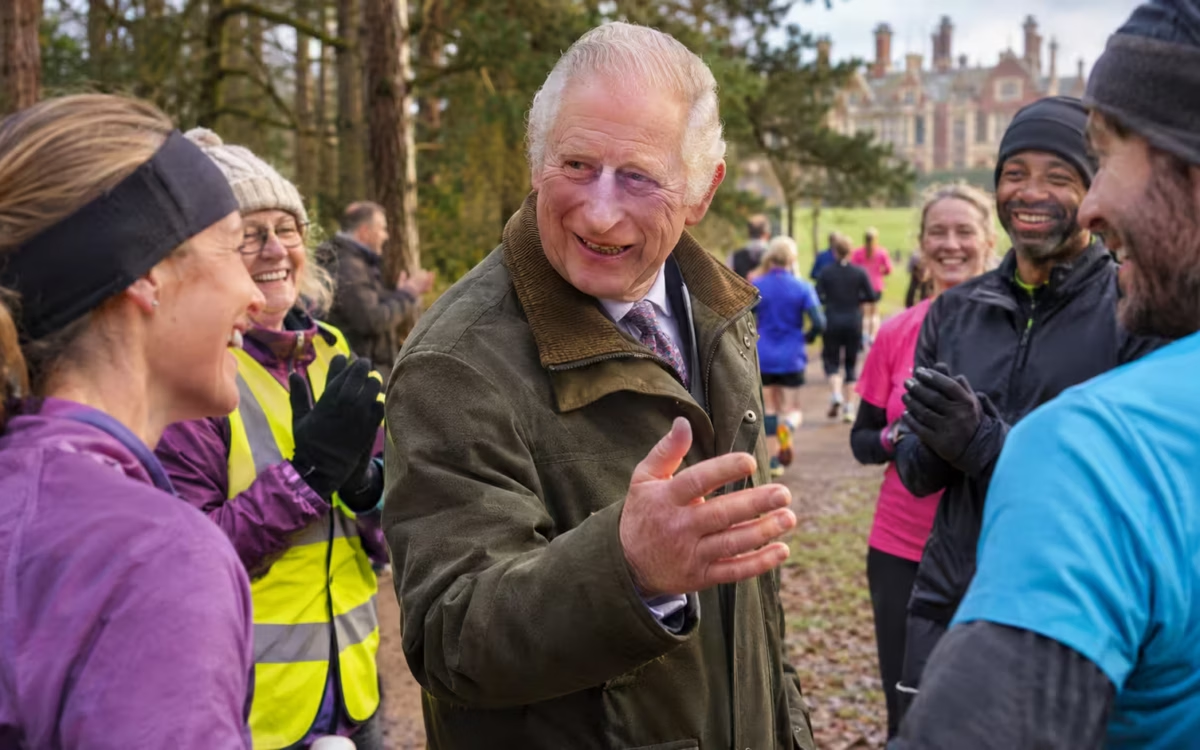
Table of Contents
King Charles III surprised runners at Sandringham parkrun on 31 January 2026, making an unexpected appearance to support a cancer charity event on his Norfolk estate.
The monarch, who was diagnosed with cancer in February 2024, joined volunteers and encouraged participants taking part in the weekly five-kilometre event, organised in partnership with Move Against Cancer’s 5K Your Way initiative.
His appearance came just days before World Cancer Day on 4 February and marked the second consecutive year he had visited the local group.
The occasion highlighted his continuing commitment to cancer awareness and the importance of community support for people affected by the disease.
What Happened During King Charles’ Sandringham Parkrun Visit?
On Saturday, 31 January 2026, runners and walkers participating in Sandringham parkrun received an unexpected royal welcome when King Charles appeared along the woodland route.
The King stood beside Move Against Cancer ambassador Sarah Byatt at a marshal point, greeting participants and encouraging them as they completed their first lap.
Photographs showed Charles smiling, waving and speaking with runners and volunteers.
Rather than participating in the five-kilometre run himself, the monarch attended as a spectator, offering encouragement to those completing the course.
One of the memorable moments involved a volunteer holding a humorous sign confirming to participants that they really had seen the King during their first lap.
The unexpected encounter attracted attention because the event was an ordinary community gathering rather than a formal royal engagement.
Participants were able to interact with the monarch in the familiar surroundings of Sandringham Country Park, without the elaborate ceremonial arrangements typically associated with royal appearances.
The visit was particularly meaningful for members of the local 5K Your Way group, which welcomes people living with cancer, those recovering from treatment and individuals supporting affected relatives or friends.
It was not Charles’s first appearance at the event.
In January 2025, he surprised the same group while members were celebrating the first anniversary of their Sandringham initiative.
During that earlier visit, the King met participants at the estate’s visitor centre, joined informal conversations and spent time with those attending a gathering involving refreshments.
His return in 2026 demonstrated continued interest in the initiative rather than a single ceremonial appearance.
Organisers expressed their appreciation following the second visit, recognising the attention his involvement had brought to cancer support activities.
The Royal Family also shared photographs of the occasion through its official social media channels, helping bring the charity’s work to a wider audience.
Why King Charles’ Cancer Diagnosis Made the Parkrun Visit Significant?
King Charles’s appearance carried particular importance because of his own experience with cancer.
Buckingham Palace announced in February 2024 that the monarch had been diagnosed with an undisclosed form of the disease following medical investigations.
He subsequently began regular outpatient treatment while temporarily reducing public-facing engagements.
Although the Palace has not publicly identified the specific type of cancer, Charles has increasingly used his public platform to encourage awareness of early diagnosis and effective treatment.
A significant development came in December 2025, when the King delivered a televised message supporting the Stand Up To Cancer campaign.
During the broadcast, he announced that his treatment schedule could be reduced in 2026 following positive progress.
He credited early diagnosis, medical intervention and following professional advice for the improvement.
The announcement also reinforced his message about the importance of attending cancer screening appointments and identifying potential symptoms early.
His Sandringham appearance several weeks later brought that message into a community setting.
Rather than discussing cancer solely through official speeches or national campaigns, the King was able to meet people participating in activities designed around mutual encouragement and companionship.
The Royal Family’s experience with cancer has also extended to Catherine, Princess of Wales, who announced her own diagnosis in March 2024.
Both senior royals have continued undertaking public responsibilities following their respective diagnoses.
Their relationship has remained visible through royal engagements, including a Windsor Castle appearance where the Princess of Wales praised King Charles’s watercolour paintings.
However, the Sandringham visit had a different purpose.
It focused directly on people affected by cancer and the organisations working to support them.
The appearance should not be interpreted as a new medical announcement or confirmation that the King’s treatment had ended.
Instead, it represented another example of his willingness to support cancer awareness while managing his own health.
How Move Against Cancer’s 5K Your Way Initiative Helps Communities?
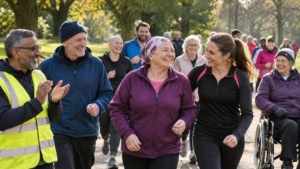
The charity behind the Sandringham gathering, Move Against Cancer, promotes physical activity, friendship and community connections among people affected by cancer.
Its 5K Your Way initiative operates alongside established parkrun events across the UK and Ireland.
Unlike traditional competitive running events, participation does not require individuals to complete the entire five-kilometre distance.
People can walk, jog, run, volunteer, encourage others or simply attend a social gathering.
The programme is designed to be accessible to individuals with different fitness levels, treatment experiences and personal circumstances.
Groups meet on the final Saturday of each month at designated parkrun locations, with more than 120 participating events across the UK and associated groups in Ireland.
The initiative also welcomes family members, friends and healthcare professionals who want to support those living with or beyond cancer.
Its emphasis extends beyond exercise.
For many participants, the opportunity to speak with others who understand the emotional and practical challenges of a cancer diagnosis can be equally valuable.
Cancer treatment and recovery can involve uncertainty, fatigue and changes to everyday routines.
Supportive community activities may help individuals maintain social connections and engage in suitable physical activity according to their abilities and medical advice.
Following the King’s appearance, Dr Lucy Gossage, an oncologist and co-founder of 5K Your Way, welcomed his support for the initiative.
She explained that his involvement could help challenge misconceptions about living with cancer while drawing attention to the benefits of remaining appropriately active.
Her comments also reflected the charity’s wider objective of encouraging people to maintain fulfilling lives alongside or after treatment.
The King’s participation as a supporter, rather than a runner, reinforced the programme’s inclusive approach.
It demonstrated that individuals can contribute simply by attending, encouraging others and recognising the importance of community involvement.
For a relatively small local group, receiving attention from the monarch also provided an opportunity to highlight its work nationally.
Why Sandringham Parkrun Reflects King Charles’ Approach to Royal Duties?
Sandringham has long occupied an important place in the Royal Family’s private and public life.
Located in Norfolk, the estate has been associated with successive generations of British monarchs and remains a traditional location for royal Christmas gatherings.
Unlike Buckingham Palace and Windsor Castle, Sandringham is privately owned by the King, making it an important part of King Charles’s personal property and wealth.
However, the wider estate also includes public spaces, visitor facilities and woodland areas used for recreational activities.
Sandringham parkrun provides a regular opportunity for local residents and visitors to enjoy the surroundings through an organised community event.
The free weekly five-kilometre event forms part of the international parkrun movement, which began in Britain in 2004.
Its emphasis on accessible exercise and volunteering makes it particularly suitable for community-based health initiatives.
Charles’s attendance also reflected his longstanding interest in the natural environment and organisations working to improve public wellbeing.
Throughout his decades as Prince of Wales, he supported environmental conservation, countryside communities and charitable projects.
As King, he has continued participating in engagements connected with health, education, sustainability and public service.
The monarchy’s relationship with physical activity extends beyond Charles.
Princess Anne has maintained longstanding connections with competitive sport, while Princess Anne and Prince Edward’s appearance at the Glasgow Commonwealth Games reflected the Royal Family’s continuing involvement in major sporting occasions.
The Sandringham parkrun visit offered a more informal expression of that interest.
Instead of attending a major sporting competition, the King supported ordinary members of the public taking part in a free local activity.
The encounter demonstrated how smaller royal appearances can bring attention to charitable organisations without requiring elaborate events.
It also illustrated a different side of royal public engagement, allowing participants to meet the monarch in an everyday environment.
For Move Against Cancer, the visit was especially valuable because the organisation’s work depends on public awareness, volunteers and community participation.
The King’s presence helped bring national attention to a programme centred on accessible exercise and friendship.
His second consecutive appearance also suggested that Sandringham’s 5K Your Way group had established a meaningful connection with the monarch.
Ultimately, King Charles’s Sandringham parkrun visit was more than an unexpected royal encounter.
It brought together his personal experience of cancer, his support for charitable organisations and the importance of communities helping people through difficult circumstances.
The January 2026 appearance remains a notable example of how the King has used an informal public engagement to draw attention to cancer support and the people working to make it accessible.
About the Journalist
Adam reports on London news, events and local developments. His coverage includes festivals, exhibitions, public announcements, community stories and important updates affecting people across the city. He aims to provide timely and accessible reporting on what is happening in London.