Mystery Drones Over British Skies: RAF Jets Report Near Misses As Security Fears Grow
 Published By
Henry
Published:
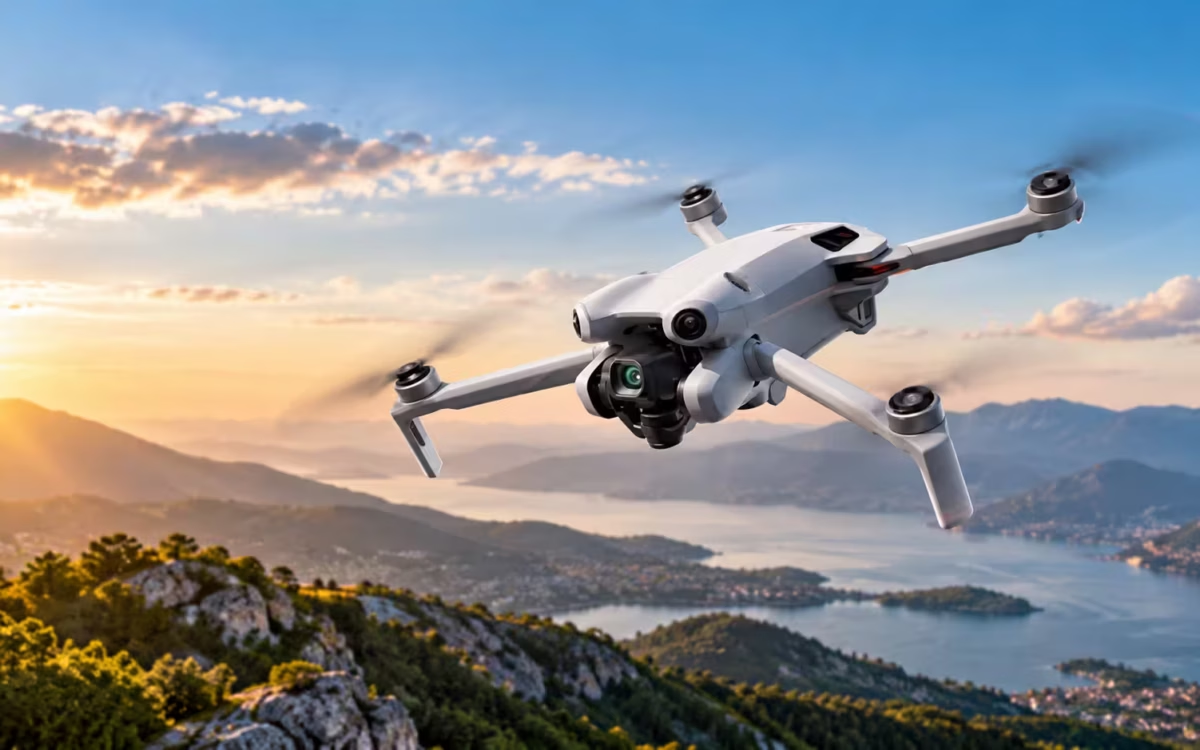
Mystery drones over British skies have raised fresh security concerns after reports emerged that Royal Air Force aircraft experienced two unexplained encounters with airborne objects flying at unusually high altitudes over the North Sea.
The incidents, which occurred in February 2026 but were publicly revealed on 16 October, involved an RAF Voyager refuelling aircraft and a Typhoon fighter jet during separate military training exercises near Norfolk and Humberside.
According to incident records examined by The Telegraph, one unidentified object passed dangerously close to a military aircraft at approximately 17,000 feet, prompting its pilot to instinctively duck.
The second encounter involved a Typhoon pilot who reported an unidentified circular object passing overhead during simulated air combat training.
The revelations have intensified concerns about the UK’s ability to monitor and protect its airspace, particularly as drone-related security incidents around British military installations continue to increase.
On 18 February, an RAF Airbus Voyager tanker was refuelling a Typhoon fighter jet off the coast of Cromer, Norfolk, when its crew spotted an unidentified object passing overhead.
The object reportedly travelled from east to west at approximately 17,000 feet, considerably higher than the altitude at which recreational drones are normally permitted to operate.
Describing the unexpected encounter, the Voyager pilot said the proximity of the object “made me instinctively duck”.
Radar controllers were unable to identify the object, despite the crew reporting its position and estimated altitude.
Five days later, on 23 February, a Typhoon pilot conducting a mock dogfight approximately 30 miles off Humberside reported another mysterious object passing close to the aircraft.
The pilot described a dark circular object resembling a car tyre, flying roughly 200 to 300 feet above the fighter jet at an altitude of approximately 12,500 feet.
The sightings were reported to police, and multiple external investigations were said to be underway when the incidents were disclosed.
However, neither object has been conclusively identified as a drone. The Voyager pilot subsequently acknowledged that the first object might have been a balloon or something similar.
There is currently no publicly established evidence proving that either encounter involved foreign surveillance, deliberate interference or hostile activity.
Defence Experts Raise Concerns Over Unidentified Drone Activity
The newly reported incidents have emerged against a backdrop of increasing concern about unauthorised drone operations around UK defence facilities.
Figures obtained by The Independent through freedom of information requests showed that 340 drone-related security incidents were reported at or near Ministry of Defence installations in the 12 months to August 2026.
Separately, official Ministry of Defence figures recorded 266 incidents during 2025, compared with 126 in 2024.
Although improved detection and reporting may account for some of the increase, defence specialists have warned that unidentified drone activity presents significant challenges for military security.
Charlie Edwards, senior fellow for strategy and national security at the International Institute for Strategic Studies, previously told The Independent:
“We are still in the dark as to who is operating those drones.”
His assessment concerned the wider pattern of drone activity around European defence installations rather than the two newly disclosed RAF encounters.
The International Institute for Strategic Studies has also assessed that Russia was highly likely to have conducted a coordinated drone surveillance campaign across parts of Europe between August 2024 and February 2026.
Researchers suggested that Russian-linked vessels, including elements of the country’s shadow fleet, may have been used to support some of those operations.
However, that broader assessment does not establish Russian involvement in the two February encounters over the North Sea.
Retired Brigadier Ben Barry, a former NATO commander and director of the British Army Staff, has similarly highlighted the range of possible explanations for suspicious drone activity.
In comments reported by The Independent, Barry suggested that incidents could involve hobbyists, criminals, foreign intelligence services or even terrorists conducting reconnaissance.
His assessment underlines the difficulty investigators face when attempting to distinguish ordinary aviation activity from deliberate surveillance or more serious threats.
The concerns have become particularly significant because relatively inexpensive drones can potentially be used to monitor sensitive locations without requiring conventional military aircraft.
Questions also remain about the objects’ reported operating altitudes.
Under the UK Civil Aviation Authority’s standard rules, drones operating in the open category must remain below 120 metres, or approximately 400 feet, above the ground unless an applicable exception or authorisation permits otherwise.
The objects reported by RAF pilots were substantially higher than that normal limit.
Nevertheless, the altitude alone cannot establish whether they were drones, balloons or another type of airborne object.
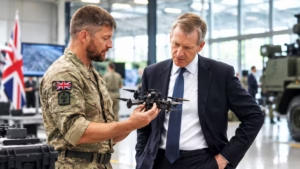
The Ministry of Defence has responded to the wider threat by expanding counter-drone capabilities and pursuing additional powers for military personnel to intercept drones posing credible risks to defence facilities.
In February, Defence Secretary John Healey warned that the increase in incidents highlighted “the increasing and changing nature of the threats we face”.
The government has also announced additional investment in surveillance equipment, detection technology and measures intended to strengthen protection around sensitive military locations.
Responding to reports of the RAF encounters, a Ministry of Defence spokesperson said that enhanced monitoring capabilities had improved the military’s ability to identify and assess potential drone activity.
The department confirmed that more than £2 billion was being invested in wider air defence and counter-drone capabilities, including work associated with the Typhoon fleet.
It also emphasised that reported drone sightings should not automatically be interpreted as hostile activity.
The latest disclosure comes during a period of wider security concern across Europe.
On 13 October, MI5 Director General Ken McCallum warned that Russia and Iran were intensifying hostile activities affecting Britain and its allies.
His comments highlighted the changing nature of national security threats, including espionage, sabotage and emerging technologies.
However, no connection has been established between those warnings and the unidentified objects encountered by RAF aircraft in February.
For British defence officials, the immediate challenge is determining what the pilots actually encountered and whether either incident exposed a vulnerability in military airspace monitoring.
The absence of a definitive identification leaves several possibilities open, while the fact that neither object appeared on the relevant radar displays adds to questions about detection.
As investigations continue, the mystery drones over British skies have become part of a wider debate about how effectively Britain can identify unexpected aerial activity and protect aircraft operating in military training areas.
For now, the most important unanswered question remains straightforward: what exactly passed so close to two RAF aircraft over the North Sea, and who, if anyone, was controlling it?
About the Journalist
Henry is the editorial head and lead author at Londoner. He oversees the publication’s editorial direction, article quality, source verification and corrections process. He also reviews major stories before publication to ensure they meet Londoner’s standards for accuracy, fairness and transparency.