UK Elderly Drivers Highway Code Update: What Over-70s Need to Know in 2026?
 Published By
Lucy
Published:
Updated:
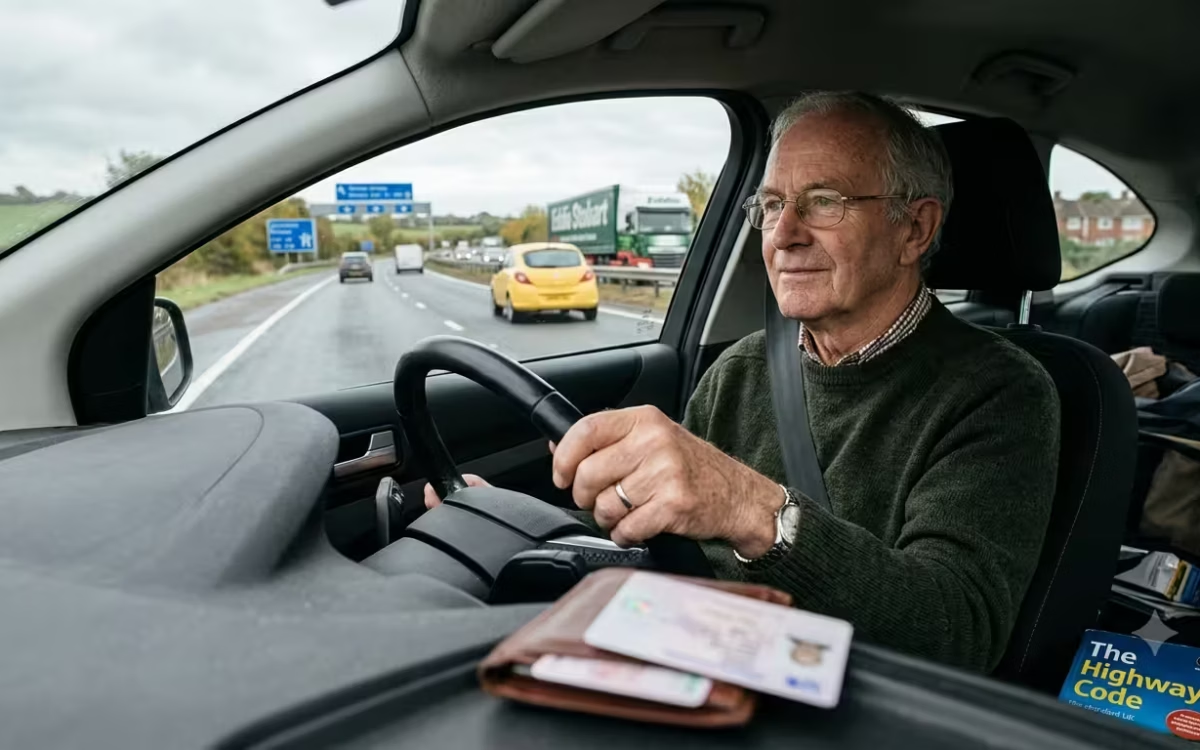
Table of Contents
The UK elderly drivers Highway Code update is drawing attention in 2026 as the government considers stronger eyesight checks for older motorists. However, drivers aged 70 and over are not being forced to retake their practical driving test, and there is no fixed age at which everyone must stop driving.
The main proposal is mandatory eyesight testing during the over-70 licence renewal process. Until any final change is introduced, the existing renewal, medical and eyesight rules continue to apply.
What Is the UK Elderly Drivers Highway Code Update in 2026?
There has not been a new Highway Code rule creating an automatic driving ban for elderly motorists. The main 2026 development is a Department for Transport consultation on changing how eyesight is checked for drivers aged 70 and above.
Currently, older drivers renew their entitlement at 70 and normally every three years afterwards. They declare that they meet the legal eyesight standard and must report relevant medical conditions.
The government consulted on replacing or strengthening that self-declaration with a formal eyesight test.
The consultation closed on 11 May 2026. As of October 2026, the official consultation remains closed, so mandatory testing should not be treated as a rule already in force.
The proposal sits alongside wider driving licence rule changes in 2026, although different rules can apply across Great Britain and Northern Ireland.
Do Drivers Over 70 Have to Retake Their Driving Test?
No. Turning 70 does not trigger another theory or practical driving test.
In a parliamentary answer on 29 June 2026, the Department for Transport said there were no plans to set an age at which licences would automatically be revoked or drivers would automatically have to retake a test.
Someone can therefore continue driving beyond 70, 80 or 90 if they remain medically fit, meet eyesight requirements and hold a valid licence.
Confusion has grown because some driving licence proposals affecting over-70 motorists have been discussed alongside claims about compulsory retesting. The actual proposals focus mainly on eyesight and fitness to drive.
What Happens to a Driving Licence at Age 70?
In Great Britain, a driver must renew their entitlement when they reach 70. After that, renewal is normally required every three years.
During renewal, drivers must confirm that they meet the legal eyesight standard and disclose relevant medical conditions that could affect safe driving.
Receiving a renewed licence does not remove the responsibility to monitor health between renewals. If a notifiable condition develops, it may need to be reported to the DVLA before the next renewal date.
Northern Ireland operates a separate licensing system, so drivers should make sure information applies to the part of the UK where their licence was issued.
Could Mandatory Eyesight Tests Be Introduced?
Yes. This is the biggest potential change for elderly drivers.
The 2026 consultation considered mandatory eyesight testing from age 70, possibly repeated every time the licence is renewed. Options included tests conducted by opticians, NHS services or dedicated testing arrangements.
The government also considered whether checks should become more frequent at higher ages. However, a universal mandatory eyesight test for every over-70 driver has not yet been introduced.
Possible cognitive assessments have also been mentioned as a future fitness-to-drive measure. They are not currently a standard requirement for all elderly motorists.
What Eyesight Standard Must Older Drivers Meet?
Older motorists already have to meet the legal eyesight standards that apply to drivers generally.
Rule 92 of the Highway Code says drivers must be able to read a vehicle number plate made to the current standard from 20 metres away in good daylight. Glasses or contact lenses can be used, but they must be worn while driving if needed to meet the standard.
Drivers must also satisfy the required visual acuity and field-of-vision standards.
Regular eye examinations can be particularly useful for older motorists because eyesight changes can develop gradually. Problems with glare, sharpness or peripheral vision may become more noticeable over time.
What Does the Highway Code Say About Older Drivers?
The Highway Code specifically recognises older motorists. Rule 216 says their reactions may be slower and tells other road users to make allowances.
It does not state that a person becomes unsafe simply because they reach a certain age.
Older motorists should instead consider whether they can observe properly, judge speed and distance, react safely and control the vehicle comfortably. Health and driving ability matter more than age alone.
Drivers should also consider medication. Some medicines may cause drowsiness, slower reactions or reduced concentration, so medical advice and medicine warnings should be followed.
What Should Elderly Drivers Check Before Driving?
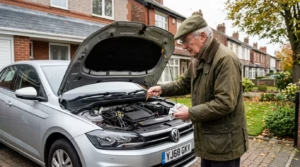
Older drivers can reduce risk by regularly reviewing their own ability and their vehicle’s condition.
Useful checks include:
- Eyesight: Have regular eye examinations and use prescribed glasses or contact lenses.
- Medication: Check whether medicines could affect alertness or reactions.
- Night Driving: Consider whether glare or poor visibility is becoming difficult.
- Mobility: Make sure mirrors, blind spots and junctions can be checked comfortably.
- Fatigue: Avoid driving when tired and take breaks during longer journeys.
- Vehicle Condition: Check tyres, brakes, lights, mirrors and the windscreen.
A valid MOT does not guarantee that a vehicle stays roadworthy throughout the year. Drivers remain responsible for ensuring they keep safety-critical parts of the car in good condition.
Which Medical Conditions Could Affect an Older Driver’s Licence?
Certain medical conditions must be reported to the DVLA if they could affect safe driving.
Depending on the circumstances, these may involve eyesight, neurological health, heart problems, consciousness, mobility, diabetes or cognitive ability.
Reporting a condition does not automatically mean losing a licence. The DVLA may request medical evidence or information from healthcare professionals before deciding whether someone remains fit to drive. Medical investigations can apply to drivers of any age.
Older motorists should therefore not wait for their next three-year renewal if they develop a condition that legally needs to be reported.
Are Tougher Rules Likely for Elderly Drivers?
Further changes remain possible. Mandatory eyesight testing is the clearest proposal, while future policy could also consider cognitive health, medical reporting and a greater role for healthcare professionals.
Any new system will have to balance road safety with independence. Driving remains important for many older people, particularly where public transport is limited.
For now, motorists should follow the rules already in force rather than assuming proposed measures have already become law.
What Should Older Drivers Do in 2026?
Drivers reaching 70 should renew their licence and continue renewing it normally every three years. They must meet the eyesight standard, report relevant medical conditions and remain fit to drive.
There is currently no blanket rule forcing all over-70s to retake their driving test and no automatic age at which every driver must surrender their licence.
Mandatory eyesight testing could change the renewal process in future, but until a final policy is introduced, the existing system remains in place.
The UK elderly drivers Highway Code update is therefore primarily about closer scrutiny of eyesight and fitness to drive, not an age-based ban on older motorists.
About the Journalist
Lucy reports on London’s boroughs and the capital’s sporting community. Her coverage includes council decisions, neighbourhood developments, community issues, football, tennis, cricket and major sporting events. She focuses on stories that connect local communities and highlight the people and organisations shaping London.