What Part Of The Car Does The Law Require You To Keep In Good Condition?
 Published By
Olivia
Published By
Olivia
Published:
Table of Contents
UK law requires drivers to keep all parts of a car that affect its safety and roadworthiness in good working condition. This includes the brakes, tyres, steering, lights, windscreen, mirrors, seat belts and other safety-critical components.
It is not enough for a vehicle simply to have a valid MOT certificate. Drivers are responsible for making sure their car remains roadworthy whenever it is being used on a public road.
Understanding which parts need particular attention can help motorists stay within the law, reduce the risk of accidents and avoid penalties for driving an unsafe vehicle.
What Parts of a Car Must Be Kept in Good Condition by Law?
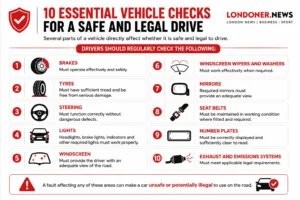
Several parts of a vehicle directly affect whether it is safe and legal to drive.
Drivers should regularly check the following:
- Brakes: Must operate effectively and safely.
- Tyres: Must have sufficient tread and be free from serious damage.
- Steering: Must function correctly without dangerous defects.
- Lights: Headlights, brake lights, indicators and other required lights must work properly.
- Windscreen: Must provide the driver with an adequate view of the road.
- Windscreen Wipers and Washers: Must work effectively when required.
- Mirrors: Required mirrors must provide an adequate view.
- Seat Belts: Must be maintained in working condition where fitted and required.
- Number Plates: Must be correctly displayed and sufficiently clear to read.
- Exhaust and Emissions Systems: Must meet applicable legal requirements.
A fault affecting any of these areas can make a car unsafe or potentially illegal to use on the road.
Do You Have to Keep Your Brakes in Good Condition?
Yes. Brakes are one of the most important safety systems that must be maintained in good working order.
A driver should not wait until an MOT test identifies a braking problem. Warning signs such as reduced braking performance, unusual noises, pulling to one side or a brake warning light should be investigated promptly.
Driving with defective brakes can significantly increase stopping distances and the risk of a collision. Serious defects can also result in enforcement action.
What Are the Legal Requirements for Car Tyres?
Tyres are another part of the car that must be kept in a safe and legal condition.
For most cars in the UK, tyres must have a minimum tread depth of 1.6mm across the central three-quarters of the tyre’s breadth and around its entire circumference.
Tyres should also:
- Be Properly inflated.
- Be Suitable for the vehicle.
- Have no dangerous cuts or bulges.
- Have no exposed cords or structural damage.
- Be fitted correctly.
Drivers should check their tyres regularly rather than relying solely on the annual MOT.
Why Is Tyre Condition So Important?
Tyres are the vehicle’s direct contact with the road. Worn or damaged tyres can reduce grip, particularly when driving in wet conditions.
Poor tyre condition can affect braking, steering and overall vehicle stability. Maintaining the correct tyre pressure can also improve handling and reduce unnecessary tyre wear.
Does the Law Require Car Lights to Work?
Required vehicle lights must be maintained so they work correctly when they are needed.
This can include:
- Headlights.
- Rear Lights.
- Brake Lights.
- Direction Indicators.
- Number Plate Lights.
- Fog Lights, where applicable.
A failed bulb may seem minor, but defective lighting can make it harder for other road users to see a vehicle or understand what its driver intends to do.
Checking the lights only takes a few minutes and is particularly worthwhile before a long journey.
Does the Windscreen Have to Be in Good Condition?
The windscreen must allow the driver to maintain a clear view of the road.
Damage such as large cracks or chips can become a legal and safety problem when it substantially obstructs the driver’s view. The windscreen should therefore be inspected regularly and damage repaired before it becomes more serious.
The driver’s view can also be affected by items attached to the windscreen, excessive dirt or other obstructions.
What About Windscreen Wipers and Washers?
Where required, windscreen wipers and washers need to work effectively.
Worn wiper blades can leave streaks across the glass and seriously reduce visibility during rain. Drivers should also ensure that there is enough screenwash available, particularly before longer journeys or during poor weather.
Does the Steering System Need to Be Maintained?
Yes. A car’s steering system needs to operate safely.
Problems can include excessive play in the steering wheel, unusual vibrations, difficulty steering or the vehicle pulling unexpectedly. Any significant change in steering behaviour should be checked by a competent mechanic.
Steering problems should not be ignored because they can affect the driver’s ability to control the vehicle.
Are Mirrors a Legal Requirement?
Cars must have the mirrors required for their vehicle type and circumstances, and those mirrors should provide an adequate view.
A badly damaged, missing or incorrectly positioned mirror may restrict visibility around the vehicle.
Drivers should keep mirrors clean and properly adjusted before setting off.
Do Seat Belts Have to Be Kept in Good Condition?
Where seat belts are legally required, they should be maintained so that they work properly.
Drivers should look out for:
- Damaged or frayed webbing.
- Faulty buckles.
- Belts that do not retract correctly.
- Loose or damaged mounting points.
A seat belt that is fitted but cannot operate correctly may not provide the protection it is designed to offer in a collision.
Does a Valid MOT Mean the Car Is Roadworthy?
No. A valid MOT does not guarantee that a car remains roadworthy for the entire year.
An MOT reflects the vehicle’s condition against the relevant test requirements at the time of the test. A tyre, bulb, brake component or another part can subsequently become damaged or worn.
The responsibility for keeping the vehicle roadworthy continues between MOT tests.
For example, a car could pass its MOT and then develop a serious tyre defect several weeks later. The existence of the MOT certificate would not make it acceptable to continue driving with the dangerous tyre.
Who Is Responsible for Keeping the Car Roadworthy?
The person using the vehicle has an important responsibility to make sure it is safe to drive.
Drivers should perform basic checks themselves and arrange professional inspections or repairs when necessary.
A sensible routine includes checking:
- Tyre pressure and tread.
- Lights and indicators.
- Windscreen and mirrors.
- Wipers and screenwash.
- Fluid levels.
- Warning lights.
- Braking and steering behaviour.
Drivers should take warning signs seriously rather than waiting for the next service or MOT.
Can You Be Fined for Driving a Car in Poor Condition?
Potentially, yes. The consequences depend on the defect and the relevant offence.
Using a vehicle with defective tyres, brakes, lights or other safety-critical equipment can lead to penalties. Serious defects can result in substantial fines, penalty points or further enforcement action.
Some offences can also apply separately to individual defective components. This means a vehicle with several illegal tyres, for example, can create much more serious consequences than a single minor maintenance problem.
What Is the Difference Between an MOT and Regular Maintenance?
An MOT is a statutory test, while routine maintenance is the ongoing process of keeping the vehicle safe and reliable.
| MOT | Regular Maintenance |
| Usually required annually once applicable | Needed throughout the year |
| Checks specified safety and environmental standards | Helps prevent faults and deterioration |
| Represents the vehicle’s condition when tested | Keeps the vehicle roadworthy between tests |
| Does not replace servicing | Includes routine checks, servicing and repairs |
Drivers should therefore view the MOT as one part of vehicle safety rather than an annual substitute for maintenance.
What Should Drivers Check Before a Long Journey?
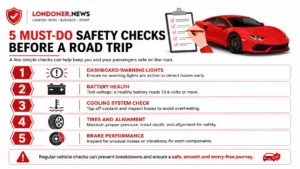
Before travelling a significant distance, motorists should carry out a basic safety inspection.
They should check tyre condition and pressure, test the lights, make sure the windscreen is clear, top up screenwash and look for dashboard warning lights. Fuel or battery range should also be considered before starting the journey.
If the brakes, steering or tyres appear unsafe, the vehicle should not simply be driven in the hope that the problem will disappear.
How Often Should a Car’s Condition Be Checked?
There is no single interval suitable for every component. Some basic checks are worth carrying out frequently, while servicing should follow the vehicle manufacturer’s recommended schedule.
Tyres, lights and fluid levels are particularly easy to inspect regularly. Drivers should also perform additional checks before long journeys and after noticing any change in the way the vehicle drives.
What Part of the Car Does the Law Require You to Keep in Good Condition?
The straightforward answer is that the law requires a vehicle to remain roadworthy, meaning its safety-critical parts and required equipment must be kept in proper condition.
Particular attention should be given to the brakes, tyres, steering, lights, windscreen, wipers, mirrors and seat belts.
A valid MOT does not remove this responsibility. Vehicle condition can change at any time, so regular checks and prompt repairs are essential for keeping a car both safe and legal on UK roads.
About the Journalist
Olivia covers London life, culture and lifestyle for Londoner. Her work includes food, shopping, neighbourhood trends, attractions, local experiences and practical guides for residents and visitors. She focuses on engaging stories that reflect everyday life across the capital.