Shepshed By-Election: Labour Defeats Reform UK By Just 53 Votes In Major Leicestershire Upset
 Published By
Lucy
Published:
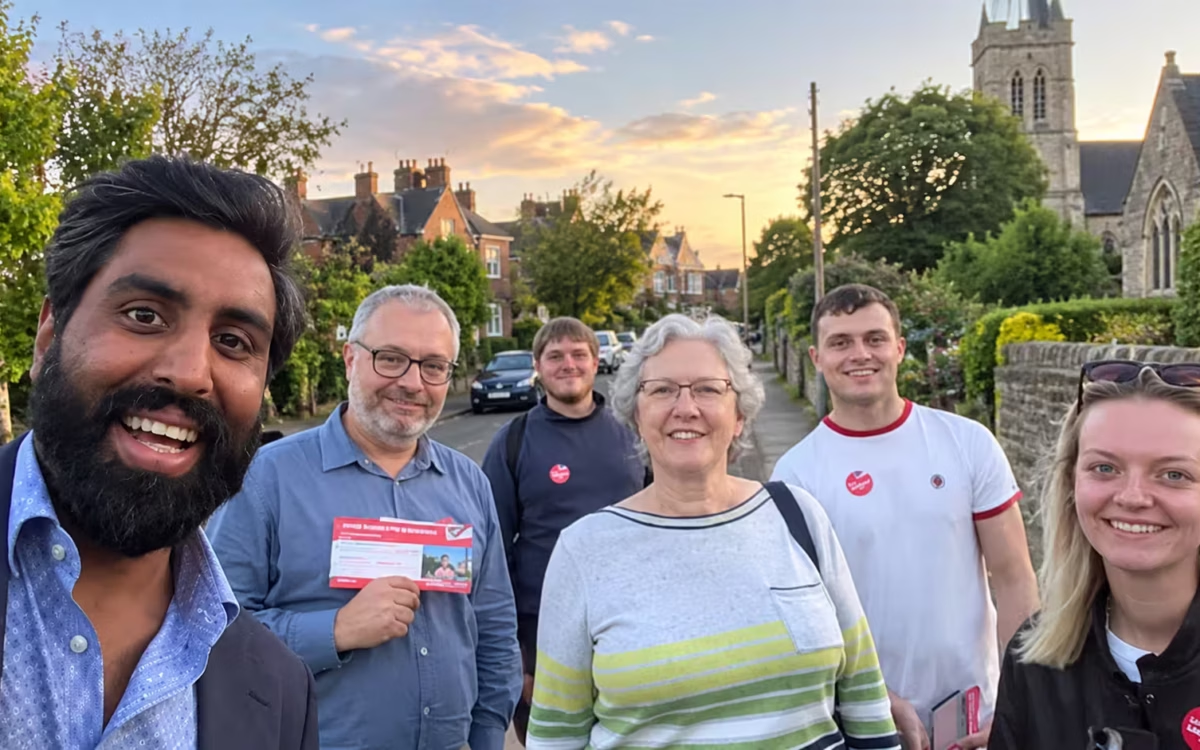
Labour has overturned a Reform UK-held seat in the Shepshed by-election, securing a narrow but politically significant victory in Leicestershire as the two parties continue their battle for support across England.
The contest, held on Thursday, 15 October 2026, saw Labour candidate Jane Lennie receive 1,163 votes, narrowly defeating Reform UK’s Stuart Wood, who secured 1,110 votes.
The winning margin was just 53 votes, with the result confirmed following a recount requested by Reform UK.
The victory represents a notable reversal from May 2025, when Reform UK won Shepshed with almost 45% of the vote. Labour, which finished third in that election, has now moved into first place, raising fresh questions about Reform’s ability to retain the council seats it secured during its earlier electoral breakthrough.
The Shepshed result is particularly sensitive for Reform UK because the party remains the largest political group on Leicestershire County Council and continues to lead a minority administration.
Losing a previously secure-looking division to Labour adds another challenge as councillors face scrutiny over local governance and the delivery of public services.
The official figures show Labour taking 32.72% of the vote, compared with 31.23% for Reform UK. Conservative candidate Sarah Louise Monk finished third with 819 votes, while Restore Britain’s Alec McKenzie attracted 228 votes.
The remaining votes were divided between Liberal Democrat Katy Brookes-Duncan, who received 115, and Green Party candidate David Neil Kellock, who secured 112.
Turnout stood at 29.65%, highlighting how a relatively small electorate can determine the outcome of a closely fought local contest.
Labour’s improvement was substantial. Its vote share increased by approximately 15 percentage points from the previous county election, while Reform’s fell by about 14 points.
The Conservatives also lost ground, leaving a three-way contest in which neither of the two leading parties commanded more than a third of the electorate’s valid votes.
Labour and Reform UK React to Shepshed Result
The outcome prompted sharply different reactions from Labour and Reform UK representatives.
Jewel Miah, leader of the Labour group on Leicestershire County Council, welcomed the victory and suggested that dissatisfaction with Reform’s local performance had contributed to the result.
Speaking to the BBC, Miah argued that residents had turned towards Labour “because they felt let down by Reform”. He described the result as a significant achievement for Lennie, who was unable to attend the early-morning count.
Reform UK’s defeated candidate Stuart Wood offered a different interpretation, pointing to the impact of Restore Britain, whose candidate secured more votes than Labour’s eventual winning margin.
Wood told the BBC:
“It shows if you vote Restore, you get Labour.”
The remarks reveal the growing tension between Reform UK and smaller parties competing for voters on the political right. Restore Britain’s 228 votes were more than four times the 53-vote margin separating Labour and Reform.
However, that does not establish that Reform would have won without Restore Britain on the ballot. Voters supporting smaller parties cannot automatically be assumed to favour another party, and some might have abstained altogether.
Labour MP for Loughborough, Dr Jeevun Sandher, also celebrated the result, describing it as a”brilliant victory”.
In a public reaction reported by Labour Home on 16 October, Sandher said:
“Together we win, divided we lose.”
His comments underline Labour’s view that the outcome reflects an opportunity to rebuild support in areas where Reform made substantial gains during the 2025 local elections.
Labour Home
The result has wider implications because Shepshed was not previously considered a Labour stronghold. Reform’s former councillor Helen Butler won the seat in May 2025 with 1,859 votes, compared with 742 for Labour’s Jane Lennie.
Butler subsequently resigned in August 2026, explaining that she wanted to devote more time to her young family. Her departure triggered the October contest and gave Reform its first electoral test in Shepshed since taking control of the division.
The latest result means Labour has gained a seat that Reform previously held by a considerable margin, although the relatively low turnout means the outcome should not be treated as a direct forecast of a general election.
Political researchers have previously warned that Reform UK’s rapid electoral expansion would bring growing expectations about the party’s performance in local government.
Alia Middleton, Senior Lecturer in Politics at the University of Surrey, wrote in a May 2026 analysis published by The Conversation that Reform needed to demonstrate it could operate “not just as a campaign machine” but also deliver results for residents.
Her assessment was made several months before the Shepshed contest, rather than in direct response to Labour’s latest victory.
Nevertheless, the result illustrates the electoral pressures facing parties when they move from winning council seats to defending their record in office.
Professor Tim Bale, a political scientist at Queen Mary University of London, also described the changing electoral landscape earlier this year as an “era of five- rather than two-party politics”.
Bale’s observation helps explain why the presence of Restore Britain, alongside the established parties, matters in a closely contested division such as Shepshed.
Smaller parties can influence the winning margin even when they finish well outside the leading positions.
There is also a broader challenge for Labour. Although its candidate secured the victory, Reform UK still attracted more than 1,100 votes, demonstrating that it retains a substantial electoral base in the area.
With Labour now holding three seats on Leicestershire County Council and Reform remaining the largest group with 23 councillors, the immediate balance of power has not fundamentally changed. But the political message is harder to dismiss.
A seat Reform won comfortably in 2025 has changed hands less than 18 months later, and the result has given Labour renewed confidence in its ability to compete in areas where Reform previously appeared strongest.
For Reform UK, the Shepshed by-election raises questions about retaining its supporters, handling competition from other parties on the right and convincing residents that its record in local government deserves continued backing.
For Labour, the challenge will be converting a narrow local success into sustained electoral support.
The 53-vote victory cannot establish a nationwide political trend by itself, but it demonstrates how quickly a sizeable council-election lead can disappear when turnout, party competition and voter preferences change.
And in a political environment where several parties are competing for the same voters, the Shepshed result offers another reminder that even a relatively small local election can carry significance far beyond the council division where it takes place.
About the Journalist
Lucy reports on London’s boroughs and the capital’s sporting community. Her coverage includes council decisions, neighbourhood developments, community issues, football, tennis, cricket and major sporting events. She focuses on stories that connect local communities and highlight the people and organisations shaping London.