Helen Butler Reform UK Resignation: Shepshed By-Election Date Confirmed
 Published By
Henry
Published By
Henry
Published:
Updated:

Table of Contents
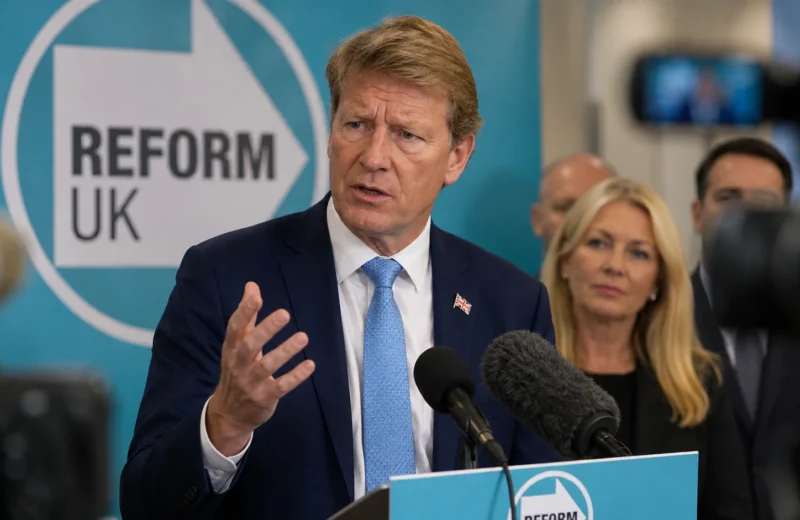
The Helen Butler Reform UK resignation has triggered a fresh political contest in Leicestershire, with voters in Shepshed now set to choose a new county councillor on 15 October 2026.
Former Reform UK councillor Helen Butler resigned from her Shepshed seat on Leicestershire County Council in August, explaining that she wanted to spend more time with her young family.
The latest development came on 10 September, when the date of the resulting by-election was confirmed.
Candidates have until 18 September 2026 to submit their nominations, meaning the final field of candidates is not yet settled.
Butler had represented Shepshed since the May 2025 county council election, when she secured 1,859 votes, or 44.9% of the vote. Conservative candidate Christine Radford finished second with 1,054 votes, while Labour received 742.
Why Did Helen Butler Resign From Reform UK’s Council Group?

Butler made clear that her decision to leave elected office was primarily about her family rather than a political disagreement with Reform UK.
Announcing her resignation, she said the decision had not been easy and described representing Shepshed as an “incredible privilege”.
Explaining the personal reason behind the move, Butler said:
“My family is the biggest reason for my decision.”
She added that she wanted to spend more evenings with her children while they were still young rather than attending council meetings.
That distinction is important. Although Reform UK has experienced a number of councillor departures elsewhere, there is no evidence in Butler’s public resignation statement that she quit because of a dispute with the party or its policies.
Her family commitments had already affected her political workload before the full resignation.
Butler was originally appointed to Leicestershire County Council’s cabinet with responsibility for resources after Reform’s breakthrough in the May 2025 election. However, she stepped down from that cabinet position in October 2025, again citing family commitments.
At the time, council leader Dan Harrison praised her contribution and acknowledged the pressures of combining elected office with family responsibilities.
Harrison said:
“Balancing a home life with being a cabinet member is hard.”
He added that Butler deserved credit for recognising that she could no longer give the cabinet role the time it required.
What Does The Resignation Mean For Reform UK?
Butler’s departure leaves Reform with 23 seats on the 55-member Leicestershire County Council, according to the latest reporting.
The Conservatives hold 15 seats, the Liberal Democrats 11 and Labour two, with the remaining occupied seats split between the Green Party, Restore Britain and an independent. Butler’s Shepshed seat is currently vacant.
Before the resignation, official council figures in May 2026 showed Reform with 24 councillors, compared with 15 Conservatives, 11 Liberal Democrats, two Labour councillors and one each from the Greens, Restore Britain and the independents.
The October by-election will therefore be closely watched as Reform attempts to retain a division where it established a sizeable lead in 2025.
While losing or retaining one council seat will not decide the future of Reform nationally, the result will provide another indication of whether support won during the party’s rapid local-election expansion is holding at constituency level.
Political Experts Highlight Reform’s Next Challenge
Political academics have previously argued that Reform’s biggest challenge after winning large numbers of council seats is moving from campaigning to demonstrating that it can govern effectively.
Alia Middleton, Senior Lecturer in Politics at the University of Surrey, said following the 2026 local elections that voters would increasingly expect results from the party.
Middleton said Reform needed to demonstrate that it could function not simply as “a campaign machine” but as a professional political organisation capable of delivering its promises.
Her comments were about Reform’s broader local-election performance rather than Butler’s individual resignation, but they provide context for why contests such as Shepshed matter politically.
Professor Tim Bale of Queen Mary University of London has meanwhile described Britain’s current electoral landscape as an “era of five- rather than two-party politics”, reflecting the increased competition between Reform, Labour, the Conservatives, Liberal Democrats and Greens.
That fragmentation makes local by-elections particularly difficult to predict from previous results alone.
When Is The Shepshed By-Election?
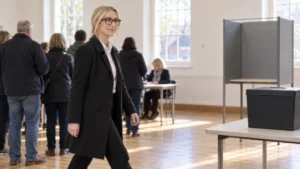
The Shepshed county council by-election will take place on Thursday, 15 October 2026.
Charnwood Borough Council is administering the election, with prospective candidates required to submit nominations by 18 September.
The contest comes roughly 17 months after Butler’s original victory.
In May 2025, the results were:
| Candidate | Party | Votes | Vote Share |
| Helen Butler | Reform UK | 1,859 | 44.9% |
| Christine Radford | Conservative | 1,054 | 25.4% |
| Jane Lennie | Labour | 742 | 17.9% |
| Katy Brookes-Duncan | Liberal Democrats | 276 | 6.7% |
| Kelly Swann | Green Party | 211 | 5.1% |
There were 12,051 registered electors and 4,142 valid votes recorded in the division.
The size of Butler’s original advantage means Reform begins with a significant previous-vote lead, although by-elections can produce very different turnout levels and voting patterns from full council elections.
For Reform UK, retaining Shepshed would help demonstrate resilience following the resignation. For its rivals, overturning Butler’s 2025 majority would offer an opportunity to argue that the political mood in the area has shifted.
The next key moment will come after nominations close on 18 September, when voters will know exactly which candidates will contest the vacant seat on 15 October.
About the Journalist
Henry is the editorial head and lead author at Londoner. He oversees the publication’s editorial direction, article quality, source verification and corrections process. He also reviews major stories before publication to ensure they meet Londoner’s standards for accuracy, fairness and transparency.