Rachel Reeves Pension Tax Changes: Thousands of Families Face New Rules as Experts Warn Over Retirement Savings
 Published By
Henry
Published:
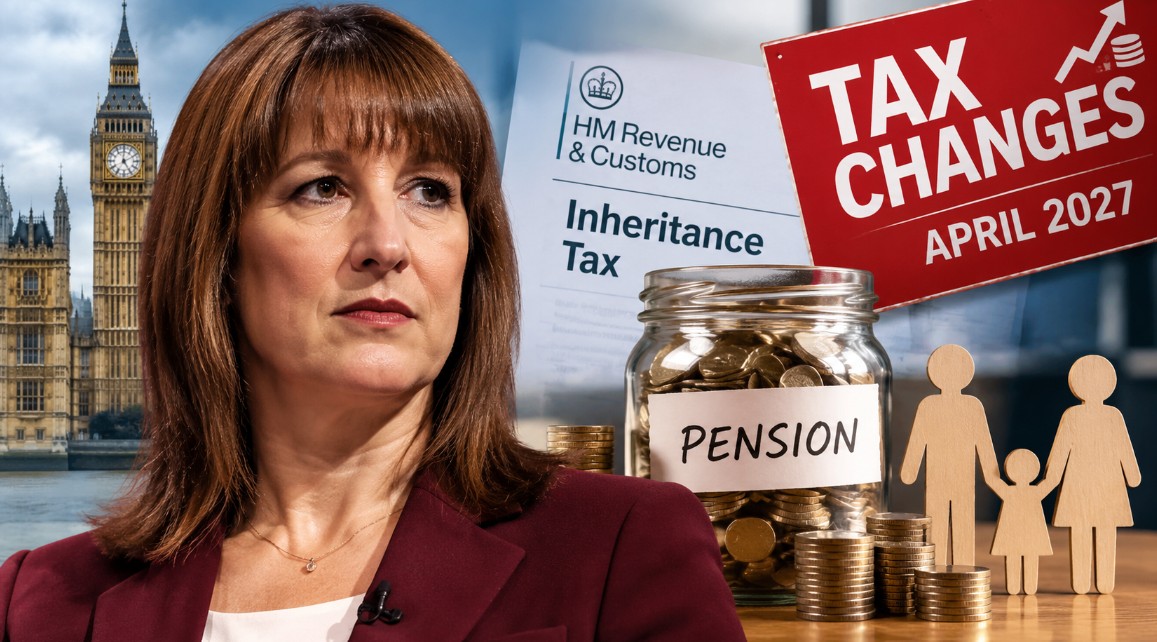
Thousands of British families could face higher inheritance tax bills under major pension tax changes introduced by former Chancellor Rachel Reeves, with financial experts warning that the reforms are already influencing retirement decisions and how people plan to pass wealth to their children.
The changes, due to take effect on 6 April 2027, will bring most unused pension funds and pension death benefits within the scope of inheritance tax. The reforms represent a significant shift in how retirement savings are treated when someone dies, particularly for families who previously regarded pensions as a tax-efficient way of passing money to the next generation.
The legislation was introduced following Reeves’s October 2024 Budget and was subsequently enacted through the Finance Act 2026. Although the rules have not yet taken effect, pension providers and financial advisers are reporting growing concern among savers approaching retirement.
The issue has returned to the political spotlight ahead of the 28 October 2026 Autumn Budget, when current Chancellor John Healey will outline the government’s latest tax and spending decisions.
Reeves, who served as Chancellor from July 2024 until July 2026, is no longer responsible for Treasury policy. However, the pension reforms announced during her tenure remain scheduled for implementation, leaving households to consider their impact alongside the possibility of further changes under the new Chancellor.
Experts Warn Pension Tax Changes Are Already Affecting Retirement Decisions
New figures suggest the impact of the reforms could be substantial for families with larger pension savings and other inherited assets.
HMRC estimates that approximately 10,500 estates will become liable for inheritance tax for the first time during 2027–28 because of the pension changes. A further 38,500 estates are expected to face higher bills than under the previous arrangements.
The government estimates that the average additional inheritance tax liability among affected estates could be around £34,000. However, these projections do not fully reflect potential changes in how people manage their pension savings, meaning the eventual impact could differ.
Research released by Royal London on 22 October 2026 provides further evidence that the uncertainty is already shaping financial decisions.
In a survey of 85 financial advisers, 59% identified greater certainty around pension taxation as their leading priority for the upcoming Budget, while 53% wanted a simpler tax system.
The findings also revealed that 84% of advisers said the planned inheritance tax reforms had already influenced conversations with clients. Some 51% reported seeing more clients withdraw pension money earlier, while the same proportion observed increased gifting of lump sums.
Jamie Jenkins, Head of Policy at Royal London, said:
“Advisers are telling us clearly that they want greater stability around pension taxation and a simpler tax system.”
Jenkins warned that uncertainty surrounding pension inheritance tax was influencing discussions about savings, investments and retirement planning, with some households already changing their approach.
The concerns extend beyond the immediate financial consequences of the new tax rules.
Families who previously planned to leave pension wealth untouched for their children may now need to consider how inheritance tax interacts with property values, investment accounts and other assets.
For example, a family whose estate was previously below the inheritance tax threshold could find that including unused pension funds pushes its overall value above the relevant allowance.
However, the reforms do not mean every inherited pension will automatically face a 40% tax charge.
The existing exemption for assets passing to a spouse or civil partner will generally continue to apply, while qualifying death-in-service benefits and certain dependants’ pensions remain outside the new arrangements.
The government has also defended the policy. Responding to a parliamentary question on 19 October, Treasury minister James Murray said more than 90% of UK estates were still expected to have no inheritance tax liability in 2030–31 following the reforms.
He also clarified that where inherited pension benefits are subject to income tax, provisions are intended to prevent the same portion of those benefits being charged both inheritance tax and income tax.
Nevertheless, financial advisers remain concerned about the additional administrative responsibilities facing executors and beneficiaries.
Rachel Vahey, Head of Public Policy at AJ Bell, raised those concerns in her assessment of the approaching Budget.
“Advisers have been straining to hold back a surging tax tide in recent years.”
Vahey highlighted the administrative difficulties associated with bringing pensions into inheritance tax calculations, particularly for personal representatives dealing with an estate following a bereavement.
AJ Bell’s October research involving 233 financial advisers found that 87% identified frozen inheritance tax thresholds and the forthcoming pension inheritance tax changes as major concerns for clients.
What Other Pension Tax Changes Were Introduced Under Rachel Reeves?
The inheritance tax reforms are not the only pension measures associated with Reeves’s time at the Treasury.
Her November 2025 Budget also introduced a significant change to the National Insurance treatment of pension contributions made through salary sacrifice arrangements.
Under the announced rules, from April 2029, only the first £2,000 of annual employee pension contributions through salary sacrifice will qualify for National Insurance exemption.
Contributions above that threshold will be subject to employee and employer National Insurance contributions, although the normal income tax relief on eligible pension contributions will remain available.
The Treasury has said most employees making typical pension contributions will not be affected. However, workers contributing larger amounts through salary sacrifice arrangements and their employers could face higher National Insurance costs.
Another major concern has been the future of tax-free pension withdrawals.
Under the rules currently in force, most savers can take up to 25% of their pension savings tax-free, subject to a standard lifetime lump sum allowance of £268,275. Some individuals have protected allowances that may be higher.
Despite repeated speculation before earlier Budgets, this tax-free entitlement has not been cut. Nor has any further reduction been confirmed ahead of the October 2026 Budget.
However, fears surrounding potential changes have already encouraged significant withdrawals.
AJ Bell has pointed to Financial Conduct Authority data indicating that approximately £14 billion more tax-free cash was withdrawn from pensions in 2025 than would ordinarily have been expected, amid concerns about possible restrictions on pension lump sums.
Tom Selby, Director of Public Policy at AJ Bell, said in an October assessment:
“Healey has a golden opportunity to end years of damaging speculation about the fate of pension tax incentives.”
Selby has argued that withdrawing retirement savings prematurely can undermine households’ long-term financial security while reducing the capital available for investment.
He has called for a commitment to maintaining pension tax stability, including existing tax-free cash entitlements and pension contribution relief.
The debate comes at a sensitive moment for the government, with the new Chancellor preparing to present his first Budget on Wednesday, 28 October.
Further changes to pension taxation, tax-free withdrawals or pension contribution relief remain matters of speculation until the Treasury formally announces its decisions.
For workers approaching retirement, that distinction is particularly important.
Taking a large pension withdrawal in response to rumours could trigger income tax consequences, reduce future investment growth and permanently use up valuable tax-free entitlements.
Similarly, transferring money into other savings products or gifting substantial amounts to relatives can have consequences depending on an individual’s estate, income and financial circumstances.
With Reeves’s inheritance tax reforms already written into law and further Budget decisions approaching, pension taxation is likely to remain a major issue for households, financial advisers and policymakers.
For now, the clearest confirmed change is that most unused pension wealth will enter inheritance tax calculations from April 2027, while the salary sacrifice National Insurance restrictions are scheduled to begin in April 2029.
Whether John Healey chooses to modify those inherited policies or introduce further measures will become clearer when he delivers the Autumn Budget on 28 October.
Until then, experts are urging savers to distinguish between confirmed legislation and political speculation before making decisions that could affect their retirement income for years to come.
About the Journalist
Henry is the editorial head and lead author at Londoner. He oversees the publication’s editorial direction, article quality, source verification and corrections process. He also reviews major stories before publication to ensure they meet Londoner’s standards for accuracy, fairness and transparency.