Princess Anne Interaction With Earl Spencer: Awkward Royal Dinner Exchange Revealed
 Published By
Olivia
Published:
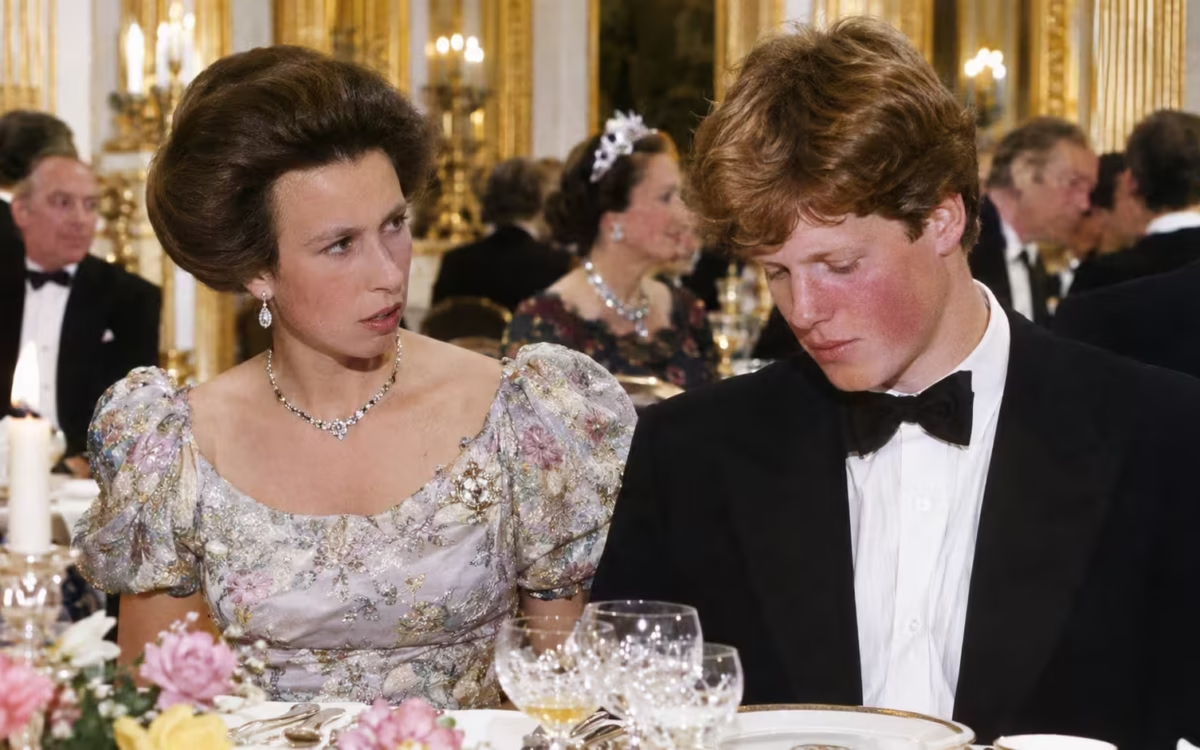
Table of Contents
A Princess Anne interaction with Earl Spencer more than four decades ago has returned to attention after Princess Diana’s brother described an uncomfortable exchange at Buckingham Palace in his new memoir.
Charles Spencer says the incident happened on 27 July 1981, just two days before his sister married the then-Prince Charles at St Paul’s Cathedral. Spencer, who was 17, had been seated beside the Princess Royal at a formal dinner attended by international royal guests.
Hoping to make polite conversation, he asked Anne about the christening of her baby daughter, Zara. According to Spencer, her unexpectedly blunt reply left him embarrassed and unable to respond.
The account appears in Swan Song: Diana, My Sister, published in September 2026. It is Spencer’s personal recollection, not an independently verified exchange, and has renewed debate about Anne’s direct manner.
What Happened Between Princess Anne And Earl Spencer At The Dinner?
Spencer recalls being told that he would share a table with Anne during the celebrations ahead of the royal wedding. The prospect apparently made him nervous. Despite his aristocratic background, he was a teenager at an unusually formal occasion.
He decided that a family event would provide a safe subject. Anne’s daughter Zara Phillips, now known as Zara Tindall, had been christened earlier that day at Windsor Castle.
When Anne turned towards him, Spencer asked how the christening had gone. He expected the princess to speak happily about the occasion, giving him an easy opening for conversation.
Instead, he writes, Anne looked at him “witheringly” and replied: “Tell me, how’s a christening supposed to go?”
Spencer said he “turned red and looked at my plate”, unable to think of an answer. The remark struck him as dismissive, particularly because he had been trying to show interest in something important to her family.
Nearby, his brother-in-law Neil McCorquodale was apparently chatting comfortably with Japan’s Crown Princess about rice cultivation.
In the memoir, he reflects that a guest’s experience could depend on whether their royal dinner companion tried to find common ground or made them “feel small”.
The passage captures Spencer’s feelings but cannot establish Anne’s intent. Her words might have been dry humour or a straightforward reply.
No public account from Anne has clarified how she remembers the evening, so claims that the exchange reflected deliberate hostility would go beyond what has been established.
Why The 1981 Royal Dinner Was So Significant?
The setting helps explain why Spencer remembered such a brief conversation.
On 29 July 1981, Diana Spencer married Prince Charles in a globally televised ceremony at St Paul’s Cathedral. The celebration brought together international dignitaries, aristocratic families and British royals.
For Diana’s younger brother, the days before the ceremony brought an unusually intense introduction to royal protocol. The Spencers had royal connections, but this wedding brought unprecedented scrutiny.
The dinner formed part of preparations for a historic royal event.
Anne, meanwhile, was already an experienced working royal and a mother of two. Her children, Peter and Zara, were growing up in a household where public responsibilities and private family milestones frequently overlapped.
That makes the choice of conversation understandable, even if it did not produce the response Spencer wanted.
Zara’s christening had taken place amid a busy period of family obligations and wedding celebrations. Her response cannot reliably be judged without knowing her mood, tone or the wider conversation that evening.
The anecdote nevertheless reflects the difference between royal confidence and the nervousness of a young guest. Spencer was searching for a suitable topic while Anne was accustomed to navigating formal occasions.
Accounts of royal life frequently return to that contrast between public ceremony and private personality.
Prince Philip’s famously uncompromising approach, for example, also emerges in his reported comments about Charles, where blunt criticism became part of a wider family disagreement.
Still, a single conversation can be interpreted differently by those involved.
How Earl Spencer’s Memoir Has Reopened Royal Disputes?
The story about Anne is only one part of a much larger controversy surrounding Spencer’s book.
Published on 22 September 2026, Swan Song: Diana, My Sister sets out his memories of Diana’s childhood, marriage and death, alongside his interpretation of the Royal Family’s treatment of her.
Spencer said he wanted to record his perspective before the thirtieth anniversary of Diana’s death in 2027.
Several passages have generated disputes. Among the most contested are Spencer’s claims about the then-Prince Charles’s conduct following Diana’s fatal car crash in Paris in August 1997.
Buckingham Palace responded to those allegations by suggesting that grief can affect judgment and memory. Spencer has maintained that his recollections are truthful.
The palace response concerned claims about the King, not a specific rebuttal of the dinner anecdote involving Anne.
The memoir also led to a separate disagreement with Piers Morgan after Spencer acknowledged an incorrect assumption connecting the broadcaster to intrusive photographs of Diana published in 1993.
That dispute, including Piers Morgan’s announced legal action against Earl Spencer, demonstrates why the distinction between personal recollection and independently documented events matters.
An admitted factual error in one passage does not automatically disprove other memories. Equally, a vividly remembered conversation cannot be treated as a complete account of another person’s motives.
The Anne anecdote concerns only a few words, yet Spencer remembers their impact decades later.
What The Exchange Says About Princess Anne And Royal Etiquette?
Princess Anne has long been associated with plain speaking, practicality and a reluctance to indulge ceremony for its own sake. Her public reputation differs from the warmer, more openly conversational style associated with some other royals.
Supporters often interpret her directness as refreshing. Others may find it difficult to read, especially in formal settings where guests expect courtesy to take a familiar form.
Spencer’s question was conventional small talk. Anne’s alleged answer challenged his expectation of a cheerful response.
Yet the exchange also illustrates the limits of retrospective anecdotes. Only Spencer’s perspective is represented in the published account. There is no established evidence that Anne intended a personal slight, or that the incident caused a lasting dispute between them.
The wider context remains Diana. Spencer’s relationship with his sister and his efforts to explain her experiences have shaped much of his public commentary since her death.
Diana’s life also contained relationships far beyond palace etiquette, including her later private romance with heart surgeon Hasnat Khan, which reflected her attempts to establish a personal life outside royal expectations.
Nearly 45 years after the wedding, Spencer’s memory of sitting beside Anne has become another small but revealing part of the conversation about Diana’s royal world.
It is not evidence of a feud, nor proof of Anne’s intentions. What it does show is how an apparently minor exchange can remain powerful in someone’s memory, especially when it takes place during an extraordinary family event.
For Spencer, a question intended to make conversation became an uncomfortable moment he never forgot. For readers, the story offers a glimpse of royal life through the eyes of someone who was close to the monarchy but still capable of feeling like an outsider.
About the Journalist
Olivia covers London life, culture and lifestyle for Londoner. Her work includes food, shopping, neighbourhood trends, attractions, local experiences and practical guides for residents and visitors. She focuses on engaging stories that reflect everyday life across the capital.