Queen Elizabeth Scolds Prince William: The Balcony Moment That Still Captures Royal Fans
 Published By
Ben
Published:
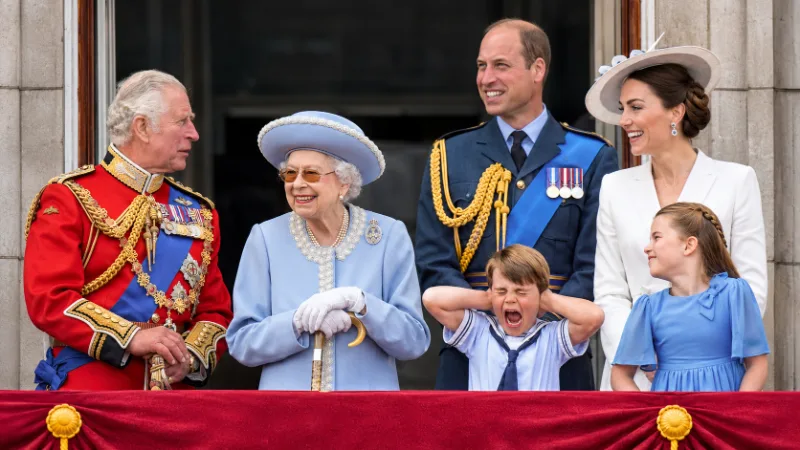
Table of Contents
Footage from Buckingham Palace offered a rare glimpse of Queen Elizabeth II’s family life.
During the Trooping the Colour celebrations on 11 June 2016, the late monarch appeared to tell her grandson, Prince William, to stand up as he crouched beside his young son, Prince George.
William rose as George put a hand across his face. Newspapers around the world described it as a royal telling-off, with reports quoting the Queen as saying, “Stand up, William.”
The brief clip showed William balancing two roles: attentive father and representative of the Crown.
The incident occurred in 2016, six years before Elizabeth II died in September 2022, not during a recent royal appearance.
What Happened When Queen Elizabeth Scolded Prince William?
The royal family had gathered on the balcony of Buckingham Palace after the Trooping the Colour parade, one of the best-known events in the royal calendar. That year’s ceremony held particular significance because it marked the Queen’s official 90th birthday.
Elizabeth, wearing a striking bright-green outfit, stood among relatives watching the Royal Air Force flypast. William, then 33 and known as the Duke of Cambridge, was nearby with George, who was two years old.
William lowered himself to George’s height to speak to him. The Queen then turned towards her grandson and tapped or gestured towards him, apparently indicating that he should get back to his feet.
William stood. Prince Harry appeared amused, while George raised a hand to his face. The toddler’s expression, often described online as a facepalm, made the footage particularly shareable, although there is no way to know whether he was reacting to the exchange itself.
Contemporary reports from ABC News and the Evening Standard attributed the words “Stand up, William” to the Queen.
Because the short clip does not provide a complete, clearly audible conversation, the exact wording and tone should not be treated as independently established beyond those reports.
What the footage does show is straightforward: the Queen signalled, William responded, and the family continued their balcony appearance. There was no public indication of lasting tension between grandmother and grandson.
Why Did The Queen Want William To Stand Up?
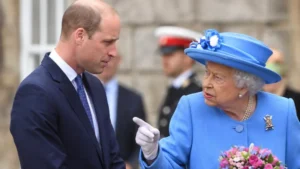
The Queen never issued a public explanation of the gesture, making any claim about her private thoughts speculative.
The most plausible interpretation is that she wanted William standing alongside the family during a formal appearance watched by crowds and television audiences.
Trooping the Colour is more than a birthday celebration. It is a military ceremony reflecting the monarch’s relationship with the armed forces, followed by the familiar balcony gathering and flypast.
The family represents an institution as well as enjoying the occasion.
William’s decision to crouch did not mean he was deliberately ignoring that responsibility. He was speaking to a small child, presumably helping George follow what was happening around him.
The Queen’s intervention could therefore be understood as a quick reminder about the expectations of the occasion, rather than an angry rebuke.
For Elizabeth, public ceremony and attention to detail were central features of her long reign.
She had spent decades appearing at military parades, national commemorations and state occasions where even small gestures could attract attention.
Those standards were also familiar within the wider family.
The contrast between private feelings and public expectations was evident in Prince Philip’s reported criticism of Charles over revelations about his upbringing, another example of how different generations of royals approached duty and personal expression.
Nevertheless, it would go too far to suggest that William broke a specific written balcony rule. No official statement identified such a breach, and the video alone cannot establish why the Queen intervened.
Prince George’s Reaction Made The Royal Exchange Go Viral
Although the Queen’s gesture provided the central moment, George’s reaction helped the video spread far beyond audiences interested in royal protocol.
His hand-to-face movement looked, to many viewers, like the unmistakable expression of a child embarrassed by a parent.
That remains an interpretation. George was only two, watching aircraft and crowds. His gesture could have been unrelated to what the adults were saying.
The occasion was already an important family milestone. Princess Charlotte, then 13 months old, made her first Buckingham Palace balcony appearance, held by Catherine, then Duchess of Cambridge.
George had a front-row view of the celebration, while Harry and other relatives joined the Queen for the flypast.
Images of royal children introduce spontaneity into formal settings. Small expressions can become enduring images.
William and Catherine have since tried to balance that curiosity with their children’s need for an ordinary upbringing.
Their approach to Prince George and Princess Charlotte’s media privacy reflects the reality that even innocent family moments can circulate worldwide for years.
The 2016 footage illustrates that tension particularly well. William’s instinct was to engage with his son, but the interaction unfolded in full public view. A private-style reminder from his grandmother then became a global talking point.
The appeal of the clip did not depend on royal scandal.
Its humour came from something familiar to many families: a grandmother giving an adult grandson a quick instruction, and the grandson following it without argument.
What The Moment Reveals About William And Elizabeth’s Relationship?
The balcony exchange offers a small glimpse of the relationship between William and his grandmother, but it should not be mistaken for proof of a difficult bond.
In public comments during her lifetime, William repeatedly expressed admiration for Elizabeth and the guidance she provided.
In a documentary marking her 90th birthday, he spoke about the importance of having the Queen to look up to after the death of his mother, Diana, Princess of Wales.
He credited her with understanding difficult family circumstances and offering support.
That background changes how the moment can be read. The Queen was both a grandmother and the sovereign, while William was both her grandson and a future king.
A brief correction in public fitted the unusual overlap between those roles.
Since Charles III became King in September 2022, William has taken on the title Prince of Wales and a more prominent place in the monarchy.
George, meanwhile, has grown from the toddler on the balcony into a young heir with increasing public visibility.
The importance of informal family support alongside royal responsibility remains apparent in Prince George’s close relationship with Zara Tindall, which offers a different perspective on growing up within the royal family.
More than a decade after the original footage, the story remains compelling because it captures a recognisable family exchange within an extraordinary setting.
The Queen appeared to ask William to stand, William complied, and George supplied an expression viewers could interpret for themselves.
It was neither a constitutional drama nor evidence of a family feud.
It was a fleeting reminder that even the future king could receive a gentle correction from his grandmother while the world was watching.
About the Journalist
Ben covers business, transport and global developments for Londoner. His reporting focuses on London’s economy, major companies, infrastructure, public transport and international stories that may affect people and businesses across the capital. He explains complex developments clearly using reliable sources and relevant context.