Earl Spencer Comments On Prince Harry’s UK Return As He Defends Nephew’s Decision to Come Home
 Published By
Olivia
Published By
Olivia
Published:
Updated:
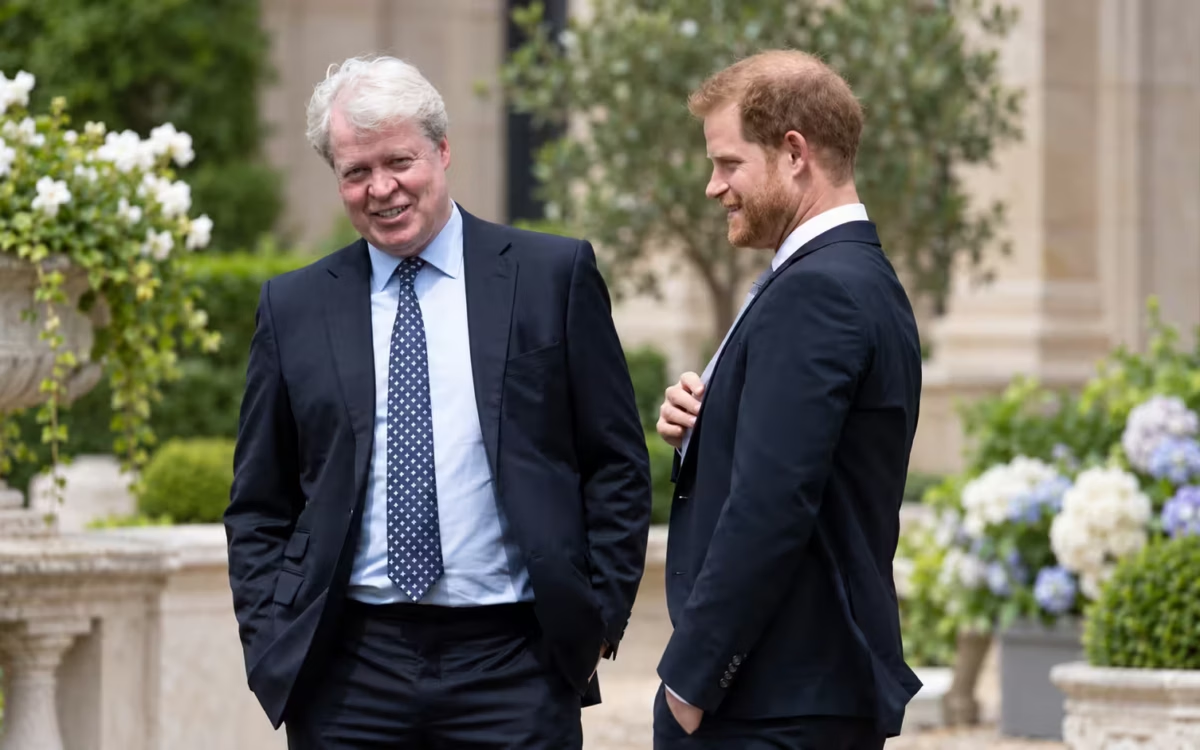
Earl Spencer has offered one of his clearest public assessments yet of Prince Harry’s return to the UK, dismissing suggestions that his nephew’s decision to come back to Britain should be viewed as extraordinary.
Charles Spencer, the younger brother of the late Diana, Princess of Wales, discussed Harry during an on-stage conversation with royal biographer and former Vanity Fair editor Tina Brown in New York on 29 September.
The event, held at St Peter’s Chelsea and hosted by McNally Jackson Books, formed part of the promotion for Spencer’s new memoir, Swan Song: Diana, My Sister.
Brown questioned whether Spencer had played any part in encouraging Harry to return to Britain after six years based in California. Spencer said the subject had not been discussed between them.
When Brown suggested Harry’s decision was particularly remarkable considering his difficult relationship with sections of the British press, Spencer pushed back.
“But is it astounding that an Englishman wants to move back to England?”
He then summed up his position even more simply: “Seems very normal to me.”
The comments are significant because Spencer has become an increasingly vocal figure in discussions surrounding Harry, Meghan and the legacy of Princess Diana, particularly since the publication of his memoir.
Earl Spencer Says He Does Not Interfere in Harry’s Decisions
Spencer made clear that his relationship with Harry should not be interpreted as one in which he directs his nephew’s decisions.
He described himself as an uncle who is available when required but does not intrude into Harry’s private affairs.
Harry, Meghan and their children stayed with Charles Spencer and his wife, Cat Spencer, during the summer. Spencer later spoke publicly about seeing Archie and Lilibet at Althorp, the Spencer family estate where Diana is buried.
The visit inevitably attracted attention because Harry’s connection with his mother’s family has remained important throughout his adult life. However, Spencer said the family’s subsequent decision to return to Britain was not something he had helped organise.
His argument was instead that the intense analysis surrounding Harry can sometimes obscure a relatively simple personal consideration: Harry is British and may want to spend more time in the country where he grew up.
That interpretation contrasts sharply with some royal commentators, who have treated the Sussexes’ move as a major development in the continuing relationship between the couple and the wider Royal Family.
Royal commentator Richard Fitzwilliams, discussing the move in August, called it an “extraordinary development”.
Former BBC royal correspondent Jennie Bond was similarly surprised, particularly because Harry had previously expressed serious concerns about bringing his family to Britain without the level of police protection he wanted.
Royal historian and commentator Ed Owens, meanwhile, pointed to Harry’s apparent efforts to improve family relations.
Speaking after an earlier visit by the Sussexes, Owens said there was a sense that the visit had gone well and that the timing could therefore represent an opportunity for closer contact.
Those are interpretations rather than confirmed explanations for Harry’s decision. Neither Harry nor Meghan has publicly attributed the move to one single factor.
What is clearer is that returning to Britain has not restored their former position as working members of the Royal Family.
In September, a letter issued under King Charles III’s direction reaffirmed that Harry and Meghan remain non-working royals and that their charitable and commercial activities are conducted independently.
Reuters reported that the guidance characterised their position as comparable to that of private citizens with commercial and charitable interests.
That distinction means Harry can live in Britain and undertake his own charitable engagements without representing the monarch.
Spencer’s comments therefore appear to frame the return primarily as a family and personal matter rather than as evidence of an institutional royal comeback.
His wider remarks about Harry have nevertheless gone beyond where his nephew chooses to live.
Earlier in September, Spencer told the BBC that he was deeply concerned about the treatment of Harry and Meghan by parts of the media.
He said some coverage reminded him of the pressure experienced by Diana and described relentless hostile reporting as having a “cancerous influence” on the lives of those subjected to it.
He also raised Harry’s security arrangements, saying his experience of losing Diana strongly influenced his position.
Spencer said that, as Harry’s uncle, he would “veer towards protection”, while pointing to Harry’s place in the line of succession and his military service.
Those concerns have gained fresh relevance.
On 30 September, Reuters reported that photographers had allegedly targeted Archie and Lilibet around their school in England.
A spokesperson for the Sussexes accused photographers of intrusive behaviour around the school environment and raised renewed concerns over the children’s security and privacy.
The episode does not establish Spencer’s broader claims about the British press, but it shows why security and media intrusion remain central issues surrounding Harry’s return.
Spencer has also been careful not to publicly choose between Harry and Prince William in their personal disagreements.
During his recent appearances, he has said he does not know the full details of the brothers’ relationship and has resisted presenting himself as an intermediary.
However, his latest interview did reveal a difference in how the brothers have responded to one particularly important moment in Spencer family history.
Asked by Tina Brown whether William or Harry had ever discussed the famous eulogy Spencer delivered at Diana’s funeral in 1997, he said Harry had been “very supportive” of it, while he could not remember receiving comments from William.
Spencer also confirmed that neither prince received significant advance warning that he was writing his new Diana memoir.
He said he deliberately treated the book as his responsibility and informed family members, including William and Harry, shortly before its public announcement.
He declined to disclose their private reactions but said he had assured both nephews that their privacy had not been compromised.
The memoir itself has generated a separate dispute with Buckingham Palace after Spencer published his recollection of conversations involving the then Prince Charles following Diana’s death.
Buckingham Palace issued an unusually direct response, saying that grief can affect judgement and memory.
Spencer has stood firmly by his version of events and accused the King of effectively attempting to undermine his recollection without directly disproving it.
That disagreement provides important context for his comments about Harry.
Spencer is not speaking as a neutral royal observer but as Diana’s brother, someone with his own long and sometimes difficult history with the monarchy and the press.
At the same time, his comments offer a notably straightforward interpretation of Harry’s homecoming at a point when royal watchers continue to debate what the Sussexes’ renewed presence in Britain could mean.
For Spencer, there appears to be little mystery.
Harry spent six years building a life in California, but he remains an Englishman with family, friends, charitable connections and a deeply personal history in Britain.
Whether the return ultimately changes his relationship with King Charles, Prince William or the institution of the monarchy remains unresolved.
For now, Earl Spencer’s message is considerably simpler than much of the speculation surrounding his nephew: coming home does not necessarily need a royal explanation.
About the Journalist
Olivia covers London life, culture and lifestyle for Londoner. Her work includes food, shopping, neighbourhood trends, attractions, local experiences and practical guides for residents and visitors. She focuses on engaging stories that reflect everyday life across the capital.