Andy Burnham Kemi Badenoch PMQs Exchange: What Was Said In Their Latest Commons Clash?
 Published By
Adam
Published:
Updated:
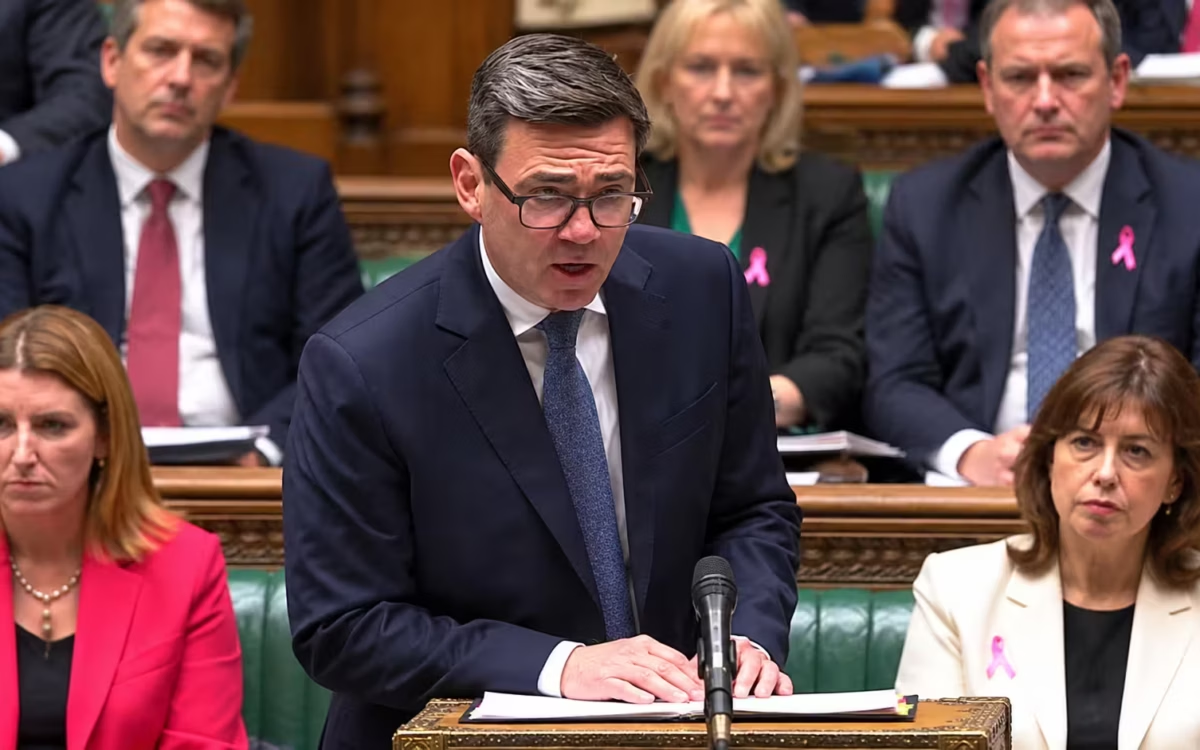
Table of Contents
The latest Andy Burnham Kemi Badenoch PMQs exchange became a wide-ranging political confrontation over Brexit, Russian interference, energy policy, welfare, defence and the approaching Budget.
At Prime Minister’s Questions on 14 October 2026, Conservative leader Kemi Badenoch challenged Prime Minister Andy Burnham over comments he had made about Russian attempts to influence the 2016 EU referendum. She then moved onto North Sea oil and gas, welfare spending and defence commitments, presenting Burnham as a leader reluctant to make difficult decisions.
The session also came amid questions over Burnham’s past dealings with Manchester City and its owners. Conservative MP Jerome Mayhew raised that issue before Badenoch began her main questions.
Why Did Kemi Badenoch Challenge Andy Burnham Over Russia And Brexit?
The opening exchanges focused on Russia and the 2016 Brexit referendum.
Burnham had previously said it was clear that Russia attempted to interfere around the referendum. MI5 director general Sir Ken McCallum later confirmed that attempted Russian interference was a matter of public record, while stressing that attempted interference was not the same as proving that the referendum result had been changed.
Badenoch used that distinction to challenge Burnham. She argued that his comments risked overstating what was known and could undermine public confidence in the democratic process.
The clash also fitted into a broader debate over Britain’s relationship with Europe. Burnham has pushed for closer cooperation with the EU on trade, security and economic matters without currently proposing a return to full EU membership, the Single Market or Customs Union.
His position on closer UK-EU ties is likely to remain an important political dividing line, particularly when debates over Brexit, trade and national security overlap.
How Did The Exchange Move To North Sea Oil And Gas?
Badenoch then shifted attention to the Rosebank and Jackdaw oil and gas developments in the North Sea.
She accused the Government of delaying decisions that could support domestic energy production, jobs and energy security. Her argument was that Britain should make greater use of its own resources rather than become increasingly dependent on imported energy.
Burnham responded that the Government had inherited a complicated process affected by previous court decisions and that ministers needed to correct the framework before making final decisions.
The disagreement exposed a difficult balance for Labour. Approving new oil and gas developments could attract criticism from environmental campaigners and some Labour MPs. Rejecting them could allow the Conservatives to argue that the Government is weakening energy security and putting North Sea jobs at risk.
Why Were Welfare And Defence Central To The PMQs Clash?
The most important policy dispute came when Badenoch linked welfare spending directly to defence.
She argued that the Government should reduce welfare costs and redirect more money towards Britain’s armed forces. She also pressed Burnham to commit to increasing defence spending to 3% of GDP by 2030.
Burnham said the Government would honour its NATO commitments, but he did not give Badenoch the timetable she wanted. Instead, he indicated that more detail would come around the Budget.
On welfare, Burnham defended the Government’s approach and said ministers wanted to reduce the number of young people outside employment or education. He also pointed towards the Milburn review as part of wider welfare reform.
Badenoch wants to frame welfare reform as both an economic and national security issue, arguing that lower benefit costs could free more money for defence.
Burnham accepts that welfare spending needs to be controlled, but he does not want welfare and defence treated simply as competing priorities.
The timing made the issue more sensitive because Burnham was due to meet Ukrainian President Volodymyr Zelenskyy later that day, giving Badenoch another reason to press him on military spending and Britain’s long-term defence commitments.
What Did The PMQs Exchange Reveal About The Budget?
The approaching Budget sat behind much of Badenoch’s attack.
She accused Burnham of avoiding difficult decisions because he feared opposition from Labour MPs. Her questions suggested that the Conservatives will focus heavily on whether the Government can fund its priorities without further tax rises or additional borrowing.
Burnham defended the direction of his Government, pointing towards reforms in social care, pensions and closer economic cooperation with Europe. His wider argument is that stronger trade and investment could help generate growth.
For London, the Budget debate matters because tax decisions affecting banks, property and major employers can have an outsized impact on the capital.
Concerns over a possible bank windfall tax and its effect on City investment and jobs have already increased scrutiny of how Burnham may balance revenue raising with maintaining London’s competitiveness as a financial centre.
Property policy is another closely watched area. Questions around Andy Burnham’s property tax proposals have added to the wider debate over whether households, investors or higher-value property owners could face changes under the Government’s fiscal plans.
Badenoch’s strategy is to connect these issues. If the Government increases spending on defence and public services while struggling to reduce welfare costs, the Conservatives will argue that higher taxes become more likely.
Why Does The Manchester City Issue Still Matter?
Questions about Burnham’s previous dealings with Manchester City and its ownership also surfaced during PMQs.
Conservative MP Jerome Mayhew asked whether anyone associated with the club had discussed the Premier League charges with Burnham or members of his team.
Burnham said those matters had not been raised with him and referred to information already released by the Greater Manchester Combined Authority about his key dealings with Manchester City’s owners.
Badenoch later returned to the controversy, suggesting that the issue was unlikely to disappear simply because Burnham had answered one question in the Commons.
For the Conservatives, the Manchester City issue provides another way to question Burnham’s judgement and transparency. For Burnham, continued disclosure will be important.
What Does The Andy Burnham Kemi Badenoch PMQs Exchange Mean Politically?
The latest Andy Burnham Kemi Badenoch PMQs exchange showed that their weekly confrontation is becoming a broader battle over leadership.
Badenoch’s approach is to force Burnham into clear decisions. Her questions on energy, welfare, defence and taxation followed the same theme: the Prime Minister must eventually choose between competing priorities.
Burnham’s approach is different. He is trying to present himself as a practical leader who avoids easy promises and focuses on longer-term solutions. He also continues to contrast his Government with the record of previous Conservative administrations.
One notable moment came at the end of their exchange, when Burnham praised Badenoch for rejecting comments that questioned whether her children were British. He used the moment to reinforce his argument for a less divisive style of politics.
With the Budget approaching and arguments over welfare, defence, Europe, energy and taxation unresolved, future PMQs sessions are likely to remain confrontational.
The 14 October exchange was more than another Commons argument. It showed the dividing lines that could shape Westminster politics for the rest of 2026, with Badenoch pushing Burnham to make faster decisions and Burnham trying to persuade voters that caution and pragmatism are strengths rather than weaknesses.
That makes the next Budget and future PMQs exchanges important tests of which leader can turn political pressure into support.
About the Journalist
Adam reports on London news, events and local developments. His coverage includes festivals, exhibitions, public announcements, community stories and important updates affecting people across the city. He aims to provide timely and accessible reporting on what is happening in London.