UK Government Cuts Pub Packaging Waste Fees as Businesses Could Save £870 a Year
 Published By
Adam
Published:
Updated:
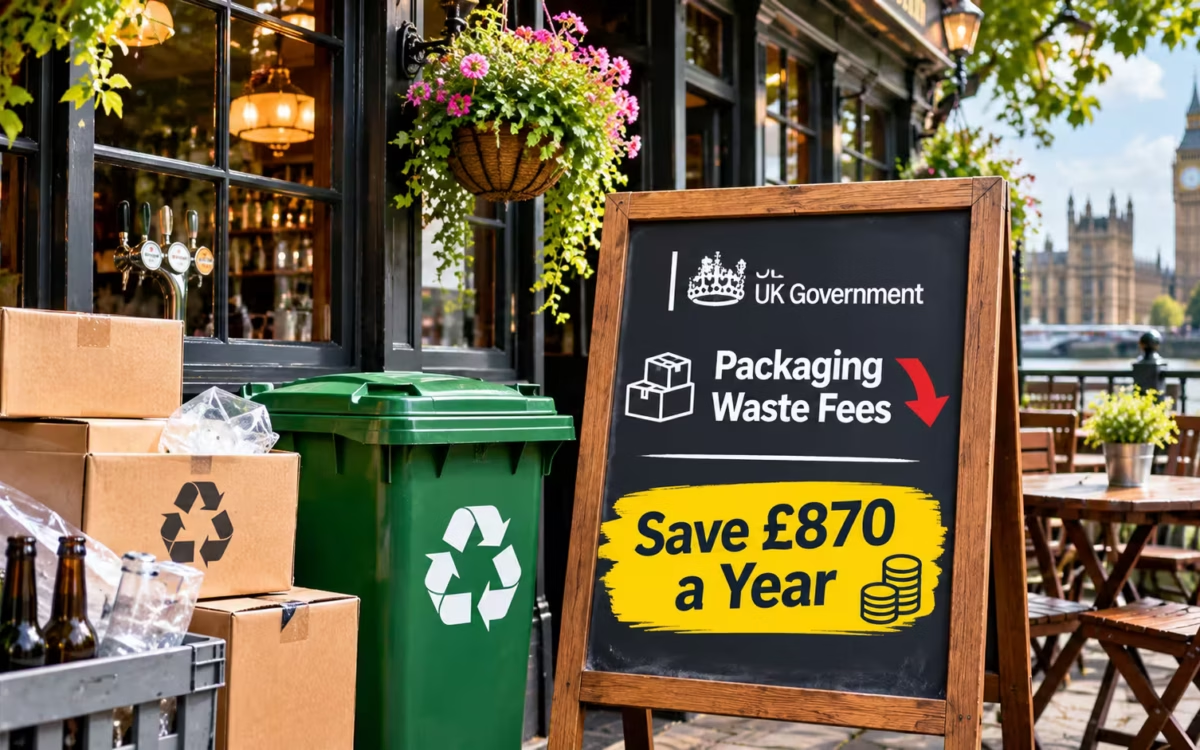
Table of Contents
The UK Government has announced changes to packaging waste fees that could save pubs up to £870 annually, following growing pressure from brewers and hospitality businesses over the cost of recycling glass bottles.
The Department for Environment, Food and Rural Affairs (Defra) confirmed on 11 November 2026 that glass drinks containers supplied directly by producers to pubs, restaurants and other licensed hospitality venues will be exempt from Extended Producer Responsibility (EPR) fees from April 2027.
The decision addresses complaints that pubs have effectively been paying twice to recycle the same glass packaging, with charges passed through the drinks supply chain despite venues already paying commercial waste contractors for collection.
Under the announced changes, businesses could save up to 6p per beer bottle and 10p per wine bottle. Government estimates suggest that a pub selling 10,000 beer bottles and 3,700 wine bottles annually could save as much as £870.
The move comes as hospitality operators face sustained financial pressure from wages, energy bills, business rates and other operating expenses.
The British Beer and Pub Association (BBPA) previously estimated that double charging under the packaging system was costing the sector approximately £50 million annually.
Although ministers expect the reforms to provide significant relief, industry representatives have warned that thousands of leased and tenanted pubs could miss out unless the eligibility rules are widened.
Why Is the Government Changing Packaging Waste Fees for Pubs?
The Extended Producer Responsibility scheme was designed to make businesses placing packaging on the market contribute towards its disposal and recycling costs.
Rather than leaving local authorities and taxpayers responsible for managing all household packaging waste, the policy transfers more of that financial responsibility to producers.
However, a significant problem emerged for pubs and hospitality venues that already pay private contractors to manage their commercial waste.
Packaging such as glass bottles could attract EPR costs at the producer level while pubs separately paid for the collection and recycling of the same materials. Those producer charges could then be reflected in wholesale drinks prices.
The BBPA argued that this arrangement effectively imposed duplicate recycling costs on businesses operating in an already challenging financial environment.
In August 2026, the association warned that the disputed charges could cost pubs around £250 million over the government’s parliamentary term if no action was taken.
The latest announcement follows those warnings and growing concerns about the impact of packaging costs on domestic glass manufacturers.
Environment Secretary Dame Angela Eagle said:
“We’ve listened to industry and hospitality businesses and are stepping in to reduce the fees for the most recyclable packaging.”
The minister said the changes would support British businesses while preserving the government’s wider objective of reducing packaging waste.
Alongside the hospitality exemption, ministers have announced plans to review how packaging fees are calculated.
The proposed approach would reduce charges on easily recyclable materials, including glass and paper, while increasing the relative cost of packaging that is more difficult to recycle, such as certain plastics.
Defra estimates that these wider changes could cut fees for the most recyclable packaging by up to 40% annually.
However, the 40% reduction remains a potential outcome of further reforms rather than a confirmed discount applying to every packaging producer.
Pub Industry Welcomes Changes but Warns Thousands Could Miss Out
The announcement has been welcomed by the British Beer and Pub Association, which has repeatedly called for the government to address the financial burden associated with packaging waste.
Emma McClarkin, Chief Executive of the British Beer and Pub Association, described the decision as welcome progress.
“The direction of travel will be warmly welcomed”
McClarkin nevertheless stressed that ministers must consider the combined effect of packaging regulation on the long-term financial sustainability of pubs and brewers.
She warned that approximately 12,000 publicans operating leased and tenanted pubs as small and medium-sized enterprises must also benefit from the reforms.
According to the association, more than a quarter of Britain’s pubs could otherwise fail to benefit equally.
The concern centres on how drinks reach individual venues. The announced exemption specifically covers glass containers sold directly by producers to licensed hospitality businesses.
Pubs purchasing through wholesalers or other intermediaries may not receive the same treatment unless additional arrangements are introduced.
This distinction could be particularly important for smaller independent operators that lack the purchasing arrangements of large pub groups.
McClarkin also indicated that the changes could ease cost pressures on British brewers by tens of millions of pounds.
The financial benefit for individual pubs will depend on their purchasing arrangements, the quantity of bottled drinks sold and whether lower packaging costs are passed through by suppliers.
For London hospitality businesses, where commercial rents, staffing costs and other overheads can already place pressure on margins, any reduction in supply-chain expenses could provide some additional financial breathing room.
However, the announcement does not guarantee an immediate fall in wholesale drinks prices or the amount customers pay at the bar.
The British glass industry has also welcomed the reforms.
Nick Kirk, Executive Director of British Glass, said:
“The proposed changes begin to address some of the unintended consequences of pEPR and better recognise the environmental benefits of glass.”
Kirk said further action was still needed to provide confidence for glass manufacturers considering investment, production and employment decisions.
British Glass has argued that a system based heavily on packaging weight can disadvantage glass compared with lighter materials, even where the glass can be recycled repeatedly.
Manufacturers have raised concerns that these costs could encourage businesses to move towards alternative materials and weaken demand for domestically produced glass containers.
The latest reforms are therefore intended to support both the hospitality industry and Britain’s wider manufacturing supply chain.
Andy Bagnall, Director General of the British Soft Drinks Association, also welcomed the action on double charging as an important first step.
He said the industry remained committed to effective recycling arrangements but wanted further work on the treatment of packaging supplied indirectly to hospitality businesses.
The announcement comes alongside separate Trade Remedies Authority investigations involving glass container imports from China and Turkey.
A provisional anti-dumping measure on certain Chinese-origin imports was imposed on 9 September 2026, while the relevant trade investigations remain ongoing.
When Will the New Pub Packaging Waste Rules Take Effect?
The exemption for qualifying glass drinks containers is scheduled to begin in April 2027, meaning pubs should not expect the announced savings to appear immediately.
Further changes to the wider packaging fee framework are also being developed.
In December 2026, the government plans to launch a call for evidence examining how businesses could increase their reuse of packaging and reduce unnecessary waste.
PackUK is then expected to begin another call for evidence in early 2027 concerning manufacturers’ packaging fees, including how charges could better reflect recyclability.
The government has maintained that producers must continue contributing towards packaging disposal costs.
According to Defra, approximately £1.4 billion has already been provided to councils through the EPR scheme to improve recycling services.
The policy is therefore being revised rather than abandoned.
For pub operators, the practical priority will be understanding whether their glass purchases qualify for the new exemption and whether suppliers reduce their charges accordingly.
Businesses buying through wholesalers may need to monitor the development of additional arrangements for indirect supply.
Operators should also distinguish between the announced EPR exemption and their existing commercial waste collection agreements. The changes do not automatically cancel private waste collection charges.
For Britain’s pub industry, the government’s intervention represents a potentially valuable reduction in operating costs after months of criticism over packaging fees.
However, the eventual financial benefit will depend on the final rules, the treatment of independent and tenanted pubs, and how quickly savings reach businesses through the drinks supply chain.
With implementation scheduled for April 2027, the coming months will determine whether the reforms deliver meaningful relief across the wider hospitality sector or primarily benefit businesses purchasing directly from producers.
“Pubs could save up to £870 a year under the Government’s new glass recycling fee exemption from April 2027, but thousands of independent and tenanted pubs risk missing out unless the rules are extended to cover drinks supplied through wholesalers.”
— Adam, Londoner Editorial
About the Journalist
Adam reports on London news, events and local developments. His coverage includes festivals, exhibitions, public announcements, community stories and important updates affecting people across the city. He aims to provide timely and accessible reporting on what is happening in London.