Meghan Markle Princess Diana Jewelry: The Heirlooms Keeping Her Memory Alive
 Published By
Lucy
Published:
Updated:
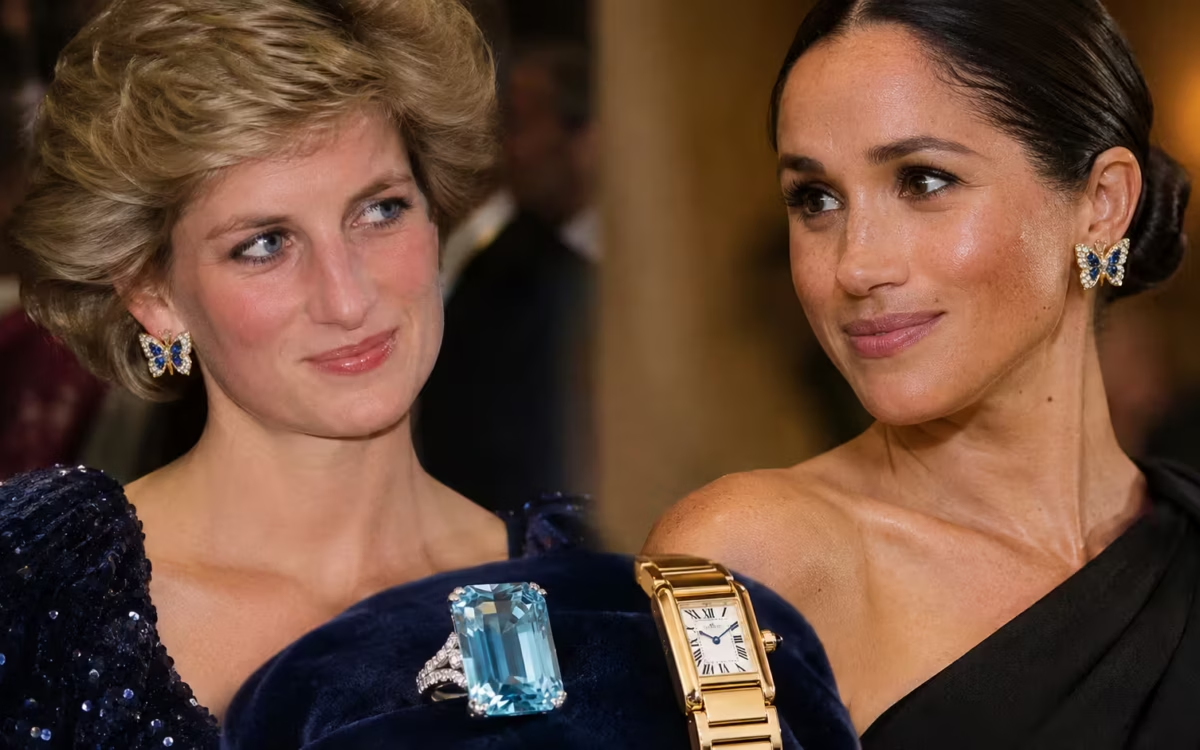
Table of Contents
Meghan Markle’s connection to Princess Diana’s jewellery returned to the spotlight in August 2026 when the Duchess of Sussex wore her late mother-in-law’s butterfly earrings at a Canadian charity gala.
The appearance offered another reminder that some of Diana’s most recognisable personal treasures have continued to be worn almost three decades after her death.
Meghan and Prince Harry attended the David Foster Foundation’s 40th anniversary celebration in Victoria, British Columbia, on 7 August.
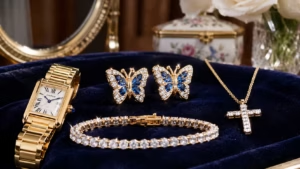
Wearing a black, one-shouldered gown by Canadian designer Greta Constantine, Meghan selected diamond-and-sapphire earrings once worn by Diana. Their delicate butterfly design carried a history stretching back to the 1980s.
The choice was noticed because Meghan has repeatedly brought Diana’s jewellery into important moments of her own life.
From her wedding reception at Windsor to international charitable visits, the pieces have appeared at occasions that matter personally to the Sussexes.
Yet the collection is not simply a wardrobe of expensive royal accessories. Each item has a documented history, and its reappearance can connect two different generations of women whose public lives have been watched intensely.
Understanding those connections also means separating confirmed ownership and appearances from speculation about hidden messages.
The Aquamarine Ring and Engagement Diamonds That Connect Two Generations
Perhaps the most memorable piece is Diana’s large aquamarine cocktail ring, which Meghan wore while leaving Windsor Castle for her wedding reception on 19 May 2018.
Against her white Stella McCartney evening dress, the pale blue gemstone became one of the defining images of the celebration.
Diana had commissioned the ring from Asprey in 1996, after her divorce from the then-Prince Charles. Its central aquamarine was reportedly given to her by her friend Lúcia Flecha de Lima.
The ring became associated with a period when Diana was establishing a more independent public identity, making it particularly evocative when Meghan wore it at the beginning of married life.
That chapter also included Diana’s private relationship with heart surgeon Hasnat Khan, when she was trying to protect some aspects of her personal life from relentless attention.
The aquamarine ring remains a visible reminder of those final years rather than merely another royal wedding accessory.
Meghan subsequently wore it during the Sussexes’ 2018 visit to Tonga and at the Ripple of Hope awards in New York in December 2022. Although often labelled Diana’s “divorce ring”, that description is a popular nickname, not an official title.
An even more personal link appeared before the wedding. When Harry proposed in 2017, he designed Meghan’s three-stone engagement ring with a central diamond sourced from Botswana and two smaller diamonds from Diana’s collection.
During their engagement interview, Harry explained that including his mother’s stones was intended to make her part of the couple’s journey.
That distinction matters. The engagement ring was newly designed for Meghan, while the aquamarine was an existing piece worn by Diana herself. Both provide a connection to Harry’s mother, but they tell different stories about remembrance and inheritance.
Butterfly Earrings, Cartier Jewellery and a Necklace With Royal History
The butterfly earrings seen in Canada in August 2026 were hardly new to Meghan’s collection. Diana had worn the gold, diamond and blue-stone design during a visit to British Columbia in 1986.
Meghan first publicly wore them during the Sussexes’ Australian tour in October 2018, shortly after her pregnancy with their son Archie was announced.
The same earrings appeared again during Meghan’s 2024 visit to Colombia, demonstrating that she has not reserved them solely for formal royal occasions.
Their Canadian return was particularly fitting because of Diana’s earlier connection to the country, although Meghan has not publicly identified that parallel as the reason for her choice.
Another inherited accessory is Diana’s gold cuff bracelet, decorated with blue gemstones. Meghan displayed it during the 2018 Australian tour and later at events including a London charity performance and the 2022 NAACP Image Awards.
Its understated shape makes it easy to recognise in photographs without becoming the focus of an entire outfit.
Her Cartier pieces carry similar histories. Meghan has worn a diamond tennis bracelet previously photographed on Diana, including at a 1997 American Red Cross gala in Washington.
Meghan’s appearances with the bracelet include a 2018 state dinner in Fiji and subsequent formal engagements.
She has also regularly worn a gold Cartier Tank Française watch associated with Diana. This is distinct from the two-tone Cartier watch Meghan purchased for herself years before marrying Harry.
That difference is sometimes overlooked when photographs of her watches circulate online, but it is important when identifying which accessories actually belonged to her mother-in-law.
A more discreet tribute came in Nigeria in May 2024. At a reception for military families in Abuja, Meghan wore a delicate diamond cross necklace on a gold chain.
Reporting at the time identified it as another Diana piece gifted to her by Harry. Diana had herself visited Nigeria in 1990, giving the accessory an additional historical resonance.
Taken together, these appearances show a pattern of repeated use rather than a single ceremonial tribute. The jewellery has accompanied Meghan at weddings, awards, charity engagements and family milestones, each adding a new association to an older object.
Why Princess Diana’s Jewellery Still Matters to Meghan and Prince Harry?
Diana’s jewellery was always more than decorative. Her sapphire engagement ring, pearls, bracelets and statement stones became part of a public image that blended royal tradition with a recognisable personal style.
After her death in Paris in August 1997, those objects acquired another meaning as keepsakes for her sons.
Diana’s will expressed the wish that her jewellery should be available for William and Harry’s future wives to have or use.
That helps explain why pieces associated with her have subsequently been seen on both Catherine, Princess of Wales, and Meghan, although not every item’s transfer history has been publicly documented.
Catherine famously wears Diana’s sapphire engagement ring, while Meghan’s collection features different heirlooms. Those choices should not automatically be treated as evidence of a rivalry or a hierarchy of affection.
Discussions about Prince Harry and Kate Middleton’s relationship often focus on the wider family tensions, but jewellery alone cannot establish how relatives feel about one another.
Nor does wearing Diana’s belongings imply that Meghan represents the monarchy at an official event. The Sussexes ceased working as senior royals in 2020, a distinction also addressed in guidance concerning Prince Harry’s royal status.
A personal heirloom can carry family significance without changing constitutional responsibilities.
For Harry, who was 12 when his mother died, sharing these possessions provides a tangible way to introduce her memory into the life he has built with Meghan and their children.
For Meghan, who never met Diana, the pieces offer a connection that photographs and stories alone cannot provide.
Unlike jewellery reserved for palace ceremonies, these pieces have become familiar parts of Meghan’s personal wardrobe across countries, causes and circumstances.
The August 2026 gala demonstrated why public interest continues. The earrings were small compared with Diana’s grandest jewels, yet their appearance connected a Canadian charity event with a royal visit four decades earlier.
That continuity is what makes the jewellery compelling: familiar objects remain visible, while their place in the family’s story continues to evolve.
About the Journalist
Lucy reports on London’s boroughs and the capital’s sporting community. Her coverage includes council decisions, neighbourhood developments, community issues, football, tennis, cricket and major sporting events. She focuses on stories that connect local communities and highlight the people and organisations shaping London.