John Humphrys Documentary on Royal Family Questions the Future of Britain’s Monarchy
 Published By
Henry
Published:
Updated:
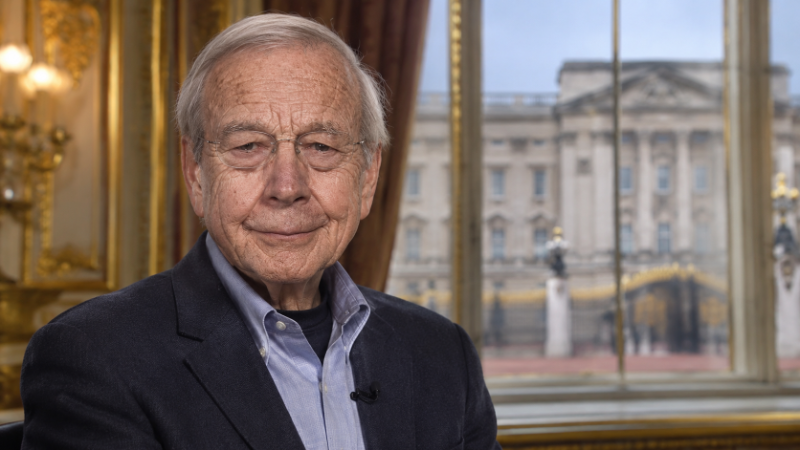
Table of Contents
Veteran broadcaster John Humphrys has reignited debate over the future of the British monarchy through his Channel 4 documentary, The Royals: Time to Go?, which examines whether the United Kingdom should continue with a hereditary head of state or move towards an elected alternative.
Originally broadcast on 15 September 2026, the documentary explores royal finances, inherited privilege, public accountability and changing attitudes towards the Royal Family.
Humphrys, who spent nearly three decades presenting BBC Radio 4’s Today programme, argues that respect for individual members of the Royal Family should not prevent Britain from questioning the institution itself.
What Did John Humphrys Reveal in His Royal Family Documentary?
The documentary presents one of the more direct challenges to the British monarchy from a prominent British broadcaster in recent years.
Rather than concentrating exclusively on royal personalities and family disagreements, Humphrys examines the constitutional and financial foundations of the institution.
The former BBC presenter has long held republican views, which he traces back to his childhood in Cardiff.
His experiences meeting Queen Elizabeth II during his broadcasting career did not fundamentally change his belief that the position of head of state should be determined through democratic choice.
Speaking to BBC Radio Wales in September, Humphrys acknowledged that he admired King Charles III in several respects.
However, he maintained that British citizens should have the opportunity to choose their head of state rather than accept an individual selected through hereditary succession.
Throughout the programme, Humphrys speaks with both supporters and opponents of the monarchy, examining whether its traditional responsibilities could be performed under a different constitutional system.
Among those featured in the documentary were former Scottish First Minister Nicola Sturgeon, former Conservative Chancellor Jeremy Hunt and journalist Charles Moore, whose contributions brought different political and constitutional perspectives to the discussion.
Sturgeon raised concerns about the personal consequences of hereditary succession, particularly for younger members of the Royal Family who inherit responsibilities before they are old enough to make independent decisions about their futures.
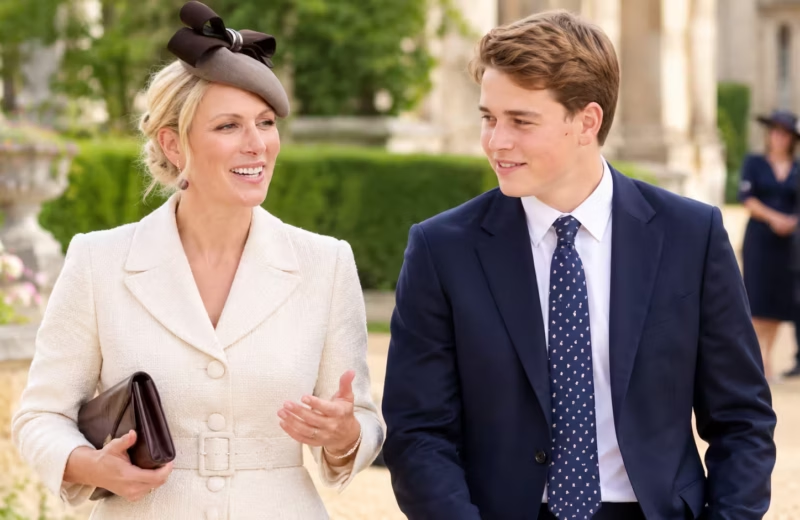
Prince George, who is second in line to the throne, represents a generation that will eventually inherit the expectations associated with royal service.
Although the close relationship between Zara Tindall and Prince George illustrates the importance of family support throughout his childhood, his position within the succession creates responsibilities considerably different from those experienced by other young members of the Royal Family.
The documentary also addresses the reputational damage surrounding Andrew Mountbatten-Windsor and questions whether the monarchy has demonstrated sufficient accountability when confronted with controversy.
Humphrys uses these issues to examine the broader relationship between the Crown and the British public.
His central argument is that an institution occupying such an important constitutional position should not be exempt from fundamental scrutiny simply because of its history.
However, the programme is presented from Humphrys’s republican perspective rather than as a neutral assessment of whether Britain should abolish the monarchy.
Royal Finances and Public Support Come Under Increasing Scrutiny
One of the most significant subjects explored in the John Humphrys documentary is the financial cost of maintaining the monarchy.
Questions surrounding public funding, royal residences and taxation have become increasingly prominent as British households continue to face substantial financial pressures.
According to financial statements published by the Royal Household in June 2026, the Sovereign Grant increased to £132.1 million for the 2025–26 financial year.
Approximately £67.5 million was allocated towards protecting and maintaining occupied royal palaces, including expenditure associated with the long-running refurbishment of Buckingham Palace.
Funding for 2026–27 was subsequently set at £137.9 million to support the final year of the palace’s major renovation programme. Annual funding is scheduled to decrease to £99.9 million under the next grant settlement covering 2027 to 2032.
The documentary questions whether these arrangements represent appropriate value for taxpayers and whether greater financial transparency could strengthen public confidence.
Buckingham Palace has already taken steps towards greater disclosure. In June 2026, it confirmed that King Charles had paid more than £30 million in personal taxes since his accession, marking the first public disclosure of the sovereign’s personal tax payments.
Nevertheless, critics argue that greater transparency should be a permanent requirement rather than a voluntary decision.
The financial debate also raises questions about the number of royal properties, their maintenance costs and how they should be used.
Buckingham Palace will remain an important ceremonial and administrative centre despite confirmation that the King and Queen will not make it their personal residence following its refurbishment.
Alongside financial scrutiny, the documentary examines whether the monarchy continues to command sufficient public support.
A Survation survey conducted in July 2026 for Channel 4 found that 28% of respondents supported abolishing the monarchy. Among people aged between 18 and 24, that figure increased to 38%.
More recent YouGov polling, conducted on 22 and 23 October 2026, found that 64% of Britons supported retaining the monarchy, compared with 25% who preferred an elected head of state.
The generational divide remained particularly noticeable, with 81% of respondents aged over 65 supporting the monarchy, compared with 46% of those aged between 18 and 24.
Although the surveys used different questions and methodologies, both highlight the challenge facing the Royal Family in maintaining its relevance among younger generations.
At the same time, senior royals continue to attract considerable public support. Prince William and Catherine, Princess of Wales, recorded favourable ratings of between 72% and 74% in the October YouGov survey.
Public attitudes towards individual royals therefore remain distinct from opinions about the constitutional institution they represent.
What Does the Documentary Mean for King Charles and the Future of the Royal Family?
The documentary arrives during an important period for King Charles III as he continues adapting the monarchy following the death of Queen Elizabeth II in September 2022.
The King’s approach has involved modernising established practices while maintaining royal traditions and the ceremonial responsibilities associated with the Crown.
Queen Camilla’s influence on King Charles has also become increasingly significant as the couple balance their public responsibilities with the challenges surrounding the wider Royal Family.
Supporters of the monarchy argue that the institution provides constitutional stability, diplomatic influence and a politically neutral figurehead capable of representing Britain independently of changes in government.
Royal engagements also provide opportunities to promote charitable organisations, environmental initiatives, British businesses and international partnerships.
The recent example of Prince William driving an electric rickshaw in Mumbai during an official visit to India illustrates how contemporary royal engagements can draw international attention to environmental innovation and sustainable development.
However, republican campaigners maintain that diplomatic and ceremonial responsibilities could equally be performed by an elected president.
Humphrys’s documentary challenges the assumption that Britain’s international reputation, tourism industry and national identity necessarily depend on maintaining a hereditary monarchy.
The programme also raises questions about the distinction between royal family membership and official public service.
The continuing status of Prince Harry and Meghan Markle as non-working royals demonstrates how the institution can maintain family connections while establishing boundaries around official responsibilities.
For Prince William, the eventual transition to the throne will bring further expectations concerning transparency, accessibility and the relationship between the monarchy and younger generations.
Nevertheless, the documentary does not signal an imminent constitutional change. Abolishing the monarchy would require substantial political agreement, parliamentary legislation and constitutional reform involving numerous arrangements currently connected to the Crown.
With a majority of Britons continuing to favour the existing system, there is currently no clear public mandate for replacing the King with an elected president.
The significance of John Humphrys’s royal family documentary lies in its challenge to the assumption that the monarchy’s future is guaranteed.
While King Charles and the Royal Family continue to command substantial public support, maintaining that position may increasingly depend on financial accountability, meaningful public service and the institution’s ability to respond to changing social expectations.
For Britain, the debate is ultimately about whether centuries of royal tradition can remain compatible with the democratic principles and evolving priorities of modern society.
“While King Charles and the Royal Family continue to command substantial public support, maintaining that position may increasingly depend on financial accountability, meaningful public service and the institution’s ability to respond to changing social expectations.”
— Henry, Londoner Editorial
About the Journalist
Henry is the editorial head and lead author at Londoner. He oversees the publication’s editorial direction, article quality, source verification and corrections process. He also reviews major stories before publication to ensure they meet Londoner’s standards for accuracy, fairness and transparency.