UK COP31 Climate Outcome Stance: Britain Rejects Weak Deal As Global Climate Talks End Without Consensus
 Published By
Henry
Published:
Updated:
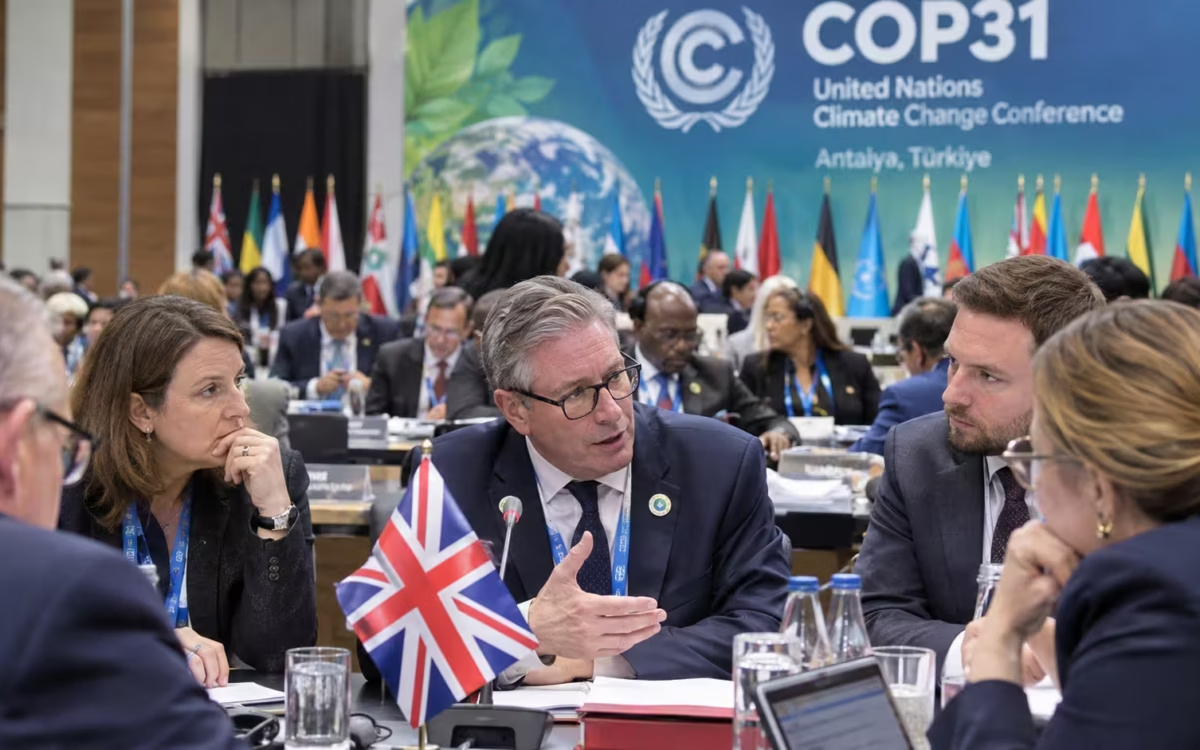
Table of Contents
The UK has refused to support the proposed COP31 climate agreement, arguing that its failure to address fossil fuels undermines global climate ambitions, despite progress on clean energy, climate finance and adaptation.
The United Kingdom has taken a firm stance against the proposed climate agreement at COP31 after international negotiations in Antalya, Türkiye, ended without consensus on Sunday, 22 November.
The British government joined the European Union and several climate-vulnerable nations in rejecting the proposed Antalya Pact, raising concerns that the agreement failed to adequately address the transition away from fossil fuels at a time when global temperatures are approaching critical thresholds.
In an official statement released on 22 November, the Department for Energy Security and Net Zero said the proposed agreement “moves us backwards on the science when we must accelerate implementation.”
The government maintained that accepting a weakened agreement could undermine previous international climate commitments, particularly those established under the Paris Agreement.
The outcome followed nearly two weeks of negotiations involving more than 190 countries, with discussions extending two days beyond their scheduled conclusion as disagreements over fossil fuels, emissions reductions and climate finance prevented an overarching deal.
However, the UK has stressed that the failure to adopt the Antalya Pact does not represent a withdrawal from international climate cooperation or a reversal of Britain’s domestic net zero commitments.
Why Did the UK Reject the COP31 Climate Agreement?
The central dispute at COP31 concerned the removal of explicit references to fossil fuels from the proposed final agreement.
Several fossil fuel-producing nations resisted stronger language, while the UK and its allies argued that an agreement failing to acknowledge the primary cause of global warming would represent a significant diplomatic setback.
The proposed pact also failed to include a clear commitment towards the proposed $120 billion climate adaptation finance target, adding to frustration among developing countries seeking greater financial support.
The disagreement comes three years after COP28 in Dubai established an international commitment to transition away from fossil fuels in energy systems.
Professor Ian Bateman of the University of Exeter welcomed the decision by Britain and its international partners to reject the proposed agreement.
“The UK, EU and allies that rejected the proposed Highway to Hell deal are to be congratulated,” he said in comments published by the university on 22 November.
The UK government has identified several priorities for international cooperation over the coming year, including accelerating renewable energy adoption, protecting forests and oceans, improving access to adaptation finance and reforming the international climate negotiation process.
Ministers have also acknowledged that the world is heading towards an overshoot of the 1.5°C global warming threshold, reinforcing the need for faster emissions reductions alongside investment in climate resilience.
According to the government’s assessment, existing national climate commitments currently put the world on course for approximately 2.6°C to 2.7°C of warming, compared with around 4°C before the Paris Agreement was adopted in 2015.
Although this represents long-term progress, it remains considerably above internationally agreed temperature ambitions.
COP31 Delivers Clean Energy Progress Despite Diplomatic Deadlock
Despite the absence of an overarching agreement, the summit delivered several individual climate outcomes.
In its official assessment published on 23 November, the United Nations Framework Convention on Climate Change (UNFCCC) confirmed progress in areas including electrification, climate finance, adaptation and support for workers and communities affected by the transition to cleaner energy.
One of the most significant developments was the international electrification initiative, which aims to increase electricity’s share of final global energy consumption to 35% by 2035.
Countries representing approximately half of the global economy supported the ambition or indicated their intention to achieve it earlier.
The wider electrification programme involves 150 countries, 37 cities and more than 260 businesses, collectively generating annual revenues exceeding $4 trillion.
Negotiators also agreed to extend an international just transition work programme for another three years, helping countries manage the economic and social consequences of decarbonisation.
Britain backed the electrification pledge while advancing international partnerships to reduce methane emissions, including cooperation with Nigeria.
Earlier in the summit, Prime Minister Andy Burnham announced UK support for an initiative aiming to mobilise £5 billion in new private finance for clean energy projects worldwide.
The initiative is intended to draw on Britain’s financial expertise, including the City of London’s ability to mobilise private investment for major infrastructure and energy projects.
The £5 billion figure represents a financing ambition rather than money already secured or an immediate government spending commitment.
Climate Scientists Warn Against Further Delays
Climate experts have expressed concern that continued disagreements between governments could widen the gap between scientific recommendations and political action.
Professor Friederike Otto, Professor of Climate Science at Imperial College London’s Grantham Institute, argued that rejecting inadequate agreements may be preferable to accepting weaker commitments. However, she cautioned against repeated diplomatic failures.
“It is very important that ‘no deal’ does not become routine,” she said in a reaction published by the Science Media Centre on 23 November.
Professor Otto also argued that countries including Britain and Germany must demonstrate leadership through their domestic energy and transport policies.
Meanwhile, Professor Richard Betts of the University of Exeter highlighted the urgency of limiting the extent of global temperature overshoot.
His assessment stressed that governments must accelerate the reduction of fossil fuel emissions while preparing communities and ecosystems for climate impacts that are already unavoidable.
In a separate analysis published by University College London on 23 November, Professor Mark Maslin, Professor Priti Parikh and Dr Simon Chin-Yee identified disagreements over fossil fuels as a fundamental reason behind the breakdown in negotiations.
Their assessment highlighted the influence of fossil fuel-producing economies and the difficulties of securing meaningful international commitments through a consensus-based system.
UN Climate Change Executive Secretary Simon Stiell also acknowledged the need to modernise the international negotiation process.
“The world cannot afford a repeat of this moment,” Stiell told delegates during the closing session on 22 November.
He nevertheless emphasised that international climate cooperation has previously overcome major setbacks and that the progress achieved through individual initiatives should not be overlooked.
London Faces £25 Billion Climate Risk as UK Maintains Net Zero Commitments
The consequences of the COP31 deadlock are particularly relevant to London, where extreme temperatures are creating growing economic, environmental and public health challenges.
According to analysis published by City Hall on 11 November, continued heatwaves could cost London more than £25 billion in lost productivity over the next decade.
The capital’s heatwaves during 2026 alone were estimated to have caused approximately £2.5 billion in productivity losses.
Mayor of London Sadiq Khan used COP31 to call for greater international action and investment to protect urban communities from rising temperatures.
The figures underline the potential financial consequences of delayed climate action, particularly for businesses, transport networks, healthcare providers and employees working in temperature-sensitive environments.
Dr Tom Coffey OBE, Mayoral Health Adviser and a London GP, also highlighted the public health implications ahead of the summit.
“Extreme heat now presents the greatest risk to health from climate-change in the UK,” he said.
London’s climate adaptation priorities include improving building resilience, increasing urban green spaces, reducing flood risks and preparing public services for more frequent periods of extreme heat.
The Mayor continues to pursue London’s ambition of becoming a net zero-carbon city by 2030, while the UK government remains committed to its legally binding national net zero targets.
The government has confirmed that the COP31 outcome will not change its domestic climate commitments, meaning existing clean energy and emissions reduction policies remain in place.
Britain Looks Ahead to COP32 and Its 2027 Climate Agenda
Attention is now turning towards COP32, which is scheduled to take place in Addis Ababa, Ethiopia, in November 2027.
The UK government has pledged to continue working with international partners throughout the coming year to develop stronger climate commitments and improve the effectiveness of future negotiations.
Britain’s upcoming G20 presidency also presents an opportunity to advance discussions on energy security, climate investment and international cooperation.
However, the absence of an overarching agreement in Antalya means several major issues remain unresolved, particularly the pace of the transition away from fossil fuels and the adequacy of financial support for climate-vulnerable countries.
The next round of international negotiations will also contribute to the second global stocktake under the Paris Agreement, which is scheduled to conclude at COP33 in 2028.
The process will assess collective progress and inform future national climate commitments.
For Britain, the challenge will be demonstrating that its diplomatic stance is supported by measurable domestic progress, investment in clean infrastructure and effective international partnerships.
While the UK COP31 climate outcome stance reflects the government’s determination not to accept weakened international commitments, the coming year will test whether that position can translate into stronger global cooperation and meaningful emissions reductions.
The failure to secure the Antalya Pact has exposed deep divisions within international climate diplomacy.
Yet with rising economic costs, increasingly severe weather and mounting scientific warnings, pressure on governments to deliver tangible results ahead of COP32 is unlikely to diminish.
“Britain's rejection of the COP31 climate agreement highlights the growing divide between global climate ambitions and political action, as rising temperatures and economic risks demand urgent international cooperation.”
— Henry, Londoner Editorial
About the Journalist
Henry is the editorial head and lead author at Londoner. He oversees the publication’s editorial direction, article quality, source verification and corrections process. He also reviews major stories before publication to ensure they meet Londoner’s standards for accuracy, fairness and transparency.