HMRC 16 To 19 Education Benefits: Parents Face 31 August Child Benefit Deadline
 Published By
Jermaine
Published By
Jermaine
Published:

Table of Contents
Parents of teenagers continuing their education after GCSEs are being urged to check their Child Benefit before the end of August, as HM Revenue and Customs warns that payments could automatically stop for families who fail to confirm their child’s plans.
The latest HMRC 16 to 19 education benefits update affects families with teenagers moving into qualifying further education or approved training. HMRC says parents whose children are starting a new eligible course in September must extend their Child Benefit claim by 31 August 2026 if they want payments to continue without interruption.
The warning comes immediately before GCSE results day on 20 August 2026, when hundreds of thousands of young people are expected to confirm whether they will enter sixth form, college, training or another post-16 route.
HMRC said more than 372,000 parents had already extended their claims digitally ahead of the deadline. Approximately 1.5 million parents have also been sent reminder letters during 2026.
What Has HMRC Announced About Benefits for 16 to 19-Year-Olds?
Child Benefit does not necessarily end when a teenager turns 16.
Parents can continue receiving it where their child remains in qualifying full-time non-advanced education or approved unpaid training. However, HMRC must know about the teenager’s plans.
For teenagers starting a new qualifying course or approved training programme in September 2026, parents generally need to update HMRC by 31 August. If they do not, Child Benefit can stop automatically after that date.
Parents can normally update the claim through the HMRC app or the online Child Benefit service. Families who received an HMRC letter may also be able to use the QR code included in it to reach the official digital service.
Importantly, parents whose teenager is already partway through a course that has previously been reported to HMRC do not need to provide the same information again simply because another academic year is beginning.
How Much Child Benefit Can Parents Receive in 2026?
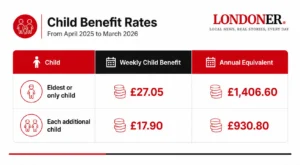
Child Benefit rates increased from 6 April 2026.
For the 2026/27 tax year, the weekly rates are:
| Child | Weekly Child Benefit | Annual Equivalent |
| Eldest or only child | £27.05 | £1,406.60 |
| Each additional child | £17.90 | £930.80 |
That means a household with an eligible teenager could lose more than £1,400 a year for an eldest or only child if their continuing education is not correctly reported to HMRC.
Child Benefit is normally paid every four weeks into the claimant’s bank account.
Who Can Continue Getting Child Benefit Between 16 and 19?
Parents can normally continue receiving Child Benefit if their child is under 20 and remains in qualifying education or training.
For Child Benefit to continue, the young person generally needs to have been accepted onto the qualifying course before turning 19 and must not be receiving Universal Credit themselves.
The important distinction is between non-advanced education, which can qualify, and advanced education such as a university degree, which normally does not.
Examples of Education That Can Qualify
HMRC’s current guidance includes:
- A levels or similar qualifications
- International Baccalaureate courses
- T levels
- GCSEs
- Scottish Highers
- NVQs and most vocational qualifications up to Level 3
- Home education
- Study programmes in England
- Pre-apprenticeships
Full-time education generally means more than an average of 12 hours a week of supervised study or course-related work experience. Different arrangements may apply where illness or disability makes fewer hours appropriate.
Which Courses Do Not Qualify?
Parents cannot normally continue receiving Child Benefit simply because their child remains a student.
Examples of education that does not qualify include certain forms of higher or advanced education, such as:
- University degrees
- Higher National Certificates in relevant advanced categories
- Higher National Diplomas at advanced level
- Certificates of Higher Education
- Some foundation or access-to-higher-education courses
Families should therefore check the actual qualification level rather than assuming that every college course automatically extends Child Benefit.
Do Apprenticeships Count for HMRC 16 to 19 Education Benefits?
This is one of the areas most likely to cause confusion.
A standard paid apprenticeship in England does not normally qualify for continued Child Benefit. HMRC also excludes training that forms part of an employment contract or is undertaken through an employer as part of a job.
Unpaid approved training can qualify, depending on the programme and location.
The distinction has attracted wider attention during 2026. The Social Security Advisory Committee warned in April that families can lose Child Benefit and parts of Universal Credit when a teenager leaves full-time education for an apprenticeship.
Its analysis found that the resulting reduction in household support can vary considerably depending on family circumstances and may create a financial disadvantage for some households choosing apprenticeships over classroom-based education.
Parents should therefore check the benefit implications before assuming an apprenticeship will be treated in the same way as sixth form or college.
What Do Parents Need to Do Before 31 August?
Parents whose teenager is starting a new qualifying course or approved training programme should confirm the details with HMRC.
The information required will normally include the young person’s education or training plans.
The quickest routes are through:
- The HMRC mobile app
- The official GOV.UK Child Benefit service
- The contact instructions included in an HMRC reminder letter
Only the person who actually claims Child Benefit can report the teenager’s education or training details to HMRC.
Families unable to use the digital services may also be able to update their claim by telephone or post using the information provided in their HMRC letter.
What Happens If Parents Miss the 31 August Deadline?
Child Benefit automatically stops on 31 August on or after a child’s 16th birthday where HMRC has not been told that the teenager is continuing in qualifying education or training.
Payments may also stop where the teenager leaves qualifying education or moves onto a type of course or training that does not meet the Child Benefit conditions.
Families should therefore not assume that payments will automatically continue because their child remains at school or college.
The education details need to be correctly recorded.
What Happens When a Teenager Finishes Their Course?
Parents also have a responsibility to tell HMRC if circumstances later change.
Where a young person completes their course, Child Benefit normally stops at the first relevant official stopping date after completion. These dates are:
| Stopping point | Date |
| Winter | End of February |
| Spring | 31 May |
| Summer | 31 August |
| Autumn | 30 November |
If a teenager leaves their course early, the claimant should tell HMRC rather than continuing to receive payments they may no longer be entitled to. Otherwise, an overpayment could arise and HMRC may seek repayment.
Can Universal Credit Continue for a 16 to 19-Year-Old in Education?
Child Benefit is not the only household support affected when a child reaches 16.
Families receiving Universal Credit may also continue receiving the extra amount for a child where a 16 to 19-year-old remains in qualifying full-time non-advanced education or approved unpaid training.
Current DWP rules say this can include GCSEs, A levels, T levels, Scottish Highers, SVQs and NVQs up to Level 3. The young person must generally have started, enrolled on or been accepted onto the education or training before reaching 19.
For eligible young people remaining in qualifying education or training, the Universal Credit child amount can continue until 31 August following their 19th birthday.
Universal Credit and Child Benefit are separate payments, so families receiving both should make sure relevant changes are reported through the appropriate system.
What Other Financial Support Is Available for 16 to 19-Year-Old Students?

Searches for HMRC 16 to 19 education benefits can be misleading because not every form of post-16 financial help is administered by HMRC.
Students in England may have access to separate Department for Education support depending on their circumstances.
16 to 19 Bursary Fund
The 16 to 19 Bursary Fund is intended to help students overcome financial barriers that might otherwise prevent them from continuing their education.
Support can include help with costs such as:
- Transport
- Books
- Equipment
- Specialist clothing
- Other essential education expenses
There are bursaries for defined vulnerable groups as well as discretionary bursaries awarded according to individual circumstances and the policies operated by schools or colleges.
Students generally need to speak directly to their school, sixth form or college about applying.
Free Meals in Further Education
Eligible students attending qualifying further education institutions may also receive free meals.
Eligibility depends on the student’s circumstances or qualifying benefits received by the student, parent or guardian, and an application normally needs to be made through the education provider.
Care to Learn for Young Parents in London
Young parents under the age of 20 may qualify for Care to Learn, which helps with childcare costs while they remain in education.
The current maximum available under the scheme can reach £195 per child per week in London, compared with £180 elsewhere, subject to the scheme’s eligibility requirements.
For London families dealing with high childcare and transport costs, checking these additional schemes alongside Child Benefit can therefore be particularly important.
Families preparing for the new academic year may also want to check the latest 16-17 Saver Railcard changes, which affect how long eligible young travellers can continue receiving discounted rail fares.
Does the High Income Child Benefit Charge Still Apply?
Continuing Child Benefit after age 16 does not remove the High Income Child Benefit Charge rules.
Where a Child Benefit claimant or their partner has adjusted net income above £60,000, the higher earner may become liable for some or all of the charge depending on their income.
HMRC advises affected families to check their position using the official Child Benefit tax calculator.
This means a household may still choose to maintain a Child Benefit claim even where some of the payment is subsequently recovered through the tax charge, depending on its circumstances.
Why Is the 2026 HMRC Deadline Important?
The latest reminder is particularly timely because the deadline falls only days after GCSE results.
Students receiving their results on 20 August 2026 may only then know whether they will attend sixth form, college, qualifying training or another pathway.
Parents subsequently have until 31 August to make sure HMRC has the necessary information where a new qualifying course begins in September.
With Child Benefit worth as much as £1,406.60 annually for an eldest or only child, overlooking the update could create a significant gap in household income.
For London households already managing high housing, travel and everyday living costs, checking the claim before the deadline could therefore make a meaningful difference to the family budget.
What Should Families Do Now?
Parents of teenagers receiving GCSE results or preparing to begin sixth form, college or approved training should check their Child Benefit position before the end of August.
The central point behind the latest HMRC 16 to 19 education benefits warning is straightforward: Child Benefit can continue beyond age 16, but it is not always automatic.
Families with teenagers starting qualifying education or training in September should ensure HMRC has the correct information by 31 August 2026. They should also check whether Universal Credit child support, the 16 to 19 Bursary Fund, free meals or other education assistance could apply.
With more than a thousand pounds of annual Child Benefit potentially at stake, checking the claim now can prevent an avoidable interruption when the new academic year begins.
Frequently Asked Questions
Does Child Benefit automatically continue after a child turns 16?
No. HMRC normally needs to be told when a teenager is continuing in qualifying education or approved training after 16.
What is the HMRC deadline for 16 to 19 education benefits in 2026?
Parents whose teenager is starting a new qualifying course or approved training in September should extend their Child Benefit claim by 31 August 2026.
Can parents claim Child Benefit for an 18-year-old at college?
Potentially, yes. Child Benefit can normally continue where the young person remains under 20 and is studying qualifying full-time non-advanced education, subject to the other eligibility rules.
Does an apprenticeship count as approved education?
A standard apprenticeship in England does not normally qualify for continued Child Benefit because it is connected with employment. Certain unpaid approved training programmes may qualify.
Does a teenager’s part-time job stop Child Benefit?
A part-time job does not automatically end Child Benefit where the young person remains in qualifying education. What matters is whether the education or training itself continues to meet HMRC’s conditions.
Can Child Benefit and Universal Credit both continue after age 16?
Yes, depending on the family’s circumstances and the young person’s education or training. They are separate benefits with their own eligibility and reporting rules.
What should parents do if their teenager changes course?
Changes should be reported promptly. Leaving qualifying education, switching to an ineligible course or beginning a paid apprenticeship can affect entitlement and failing to report a change could result in an overpayment.
About the Journalist
Jermaines covers crime, legal affairs and money-related stories for Londoner. His reporting includes police updates, court cases, consumer rights, personal finance and cost-of-living issues. He handles sensitive subjects carefully and clearly distinguishes confirmed facts from allegations, estimates and ongoing investigations.