Britain War With Russia? What The Latest UK-Moscow Escalation Actually Means
 Published By
Olivia
Published By
Olivia
Published:
Updated:
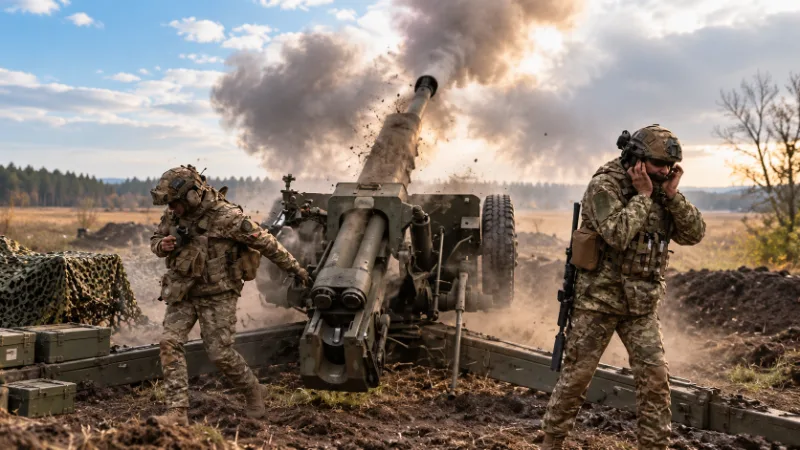
Table of Contents
Britain is not at war with Russia, but relations between London and Moscow have deteriorated sharply as the UK expands military support for Ukraine and Russia issues increasingly severe warnings over British involvement.
The latest escalation came on 18 September 2026, when Russia summoned Britain’s chargé d’affaires in Moscow, Danae Dholakia, to formally protest what the Russian Foreign Ministry described as a further increase in British weapons supplies to Ukraine.
Moscow accused London of becoming an accomplice to Ukrainian actions that Russia characterises as terrorism and war crimes.
Britain rejected that accusation, with a Foreign Office spokesperson describing the diplomatic summons as an attempt to distract attention from Russia’s invasion of Ukraine.
The development helps explain renewed online interest around searches such as “Britain war”, “Britain war with Russia” and “is Britain at war with Russia?”.
However, there is an important distinction between rapidly escalating hostility, military assistance to Ukraine and Britain actually becoming a direct party to the Russia-Ukraine war.
Defence Secretary Wes Streeting made the Government’s position explicit during a Commons statement on 10 September.
“The UK is not at war with Russia, nor do we seek confrontation with Russia.”
Streeting nevertheless said Britain and its allies are dealing with espionage, cyber attacks and increasingly confrontational military activity, while accusing Russia of repeatedly “probing” and “testing” Western countries.
That combination no declared or acknowledged direct war, but an increasingly hostile security environment is at the centre of the current debate.
Why Britain-Russia Tensions Are Rising?
Britain has become one of Ukraine’s major military supporters since Russia launched its full-scale invasion in February 2022.
The UK Government’s latest Ukraine support figures show commitments totalling approximately £25 billion, including around £16 billion of military support.
Britain has also committed to delivering 150,000 drones and 350 air-defence missiles during 2026, while more than 63,000 Ukrainian personnel have been trained in the UK through Operation Interflex.
On 8 September, Britain announced another £100 million air-defence package, including support for Patriot missiles alongside interceptors, artillery ammunition and drones intended to help Ukraine through the winter.
Moscow increasingly portrays that level of assistance as direct British involvement.
London rejects that interpretation and maintains that supplying weapons and training Ukrainian forces represents support for a country defending itself rather than British forces entering the conflict against Russia.
The dispute has now moved well beyond disagreements over sanctions.
Russia currently has no ambassador stationed in London following the departure of Andrey Kelin in July.
Moscow has denied suggestions that this amounts to a formal downgrading of diplomatic relations, but the absence of an ambassador has become another visible sign of how badly relations have deteriorated.
Reuters described bilateral relations as being in a dire state.
Londoner previously reported on the departure of Russian ambassador Andrey Kelin, including Moscow’s insistence that diplomatic ties had not formally been downgraded.
Britain has also summoned Russian diplomats.
On 3 September, the Foreign Office summoned Russia’s chargé d’affaires after an explosive-laden drone incident at Leipzig/Halle Airport in Germany which the British Government attributed to Russia.
The UK said it regarded the incident as part of a wider pattern of hostile activity.
Russia has disputed Western accusations surrounding several alleged sabotage and drone incidents.
That distinction remains important because attribution in the world of intelligence, sabotage and hybrid warfare is often more difficult than establishing responsibility for conventional military attacks.
Is Britain Actually at War With Russia?
At present, no.
The British Government does not consider the UK to be at war with Russia, and Britain has not declared war.
There is also a legal distinction between supporting one side in an armed conflict and becoming a party to that conflict.
Research published in the Leiden Journal of International Law argues that determining whether another state becomes a party to an international armed conflict depends heavily on factors such as whether its contribution is operationally connected to causing harm and whether it participates in decision-making surrounding coordinated military operations.
Supplying weapons does not therefore automatically settle the question.
That does not mean the risk of escalation can be dismissed.
Former MI6 chief Sir Alex Younger previously told Parliament that one of the difficulties in relations with Moscow was that Russia viewed the confrontation differently from Britain.
He said Russian leaders believed they were already engaged in a form of conflict with Western countries while Western governments did not regard themselves as being at war with Russia.
He described Russian operations as deliberately operating below the conventional threshold of warfare.
That so-called grey-zone or hybrid conflict can include cyber attacks, intelligence operations, sabotage, disinformation and interference with critical infrastructure without conventional forces openly attacking one another.
Military analyst Professor Michael Clarke has also warned that confrontations involving aircraft or drones could create particularly dangerous situations.
Discussing recent European security incidents, Clarke said countries may have to become prepared to intercept hostile drones, warning that the way individual confrontations are handled could determine whether a broader escalation follows.
Those comments are an expert assessment rather than evidence that Britain and Russia are inevitably heading towards war.
There is also growing attention on unexplained drone activity around British defence facilities.
Freedom of Information data reported by The Independent showed 340 drone-related security incidents at or close to Ministry of Defence sites in the year to August 2026, compared with 250 during 2025 and 126 the previous year.
Crucially, the Ministry of Defence has not publicly identified who was responsible for those incidents.
Former defence minister and Army captain Tobias Ellwood argued that the figures demonstrated vulnerabilities around military bases and critical infrastructure.
His attribution of many incidents to hostile states represents his assessment rather than a publicly confirmed conclusion from the MoD.
That distinction matters when assessing claims that Britain is already being attacked.
What Could Turn the Situation Into a Direct UK-Russia Conflict?
The most significant threshold would be direct armed hostilities between British and Russian forces.
An attack on UK territory or British military forces could also raise much wider questions about Britain’s NATO commitments.
Article 5 of the North Atlantic Treaty establishes the principle that an armed attack against one NATO member can be considered an attack against all members.
It does not mean every security incident automatically triggers a predetermined military response; NATO members determine what action they consider necessary in response to an armed attack.
Britain already maintains forces on NATO’s eastern flank and continues military surveillance activity around Europe.
At the same time, the Government’s stated position remains deterrence rather than initiating a conflict with Moscow.
Streeting told Parliament that Britain should be “alert to the Russian threat, but certainly not alarmed”, arguing that strengthening defence capabilities is intended to prevent aggression rather than make conflict inevitable.
The wider security environment nevertheless remains tense.
Britain told the Organisation for Security and Co-operation in Europe this week that Russian attacks against Ukraine intensified over the summer.
UK ambassador Neil Holland said Russia fired 460 missiles during July, including 195 ballistic and hypersonic missiles, while more than 2,800 jet-powered drones were launched during August.
Those figures relate to attacks on Ukraine rather than Britain, but they help explain why European governments are investing heavily in air defence and counter-drone capabilities.
The British Army itself is receiving new surveillance drones under programmes announced on 16 September.
The Ministry of Defence says a contract worth up to £400 million will introduce long-endurance AR5 surveillance aircraft, alongside more than 1,000 smaller drones being delivered through a separate £16 million programme.
The Bottom Line
Searches around “Britain war” are appearing against a genuinely serious deterioration in UK-Russia relations, but describing Britain as currently being at war with Russia would go beyond the established facts.
Russia has summoned Britain’s senior diplomat in Moscow over British weapons supplies to Ukraine. Britain continues to increase military support for Kyiv.
Both countries are exchanging increasingly severe accusations, while governments across Europe are becoming more concerned about cyber attacks, sabotage, drones and other activity below the threshold of conventional warfare.
Yet the British Government’s formal position remains unambiguous: the UK is not at war with Russia and says it does not seek such a confrontation.
The more precise description of the situation in September 2026 is therefore one of deep diplomatic hostility, extensive British support for Ukraine and heightened concern over hybrid threats but not a declared or confirmed direct Britain-Russia war.
What happens next will depend heavily on whether the confrontation remains below that military threshold or whether a future incident involving NATO territory, British forces or critical infrastructure produces a significantly different response.
About the Journalist
Olivia covers London life, culture and lifestyle for Londoner. Her work includes food, shopping, neighbourhood trends, attractions, local experiences and practical guides for residents and visitors. She focuses on engaging stories that reflect everyday life across the capital.