Iranian Hackers Shut Down UK Power Plant For Four Days In Major Cyber Attack
 Published By
Adam
Published By
Adam
Published:
Table of Contents
Iranian hackers shut down a UK power plant for four days in a major cyber attack, according to reports, raising fresh concerns over the vulnerability of Britain’s critical energy infrastructure to state-linked cyber threat
The incident took place in July 2026 and affected an unnamed small-scale energy generator. Hackers linked to Iran have been blamed for the attack, which left the facility offline for four days while operators worked to restore its systems.
Although the shutdown represents an unusually serious example of a cyber attack having a direct effect on physical UK energy infrastructure, the Government has stressed that the incident never threatened the wider electricity system.
The Department for Energy Security and Net Zero said the affected site was a small-scale generator and that Britain’s broader energy network remained secure throughout the incident.
What Happened in the UK Power Plant Cyber Attack?
The attack was first reported by The Telegraph on 22 August, with further details emerging over the following day.
According to the reports, hackers were able to interfere with systems at the unnamed generating facility sufficiently to force it offline. Staff then spent four days working to restore normal operations.
Officials have declined to identify the power plant, citing security concerns.
The affected facility was not one of Britain’s major power stations. The Government has instead described it as a small-scale energy generator, significantly limiting the immediate impact of its shutdown.
The Financial Times separately reported that the target was a relatively small gas-fired “peaker” plant. These facilities can be used to provide additional electricity during periods when demand rises sharply.
Despite the limited size of the generator, the ability of hackers to cause an operational shutdown is likely to concern security officials because it demonstrates how a successful cyber intrusion can move beyond data theft or website disruption and interfere with physical infrastructure.
Was the UK Power Grid at Risk?
There is currently no evidence that the attack placed Britain’s wider electricity supply at risk or resulted in widespread blackouts.
A spokesperson for the Department for Energy Security and Net Zero said the incident affected a small-scale generator and that there was no risk to the wider energy system.
The department also emphasised that the UK operates a highly resilient energy network and works with companies across the sector to protect infrastructure against security threats.
The National Cyber Security Centre, which is part of GCHQ and assists organisations dealing with significant cyber incidents, was also informed about the attack.
Reports suggest that the Government subsequently briefed energy companies and provided further security guidance following the breach.
There has been no suggestion that London suffered electricity disruption as a result of the incident, and officials have not disclosed where in Britain the generator is located.
Why Is the Iranian Hackers UK Power Plant Attack Significant?
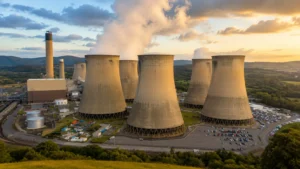
The importance of the incident lies less in the amount of electricity temporarily lost and more in what the attackers appear to have achieved.
Cyber attacks against UK organisations are common, but successfully forcing part of the country’s physical energy infrastructure offline marks a potentially significant escalation.
The incident is reported to be the first known case in which hackers affiliated with Iran have successfully forced a British power-generating facility to shut down.
That distinction makes the Iranian hackers shut down UK power plant story particularly significant for Britain’s cyber-security authorities.
The attack also comes as the National Cyber Security Centre warns that hostile states are increasingly using cyber operations as part of wider geopolitical competition.
NCSC chief executive Richard Horne said earlier in 2026 that the organisation was continuing to deal with an average of around four nationally significant cyber incidents each week.
He said that while cybercrime and ransomware remain major threats, the majority of nationally significant incidents being handled by the NCSC were now originating either directly or indirectly from nation states.
Why Are Iran-Linked Hackers Being Blamed?
The UK Government has not publicly released detailed technical evidence formally attributing the attack to the Iranian state.
However, multiple reports have described the perpetrators as hackers linked or affiliated with Iran.
The incident occurred during a period of heightened tensions between Tehran and Western governments.
Iran has previously been accused by Western governments and cyber-security agencies of carrying out or supporting cyber operations against foreign organisations and critical infrastructure.
The Guardian reported that the UK attack took place against a backdrop of tensions over Britain’s decision to permit the United States to conduct what were described as defensive operations involving British bases.
Iran’s Islamic Revolutionary Guard Corps had warned that bases used in attacks against Iranian territory could be regarded as legitimate targets.
However, the available public information does not establish that the UK power plant attack was directly ordered by the Iranian government.
Attack Came Amid Wider Infrastructure Cyber Threat
Reports of the British incident have also drawn comparisons with cyber attacks targeting infrastructure in the United States.
The UK power plant attack reportedly occurred around the same period as attacks against American water infrastructure.
Iran-linked hackers have previously been accused of targeting industrial control equipment used in essential services.
US authorities have previously attributed infrastructure compromises to an Iran-affiliated group known as CyberAv3ngers, including a 2023 campaign that compromised equipment across several infrastructure sectors.
Industrial systems can present an attractive target because they control real-world machinery rather than simply storing information.
That means a successful attack could potentially affect pumps, generators, electricity distribution equipment or other operational technology.
The British incident appears particularly notable because the cyber intrusion reportedly resulted in a physical generating facility being unable to operate for several days.
UK Had Already Warned Organisations About Iran-Linked Cyber Threats
The NCSC had already advised British organisations to review their cyber-security arrangements following escalating tensions in the Middle East.
In guidance issued earlier in 2026, the agency said Iranian state and Iran-linked cyber actors almost certainly retained at least some capability to conduct cyber operations.
Critical national infrastructure organisations were advised to consider their exposure, increase monitoring where necessary and review the security of systems accessible from outside their networks.
The NCSC also encouraged organisations to prepare for threats targeting industrial control systems and to use its Early Warning service to identify potential security issues affecting their networks.
The power plant incident is likely to reinforce those warnings across the UK’s electricity, water, transport and communications industries.
Government Tightening Cyber Rules for Energy Companies
The attack also comes as ministers move to strengthen cyber-security requirements across Britain’s critical infrastructure.
The Government has been developing new baseline cyber-resilience requirements for companies operating within the downstream gas and electricity sector.
Following a consultation, the Department for Energy Security and Net Zero and Ofgem confirmed plans to review how existing Network and Information Systems regulations apply to the energy industry and to establish baseline requirements across Ofgem-licensed organisations.
Wider reforms under the Cyber Security and Resilience framework would also increase reporting requirements for significant cyber incidents.
Government proposals include requiring certain operators to provide an initial notification of qualifying incidents within 24 hours and a fuller report within 72 hours, with the NCSC informed alongside the relevant regulator.
Ministers are also seeking powers allowing the Government to direct regulated organisations to take necessary and proportionate measures when an imminent or active cyber threat poses a national security risk.
Could Another UK Power Plant Be Targeted?
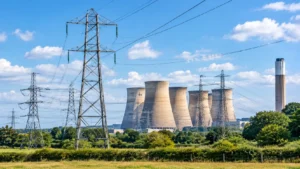
Cyber-security authorities cannot guarantee that another attempt will not take place.
Energy infrastructure is increasingly dependent on interconnected digital systems, remote monitoring equipment and industrial controllers, creating potential routes that attackers may attempt to exploit.
The challenge is particularly significant for older infrastructure, where equipment may have been designed and installed before modern cyber threats became a major national security concern.
However, the successful compromise of one small generator does not mean hackers could easily disrupt Britain’s entire electricity system.
The UK electricity network consists of numerous generators, transmission systems, distribution operators and resilience measures designed to prevent a single failure from bringing down the national system.
That appears to have worked in this case: the targeted generator remained offline for four days without placing the wider electricity supply at risk.
What Happens Next?
Investigations into the cyber attack are expected to focus on how hackers gained access, which systems were compromised and whether similar weaknesses exist elsewhere in Britain’s energy infrastructure.
Officials are unlikely to disclose many technical details publicly because doing so could expose vulnerabilities that other attackers might exploit.
Energy companies are nevertheless expected to review network access, industrial control equipment, external connections, security monitoring and incident-response procedures following the attack.
For the Government, the incident provides a real-world example of the growing overlap between cyber security, energy security and national security.
Britain avoided a wider electricity disruption this time, but the ability of suspected Iran-linked hackers to reportedly keep a UK generator offline for four days is likely to intensify pressure on energy operators and ministers to ensure that the country’s critical infrastructure can withstand increasingly sophisticated cyber attacks.
The immediate impact may have been limited, but the warning for Britain’s energy sector is considerably larger.
About the Journalist
Adam reports on London news, events and local developments. His coverage includes festivals, exhibitions, public announcements, community stories and important updates affecting people across the city. He aims to provide timely and accessible reporting on what is happening in London.