Portland Property Damaged By Lightning 2026: Homes Hit, Fire Breaks Out And Residents Evacuated
 Published By
Ben
Published:
Updated:
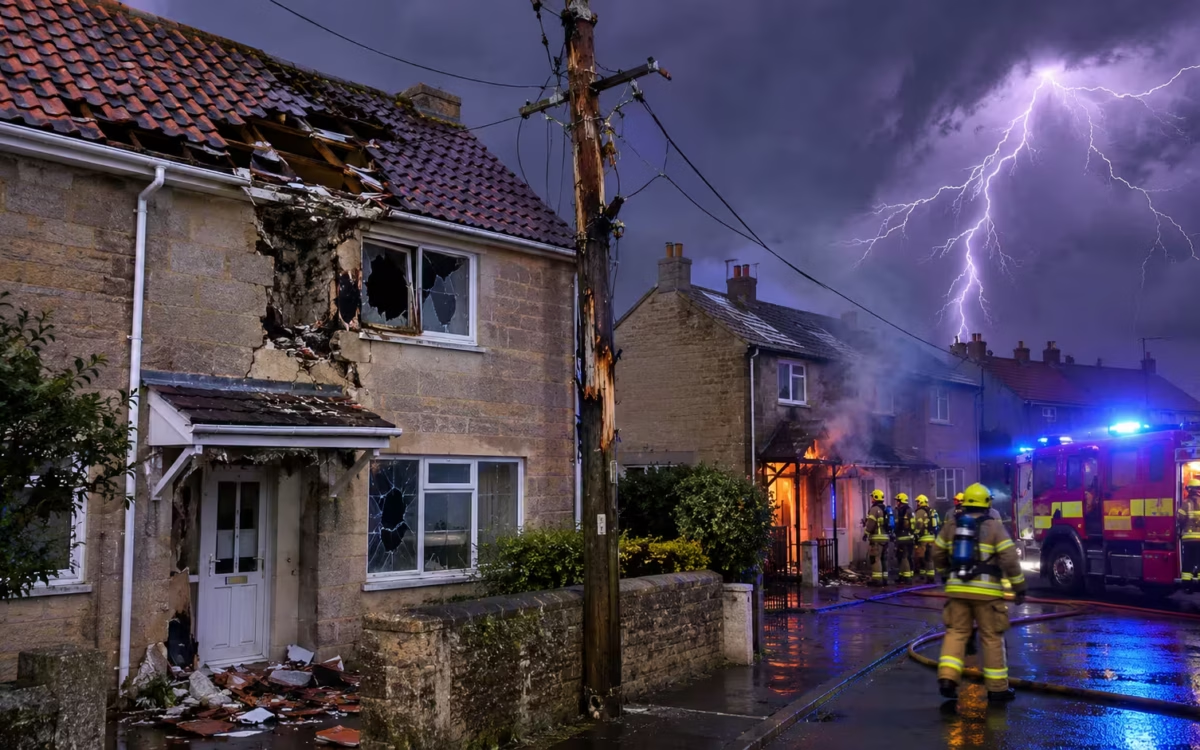
Table of Contents
A powerful lightning strike in Portland, Dorset, has caused serious damage to residential properties, sparked a house fire and forced four residents to evacuate their home. The incident occurred on Tuesday, 17 November 2026, during a thunderstorm that brought a dramatic flash of lightning to the coastal community.
Emergency services were called to Shepherds Croft at approximately 9.38 pm after reports of a property fire and damage to nearby homes. Firefighters discovered structural damage to one house, a fire at a second property and electrical damage affecting several others.
The Portland property damaged by lightning incident has raised concerns about household safety, electrical infrastructure and the dangers posed by sudden thunderstorms.
Although the destruction was significant, Dorset & Wiltshire Fire and Rescue Service confirmed that no casualties were reported.
What Happened During the Portland Lightning Strike on 17 November?
The incident began on Tuesday evening when a powerful lightning bolt struck the Shepherds Croft area of Portland, an island connected to the Dorset mainland.
According to Dorset & Wiltshire Fire and Rescue Service, the emergency call was received at 9.38 pm, following reports of a fire at a residential property.
Four fire crews attended the scene, including one from Portland, two from Weymouth and another from Dorchester. Police officers and ambulance crews also responded as the extent of the damage became clear.
The lightning strike hit a telegraph pole, with the effects spreading to neighbouring properties through electrical and communications infrastructure.
Residents described an exceptionally loud noise, with some initially believing an explosion had occurred.
Linda Hutton, whose home was affected, told the BBC:
“It was like a bomb going off. I’ve never heard a bang like it.”
She described feeling a sudden force from the impact, while electrical wiring and covers were damaged inside the house.
A camera at a holiday cottage near Portland Bill also captured the lightning strike, providing dramatic footage of the storm.
BBC Weather presenter Simon King explained that approximately 20 lightning strikes had been recorded offshore near Dorset and Portland during the unsettled weather.
Although most of the storm activity remained offshore, lightning can travel considerable distances from the centre of a thunderstorm, creating dangerous conditions even in places that escape the heaviest rainfall.
Homes Damaged as Firefighters Respond to Shepherds Croft
The lightning caused different types of damage to several properties, making the incident more complicated than a single house fire.
The fire service confirmed that one property had suffered structural damage severe enough to require specialist inspection.
Its Urban Search and Rescue team worked alongside building control officers to assess the building and determine whether it remained safe.
Four residents were evacuated, and the damaged property was cordoned off to prevent anyone entering a potentially dangerous area.
A second property suffered a fire in its porch. Firefighters extinguished the flames using a hose reel jet before conducting further inspections while wearing breathing apparatus.
Those checks found no additional fire.
Elsewhere in Shepherds Croft, lightning-related electrical damage affected sockets, internet routers and cabling. This demonstrated how a single strike could disrupt several neighbouring households without directly hitting every building.
John Hutton, another affected resident, described damage to telephone and internet connections, with visible black marks left on the walls.
The combination of structural damage, fire and electrical faults required several emergency services and technical specialists to coordinate their response.
The situation also demonstrates why the visible damage following a lightning strike may not reveal the full extent of the danger.
A building might appear relatively unaffected externally while its internal wiring, sockets or connected equipment have been damaged.
Electrical Safety First warns that lightning can produce dangerous surges, affecting connected appliances and electrical infrastructure beyond the original point of impact.
For affected homeowners, repairing visible damage is only part of the recovery process. Electrical inspections and confirmation that the property is structurally sound may also be necessary before normal occupation can resume.
The Portland incident is another example of how unexpected emergencies can place homes and essential infrastructure at risk, much as the earlier London power outage affecting Liverpool Street demonstrated the disruption caused when electricity supplies are interrupted.
Why Did 11 Portland Homes Lose Electricity After the Lightning Strike?
One of the most significant consequences of the incident was the interruption to local electricity supplies.
Scottish and Southern Electricity Networks (SSEN) disconnected affected properties while engineers assessed the safety of the electrical infrastructure.
According to BBC reporting on Wednesday, 18 November, 11 homes remained without electricity following the lightning strike.
The network operator explained that internal wiring and appliances needed to be checked before the properties could safely be reconnected.
This precaution was particularly important because the lightning had damaged electrical sockets, routers and cabling in several houses.
Lightning generates an extremely powerful electrical discharge.
When it strikes a telegraph pole, overhead line or nearby infrastructure, electrical surges can travel through connected systems and potentially damage equipment some distance from the original impact.
Such damage is not always immediately visible.
An appliance may appear intact while its internal components have been affected. Wiring and connections can also become unsafe, increasing the risk of electric shock or fire.
For this reason, restoring electricity after severe lightning damage is not simply a matter of switching the supply back on.
Engineers must establish that the network and affected properties can operate safely.
The Portland outage also highlights an important distinction between localised electrical failures and fears surrounding a national electricity shutdown.
Recent discussion about whether the UK could experience a widespread blackout has attracted attention, but weather-related incidents such as this are examples of local infrastructure disruption rather than evidence of a nationwide supply problem.
For residents affected by the Portland lightning strike, the immediate priorities remain safe reconnection, property inspections and arranging repairs.
As of the reports available on 19 November, there was no independently confirmed final timetable establishing when every affected property would have its electricity restored.
What Does the Portland Lightning Incident Mean for UK Storm Safety?
The damage in Portland demonstrates how even a short, localised thunderstorm can have serious consequences for homes and infrastructure.
Although thunderstorms are more commonly associated with warmer months, the Met Office confirms that they can occur throughout the year.
The intensity of a storm can also vary dramatically between neighbouring locations, meaning one street may experience severe lightning damage while nearby communities escape largely unaffected.
The Met Office advises households to take lightning warnings seriously, even when heavy rain or strong winds are not immediately apparent.
Its safety advice includes several precautions that can reduce risks during thunderstorms:
- Seek Safe Shelter: Move inside a substantial building or enclosed vehicle when thunder is heard.
- Protect Electrical Equipment: Disconnect non-essential appliances before the storm arrives where it is safe to do so.
- Avoid Wired Connections: Do not use corded telephones or handle electrical equipment during active lightning.
- Stay Away From Damaged Cables: Never approach fallen power lines or exposed electrical wiring.
- Report Dangerous Damage: Contact emergency services if lightning causes a fire or immediate danger to people.
The Portland incident also highlights the importance of preparing for temporary displacement and power cuts.
Families may need access to medication, drinking water, torches, charged mobile phones and other essentials if their homes become unsafe.
Government emergency preparedness guidance encourages households to keep practical supplies available for unexpected disruption, while advice on what to exclude from a UK emergency kit highlights the risks of unsuitable equipment and open flames.
For homeowners whose properties have been struck by lightning, professional inspection is particularly important.
Damaged electrical systems should not be used until a qualified professional has confirmed they are safe. Residents should also contact their home insurance provider promptly, preserve evidence of damage where safe and follow instructions from emergency responders.
The Portland property damaged by lightning incident has left families facing repairs, electrical safety checks and uncertainty over when normal life can resume.
Nevertheless, the absence of reported injuries is a significant outcome given the scale of the damage.
The events of 17 November 2026 serve as a reminder that lightning can threaten homes even when the most intense thunderstorms remain offshore.
For communities across Britain, early preparation, attention to weather warnings and swift emergency responses remain essential to reducing the risks from severe weather.
About the Journalist
Ben covers business, transport and global developments for Londoner. His reporting focuses on London’s economy, major companies, infrastructure, public transport and international stories that may affect people and businesses across the capital. He explains complex developments clearly using reliable sources and relevant context.