Andy Burnham Hits Back At David Cameron Over EU Debate As Brexit Row Deepens Ahead Of Brussels Summit
 Published By
Henry
Published:
Updated:
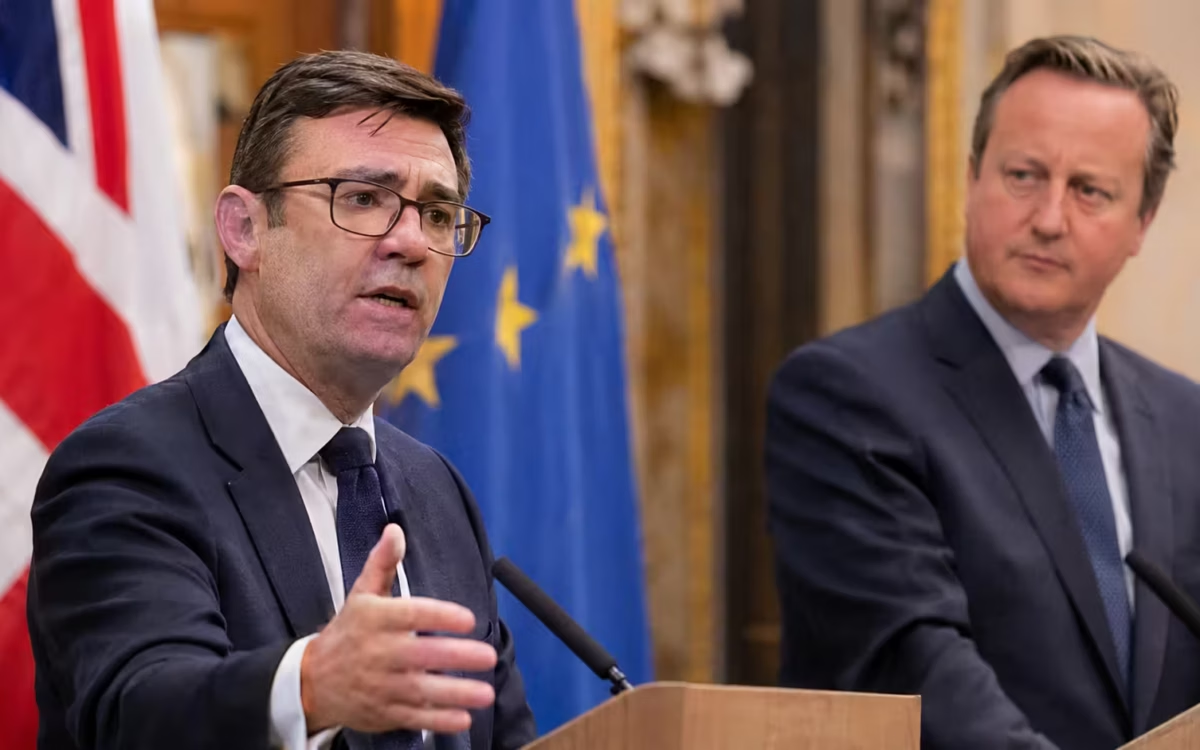
Prime Minister Andy Burnham has rejected former Conservative leader David Cameron’s warning against reopening the Brexit debate, insisting that closer ties with the European Union could strengthen Britain’s economy as crucial negotiations approach.
The disagreement between the two political figures has intensified just days before a major UK–EU summit in Brussels on 20 November, where the government hopes to secure agreements on trade, agriculture, emissions and opportunities for young people.
Lord Cameron, who called the 2016 Brexit referendum and campaigned for Britain to remain in the EU, has warned that discussing a return to membership could trigger another prolonged political battle.
However, Burnham has challenged the former prime minister’s assessment of Britain’s economic difficulties, arguing that Brexit has played a significant part in the country’s weak growth over the past decade.
The exchange has reopened one of the most divisive questions in British politics: whether the UK should strengthen its existing partnership with Brussels or eventually reconsider its position outside the European Union.
Speaking in an interview with Bloomberg’s Mishal Husain, Cameron warned that a renewed argument over EU membership could become “very long and painful”.
He urged the government to concentrate on developing a stronger relationship with its European neighbours rather than revisiting the question of membership.
Cameron also argued that Britain’s economic challenges stem largely from domestic problems, including high taxation, government borrowing, regulation and welfare spending.
His comments represent a significant intervention because he was the prime minister who initiated the referendum that ultimately resulted in Britain leaving the EU.
Although Cameron has previously expressed disappointment with the 2016 result, he believes the country should respect that decision and concentrate on making its existing relationship with Europe work more effectively.
Burnham, however, offered a sharply different interpretation.
Speaking to reporters during the European Political Community summit in Dublin on 12 November, the prime minister disputed Cameron’s claim that Brexit had not contributed to Britain’s economic problems.
He said the available evidence, including Treasury analysis, indicated that improving trade arrangements with Europe could contribute to economic growth.
Burnham also suggested Cameron’s intervention was more concerned with maintaining unity within the Conservative Party than securing Britain’s economic interests.
Importantly, the prime minister attempted to separate his immediate negotiations with Brussels from speculation about Britain rejoining the EU.
“No one’s talking about rejoin,” Burnham told reporters, emphasising that the government’s immediate priority was reaching an agreement ahead of the summit.
He believes the UK could negotiate a mutually beneficial arrangement that delivers more of the economic cooperation voters may have expected when they supported Brexit in 2016.
The disagreement comes as Britain continues to assess the economic consequences of leaving the European Union.
According to the Office for Budget Responsibility’s Brexit analysis, the post-Brexit trading relationship is expected to reduce Britain’s long-term productivity by approximately 4% compared with remaining in the EU.
The fiscal watchdog also estimates that UK exports and imports will each be approximately 15% lower in the long run than they would have been under continued membership.
These are projections against a hypothetical remain-in-the-EU scenario, rather than measurements showing that the economy has contracted by those percentages.
Nevertheless, they provide important context for the argument between Burnham and Cameron.
While Cameron maintains that Britain’s current difficulties are primarily domestic, the OBR’s assessment suggests that additional trading barriers have imposed a high long-term economic cost.
Burnham’s government argues that reducing some of those barriers could help businesses, strengthen supply chains and potentially ease costs for consumers.
The prime minister has suggested that the agreements under discussion could increase UK GDP by approximately 0.4%, although that figure remains a projected benefit rather than a confirmed outcome.
The proposed arrangements include simplifying food and agricultural trade, connecting emissions trading systems and establishing a reciprocal youth mobility programme.
For British businesses exporting food, agricultural products, and other regulated goods, reduced bureaucracy could lower administrative expenses and improve market access.
However, negotiations remain complicated.
One significant disagreement concerns university tuition fees for European students studying in Britain.
EU negotiators have been seeking more favourable tuition arrangements, while the British government must consider the potential financial implications for universities and taxpayers.
The dispute has become linked to wider negotiations, raising the possibility that progress on food trade and emissions agreements could be affected if both sides cannot reach a compromise.
Political and Brexit analyst Jill Rutter, writing for the Institute for Government on 12 November, highlighted the importance of the forthcoming summit.
She argued that the response to whatever Burnham secures in Brussels will demonstrate how much political sensitivity remains around Brexit.
Rutter identified youth mobility, university fees, regulatory alignment and potential financial contributions as important areas of disagreement.
Her analysis also raises an economic question that goes beyond the political exchange between Burnham and Cameron: whether the government can demonstrate that the practical benefits of closer European cooperation outweigh the additional obligations Britain may have to accept.
The question is particularly important for businesses seeking simpler access to European markets while retaining the regulatory flexibility available outside EU membership.
Meanwhile, former EU chief Brexit negotiator Michel Barnier has warned that Britain cannot selectively obtain the benefits of the European single market without accepting its associated requirements.
In comments reported by the BBC, Barnier reiterated that there could be “no cherry-picking” over single-market participation.
His intervention underlines a central challenge for Burnham’s longer-term ambitions.
Rejoining the single market would involve considerably wider obligations than the sector-specific agreements currently under negotiation, including the free movement principles associated with membership.
This distinction matters because closer cooperation on individual industries does not automatically mean Britain is preparing to rejoin the European Union.
Sir Christian Turner, Britain’s ambassador to the United States, has also offered a perspective on the country’s future economic relationships.
Speaking at a Politico event in Washington, Turner suggested that the UK needed stronger growth through its relationship with Europe while maintaining its important economic ties with America.
He acknowledged that Britain had not handled Brexit particularly well, while emphasising the importance of public support for any future changes.
The economic debate therefore extends beyond the immediate disagreement between two political leaders.
For exporters, manufacturers and smaller businesses, the practical outcome of negotiations could affect supply chains, regulatory costs and investment decisions.
For households, the government’s argument is that reducing barriers to food trade could eventually help ease some costs.
However, any changes to consumer prices would depend on how much of the savings businesses pass on, alongside other factors influencing inflation.
Burnham met European Commission president Ursula von der Leyen in Dublin on 12 November, with both sides seeking to advance negotiations before the Brussels summit.
The discussions have increased expectations of progress, although neither side has confirmed that the full package of agreements will be completed.
The government is also seeking to protect the independence of the UK’s financial services regulatory framework, illustrating the limits of how far ministers are currently willing to align British rules with EU requirements.
For Cameron, the central concern is that reopening the membership question could distract from domestic economic reform and undermine negotiations with European partners.
For Burnham, improving the relationship with Brussels offers an opportunity to address some of the economic difficulties associated with Brexit without immediately revisiting the referendum result.
The political implications could extend well beyond the summit.
Labour must balance demands for stronger economic cooperation with concerns about immigration, sovereignty and regulatory independence, while the Conservatives face their own challenge in defining their position on Britain’s future relationship with Europe.
The government’s longer-term approach remains unsettled, with Burnham expected to outline options for future UK–EU relations around the time of the summit.
The next major development is expected on Friday, 20 November, when Burnham meets EU leaders in Brussels.
The outcome will help establish whether the government can secure meaningful economic concessions without triggering another divisive dispute over Brexit.
For now, the exchange between Burnham and Cameron demonstrates that, more than a decade after the referendum, Britain’s relationship with the European Union remains a central issue in the country’s economic and political future.
“Burnham challenges Cameron’s Brexit warning, arguing that closer EU ties could boost Britain’s economy without reopening the debate over EU membership.”
— Henry, Londoner Editorial
About the Journalist
Henry is the editorial head and lead author at Londoner. He oversees the publication’s editorial direction, article quality, source verification and corrections process. He also reviews major stories before publication to ensure they meet Londoner’s standards for accuracy, fairness and transparency.