Cancelled Princess Diana Award Gala: Why Prince Harry And Prince William Are Facing Fresh Questions?
 Published By
Lucy
Published:
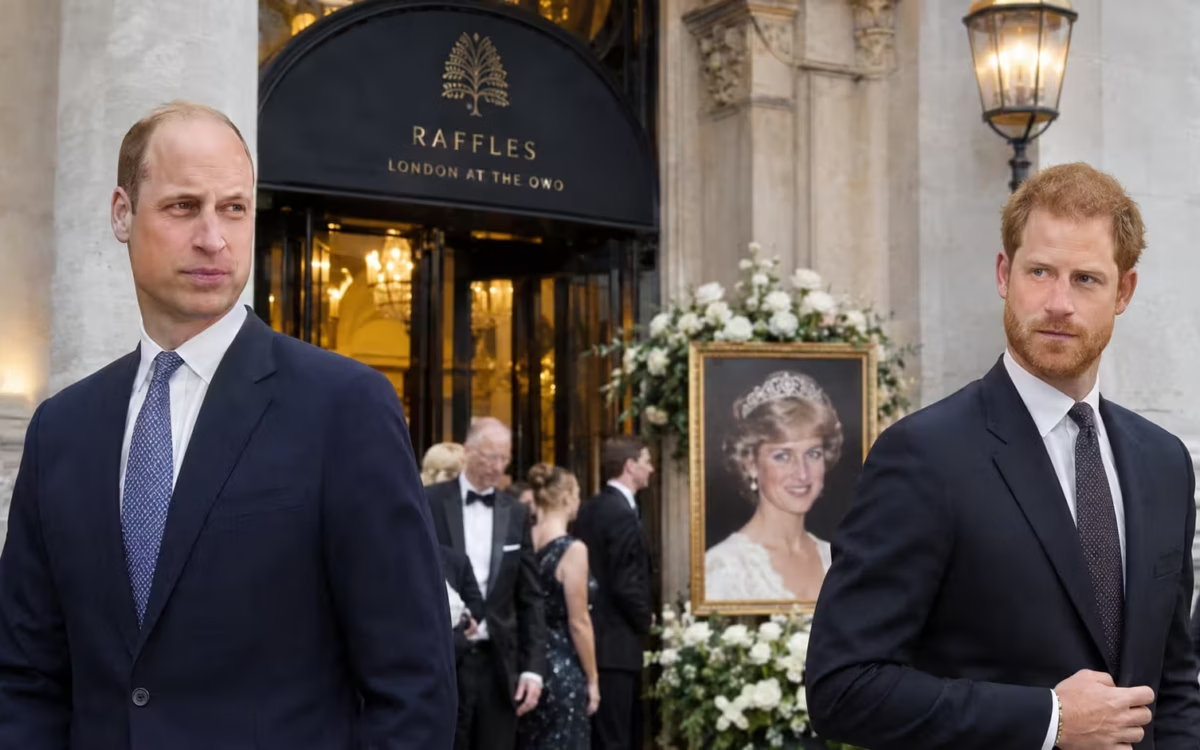
Table of Contents
The cancellation of a Princess Diana Award gala in London has renewed attention on the strained relationship between Prince William and Prince Harry, raising questions about whether their family disagreements are affecting one of the few charitable causes they continue to support together.
A black-tie fundraising dinner reportedly scheduled for 18 September 2026 at Raffles London at The OWO was called off shortly before the event. The gathering was expected to support The Diana Award, a charity established in memory of Diana, Princess of Wales.
Royal commentator Charlotte Griffiths suggested that complications surrounding Prince Harry’s potential involvement and speculation about Meghan Markle’s attendance may have contributed to the cancellation.
However, the precise reason has not been publicly established, and there is no confirmed evidence that Prince William personally ordered the event to be cancelled.
The development attracted particular attention because William and Harry have continued to support the organisation despite their longstanding differences.
The story has also gained renewed relevance following the charity’s 2026 awards ceremony on 4 November, when both brothers sent separate congratulatory letters to young people recognised for their contributions to society.
While the cancelled gala highlighted the difficulties surrounding their shared charitable commitments, the November ceremony demonstrated that both princes remain willing to honour their mother’s legacy.
Why Was the Princess Diana Award Gala Cancelled?
The planned fundraising dinner was reportedly due to take place at Raffles London at The OWO, a luxury hotel housed within the former Old War Office building in Whitehall.
According to reports published in September, the event was cancelled shortly before its scheduled date, prompting questions about the circumstances behind the decision.
Charlotte Griffiths, a royal journalist who had been reporting on the charity’s plans, suggested that difficulties concerning the involvement of the Duke and Duchess of Sussex may have complicated arrangements.
Earlier reports had indicated that Harry could make an appearance at the dinner, potentially accompanied by Meghan. Such an appearance would have attracted considerable attention, particularly following the couple’s return to Britain.
However, a spokesperson for Harry and Meghan firmly rejected suggestions that either was scheduled to attend.
The spokesperson stated that the couple were not booked to appear at the Diana Award event at Raffles London on 18 September and challenged the accuracy of reports suggesting otherwise.
This distinction is important. Although reports linked the cancellation to royal family tensions, those claims have not been independently substantiated.
Speculation also emerged that Prince William might have been uncomfortable with Meghan taking part in an event associated with their mother’s memory.
Nevertheless, there has been no public confirmation from Kensington Palace that William objected to her attendance or played a role in cancelling the dinner.
The developments came during a sensitive period for the brothers, whose relationship has remained strained despite Harry’s more recent public expressions of interest in reconciliation.
The wider questions surrounding Prince William’s concerns about Harry’s return to Britain have included trust, public appearances and the boundaries between royal responsibilities and the Sussexes’ independent activities.
For The Diana Award, the cancellation was an unwelcome development. A major fundraising event can offer valuable opportunities to attract supporters, establish partnerships and generate financial backing.
However, there is no publicly established figure for any financial loss resulting from the cancelled dinner.
How Prince William and Prince Harry’s Royal Rift Complicates Diana Award Plans?
The Diana Award occupies an unusual position within the Royal Family because it remains one of the few organisations associated with both Prince William and Prince Harry.
Established in 1999, two years after Princess Diana’s death, the charity recognises young people who demonstrate exceptional leadership, compassion and commitment to improving their communities.
For William and Harry, supporting the organisation represents a continuing connection to their mother’s humanitarian work, even as their personal relationship has deteriorated.
The brothers previously attended Diana Award events together, including the inaugural Legacy Award ceremony in 2017.
However, their public involvement has become increasingly separate following Harry and Meghan’s decision to step back from working royal duties in 2020.
Royal commentators have suggested that the brothers have informally taken turns participating in charity engagements, allowing the organisation to maintain relationships with both without requiring joint appearances.
On 3 June 2026, William met Diana Award recipients and supporters at the Truman Brewery in east London during the SXSW London festival.
The Prince of Wales discussed youth leadership and social change with campaigners, demonstrating his continuing commitment to the charity’s objectives. The engagement was recorded in the official Court Circular.
Harry has maintained his own involvement through public messages and other activities recognising young people.
Nevertheless, the cancelled September gala brought the practical difficulties of managing their separate relationships with the organisation into sharper focus.
The brothers’ disagreements have become a recurring subject of royal coverage, particularly as Prince Harry has expressed renewed hopes of reconciliation with William and King Charles.
Their involvement with The Diana Award demonstrates that they can continue supporting a shared cause without necessarily resolving their private disagreements.
For the charity, maintaining that distinction is particularly important.
Its central purpose is to recognise young people whose achievements reflect Diana’s belief in compassion, service and positive change.
Allowing attention surrounding royal relationships to overshadow those achievements could distract from the young people the organisation exists to celebrate.
What Happened After the Cancellation and What Comes Next for Diana’s Legacy?
Despite the cancellation of the September fundraising dinner, The Diana Award’s annual recognition programme continued, with its 2026 ceremony taking place virtually on 4 November.
The charity honoured 198 young people from 44 countries for their contributions to education, health, equality and environmental improvement.
Nine countries and territories were represented on the Roll of Honour for the first time, including Ukraine, Mongolia and Portugal.
India accounted for 49 recipients, while Nigeria had 25 and the United States had 23.
The ceremony also featured an important contribution from both of Diana’s sons.
William and Harry delivered separate congratulatory letters to the recipients, recognising their achievements and reinforcing their support for the values associated with their late mother.
The letters were not a joint statement, and their participation should not be interpreted as evidence of a personal reconciliation.
However, the gesture showed that the brothers remained committed to supporting the organisation despite the controversy surrounding the cancelled dinner.
The distinction between the two events is also significant. The September gathering was a reported fundraising dinner, whereas the November virtual ceremony was the charity’s annual celebration of award recipients.
The latter was not publicly identified as a direct replacement for the cancelled gala.
Attention is now turning towards 2027, which will mark the 30th anniversary of Princess Diana’s death on 31 August 1997.
The milestone is expected to prompt renewed reflection on her humanitarian legacy and the causes she championed.
Earlier speculation suggested that The Diana Award could organise a significant commemorative gathering involving both brothers.
However, the charity previously clarified that no anniversary event, attendance arrangements or participation decisions had been confirmed.
Any future gathering involving William and Harry would undoubtedly attract considerable public interest.
Yet their shared support for the organisation does not necessarily mean they are preparing to appear together.
The challenge facing the charity is to ensure that its mission remains central, regardless of whether the brothers attend events separately or eventually resume joint appearances.
Diana’s influence continues to extend beyond the Royal Family through the achievements of young people tackling issues such as mental health, educational inequality and climate change.
Her legacy also remains visible through the personal connections that members of the wider family maintain with her memory, including the continued public interest in Meghan Markle’s connection to Princess Diana’s jewellery.
As of 13 November 2026, there has been no publicly confirmed explanation establishing why the September fundraising gala was cancelled, nor any announcement of a replacement dinner.
What has been confirmed is that The Diana Award continued its work, recognised another generation of young changemakers and retained the public support of both William and Harry.
The cancelled Princess Diana Award gala may have exposed the difficulties surrounding the brothers’ relationship, but it has not ended their shared commitment to their mother’s charitable legacy.
About the Journalist
Lucy reports on London’s boroughs and the capital’s sporting community. Her coverage includes council decisions, neighbourhood developments, community issues, football, tennis, cricket and major sporting events. She focuses on stories that connect local communities and highlight the people and organisations shaping London.