Princess Anne Public Engagement Preparation: The Simple Three-Question Trick Behind Her Royal Visits
 Published By
Olivia
Published:
Updated:
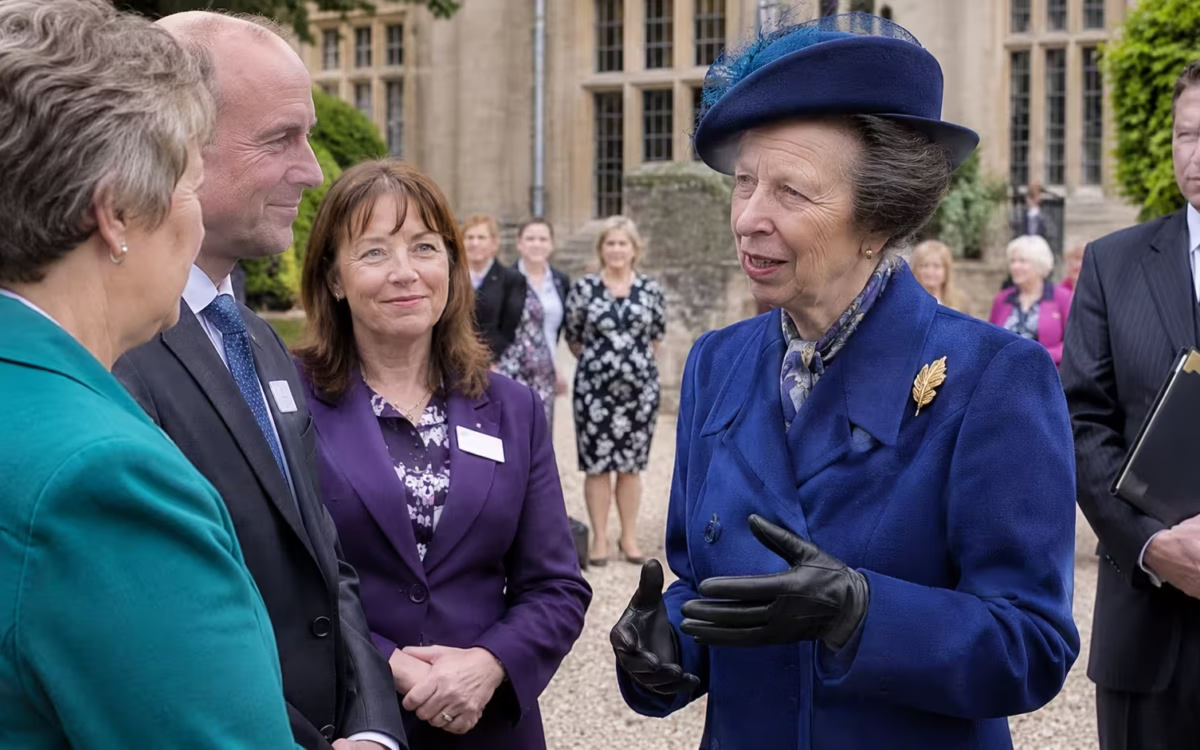
Table of Contents
Princess Anne has a surprisingly simple method for preparing for public engagements. Rather than inventing a different conversation for every person she meets, the Princess Royal revealed that she prepares three questions in advance and asks them repeatedly throughout an event.
The unusual approach, first explained during a television interview with Sir Terry Wogan in 1985, has attracted renewed attention in October and November 2026. It offers an insight into how King Charles III’s younger sister manages the demanding social responsibilities that come with being a senior working royal.
At 76, Anne remains one of the busiest members of the Royal Family, regularly visiting charities, community organisations, military establishments and international events. Her practical attitude towards royal duties has become a defining part of her public reputation.
While other royals are often associated with spontaneous conversations and lengthy greetings, Anne has consistently favoured a more straightforward approach. Her comments suggest that careful preparation and efficiency can be just as important as conversation when meeting large numbers of people.
How Does Princess Anne Prepare for Public Engagements?
Princess Anne revealed her unusual preparation technique during an appearance on the BBC television programme Wogan in 1985, when presenter Terry Wogan asked how she managed to find something different to say to the many people she encountered.
Instead of describing an elaborate strategy, the Princess Royal explained that she preferred keeping things simple.
“It’s rather like market research,” Anne said, describing how asking different people the same questions could make conversations easier to manage.
She explained that she would prepare three questions for an afternoon engagement and use them repeatedly when speaking with guests.
Her reasoning was particularly amusing. If people waiting nearby listened to the conversations ahead of them, they might already have their answers prepared by the time she reached them.
That could help shorten individual exchanges, allowing more people an opportunity to speak with her.
The technique reflects Anne’s longstanding reputation for being organised, direct and focused on completing her responsibilities.
Royal engagements often involve carefully arranged schedules, with representatives expected to meet numerous people within limited periods.
For Anne, preparing a few questions offers a way to avoid unnecessary delays without abandoning conversation altogether.
Although she did not publicly identify the exact questions she used, her description suggested that the subjects could change according to the occasion.
At a charity event, conversations might naturally concern volunteers and their activities. During an agricultural visit, discussions could focus on farming or local industry.
Such examples illustrate how the method could work rather than confirm precisely what Anne asks at individual engagements.
Her preference for straightforward conversation also fits her wider public personality.
Anne has never appeared particularly interested in turning routine duties into elaborate performances. Instead, she generally directs attention towards the people and organisations hosting her visits.
That approach has become increasingly recognisable after more than five decades of royal service.
The Princess Royal began undertaking official engagements in 1969, opening an educational and training centre in Shropshire when she was just 18.
Her experience helps explain why she can approach demanding public occasions with such apparent confidence.
Why Princess Anne Avoids Handshakes and Lengthy Royal Speeches?
Princess Anne’s preparation technique is not the only example of her distinctive approach to public engagements.
She has also spoken openly about why she prefers not to shake hands with everybody during royal walkabouts.
In the 2018 ITV documentary Queen of the World, Anne explained that the original understanding was that members of the Royal Family should avoid beginning a practice they could not extend to everyone.
“We never shook hands,” she recalled, explaining that greeting only selected individuals could be unfair to others waiting nearby.
Anne acknowledged that royal customs had changed, with younger generations increasingly embracing handshakes and more informal interactions.
However, she questioned whether such encounters sometimes became more about physical greetings than meaningful conversations.
Her comments were not presented as a criticism of every other royal’s behaviour. Instead, they reflected her preference for maintaining the original purpose of public walkabouts.
Anne has similarly expressed frustration with people holding phones or tablets directly in front of their faces while attempting to speak with her.
For someone who values direct communication, such interruptions can make a brief encounter less personal.
Her approach to ceremonial speeches is equally practical.
During the same 1985 interview with Wogan, Anne explained that she generally kept her remarks short when opening buildings or facilities.
Rather than delivering lengthy statements, she preferred acknowledging the invitation and thanking the people responsible for organising the occasion.
This straightforward personality has occasionally attracted attention beyond official engagements.
A recently revisited interaction between Princess Anne and Earl Spencer at a royal dinner highlighted how her direct manner could be interpreted differently by those around her.
In his 2026 memoir, Charles Spencer recalled an uncomfortable conversation with Anne before Princess Diana’s wedding in 1981.
His recollection offered one perspective on the exchange, although it does not establish whether Anne intended to cause offence.
The anecdote nevertheless illustrates why the Princess Royal’s communication style continues to attract public interest.
Some people admire her refusal to complicate straightforward situations, while others may interpret her brevity as unusually blunt.
Whatever the reaction, Anne’s public comments demonstrate that she has developed clear preferences about how royal engagements should operate.
What Princess Anne’s Busy Royal Schedule Reveals About Her Preparation?
Princess Anne’s preparation methods become particularly understandable when considering the scale of her royal responsibilities.
According to an analysis of the official Court Circular, she completed 478 engagements during 2025, making her one of the most active working royals.
King Charles III completed 533 engagements that year, surpassing Anne’s total, although the Princess Royal recorded 186 working days.
Her schedule regularly involves travelling between different regions, meeting representatives from several organisations and attending ceremonial occasions.
These responsibilities require familiarity with a wide range of subjects, from education and healthcare to agriculture, sport and military service.
Anne’s longstanding charitable commitments also contribute to her workload.
According to the Royal Family’s official website, she is associated with more than 300 charities, organisations and military regiments in Britain and overseas.
Her involvement with Save the Children stretches back to 1970, demonstrating the lasting relationships that underpin much of her public work.
During 2026, Anne continued representing the monarchy at significant public occasions.
In July, Princess Anne and Prince Edward appeared together at the Glasgow Commonwealth Games, supporting athletes alongside their respective spouses.
The appearance highlighted the siblings’ longstanding commitments to sport and their continued responsibilities under King Charles.
Anne’s experience as an Olympic equestrian competitor gives her a particularly strong connection with international sporting events.
More recently, the Princess Royal travelled to the Falkland Islands with her husband, Vice Admiral Sir Tim Laurence, arriving on 9 November 2026.
According to the official Court Circular, she visited Cape Pembroke Lighthouse and Tussac House on 10 November before opening the National Sports Complex in Stanley.
She subsequently departed for South Georgia, where her programme includes engagements connected with heritage and conservation.
The overseas visit demonstrates the variety of subjects Anne must encounter while representing the Royal Family.
Her ability to move between community visits, formal ceremonies and international responsibilities reflects considerable experience developed over decades.
Anne’s professional attitude also recalls the emphasis on discipline and responsibility associated with her father, Prince Philip.
The late Duke of Edinburgh was frequently described as direct in his dealings with others, although his children developed their own approaches to royal life.
His views on duty and personal restraint have also resurfaced through accounts of Prince Philip’s reported comments about King Charles, highlighting differences in personality within the family.
For Anne, the priority has generally remained the work itself.
Her public appearances give charities, volunteers, community projects and institutions an opportunity to receive recognition that they might otherwise struggle to attract.
That purpose can sometimes be overshadowed by attention surrounding royal clothing, gestures or family relationships.
Anne’s understated approach helps maintain a focus on the organisations involved.
Importantly, her three-question technique remains a historical account of how she prepared for engagements in 1985. There has been no recent confirmation that she follows precisely the same routine at every appearance today.
Nevertheless, the resurfaced interview offers a revealing explanation of her practical philosophy.
Princess Anne’s public engagement preparation is less about elaborate speeches or rehearsed charm and more about ensuring that conversations remain manageable and purposeful.
After more than 55 years of public duties, her straightforward approach remains an important part of her identity within the monarchy.
As King Charles continues relying on experienced working royals to represent the institution, Anne’s extensive schedule demonstrates why preparation matters.
What began as a humorous explanation on a television chat show has become another example of the Princess Royal’s distinctive attitude towards public service: arrive prepared, speak directly and concentrate on getting the job done.
About the Journalist
Olivia covers London life, culture and lifestyle for Londoner. Her work includes food, shopping, neighbourhood trends, attractions, local experiences and practical guides for residents and visitors. She focuses on engaging stories that reflect everyday life across the capital.