Prince Philip Comments To Charles: Why He Called His Son’s Royal Revelations ‘Bloody Stupid’
 Published By
Jermaine
Published:
Updated:
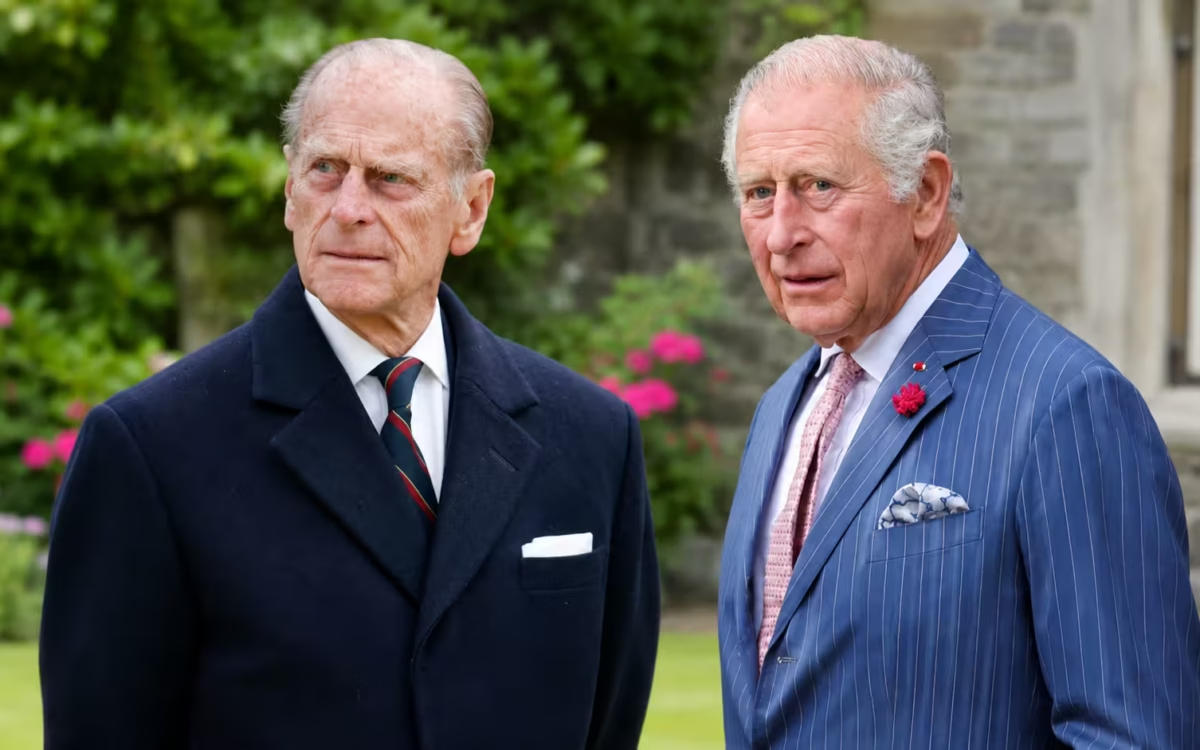
Table of Contents
Prince Philip’s reported comments about King Charles have returned to attention after royal biographer Gyles Brandreth described the late Duke of Edinburgh’s anger over the then-Prince of Wales speaking publicly about his childhood.
The dispute centred on Charles’s cooperation with Jonathan Dimbleby for the authorised 1994 biography The Prince of Wales: A Biography.
According to Brandreth, Philip believed his eldest son had gone too far by allowing deeply personal grievances about his upbringing and his parents to enter the public record.
Brandreth has said Philip regarded Charles as “self-indulgent” and thought it was “bloody stupid” for him to air those grievances publicly.
He also wrote that Queen Elizabeth II was saddened by what appeared in the biography, although the late Queen did not publicly respond to the claims herself.
The episode remains revealing because it shows how differently Philip and Charles approached emotion, duty and the boundaries between private family life and public royal life.
Decades later, those same questions continue to shape the monarchy as Charles deals with highly public family tensions involving the next generation.
What Prince Philip Reportedly Said About Charles?
Brandreth, who knew Prince Philip for decades and later wrote Philip: The Final Portrait, has portrayed the Duke as frustrated by Charles’s tendency to dwell on personal difficulties.
Brandreth’s own description of the book says it examines Philip’s relationships with his children and wider family as part of a portrait built from more than four decades of knowing him.
According to Brandreth’s account, Philip felt Charles spent too much time thinking about himself, feeling sorry for himself and reflecting on how difficult it was to be Prince of Wales.
The criticism became particularly sharp when Charles’s authorised biography gave the public a much more intimate picture of his childhood.
The book described Charles as having felt emotionally distant from his parents and as wanting a kind of affection he believed they could not, or did not, give him.
Brandreth later wrote that Philip saw the decision to make those feelings public as unfair and damaging.
His reported reaction was characteristically direct. Brandreth said Philip was “bloody angry” and considered it “bloody stupid” for Charles to air his grievances publicly.
That language matters because Philip’s objection appears to have been about more than disagreement over Charles’s recollections. It reflected a fundamentally different view of how a senior royal should handle private pain.
Philip came from a generation in which personal difficulty was generally expected to be absorbed privately, particularly by people carrying major public responsibilities.
Charles, by contrast, was increasingly willing to let the public see the emotional pressures behind royal life.
The same question has resurfaced in a different generation, with Prince Harry’s recent comments about reconciliation with King Charles and Prince William following years in which private royal disagreements repeatedly became public.
Why Was Charles’s 1994 Biography Angered His Father?
Jonathan Dimbleby’s biography appeared during one of the most turbulent periods in Charles’s public life.
His marriage to Diana, Princess of Wales, had broken down, intense media scrutiny surrounded the Royal Family and questions about Charles’s character and future role were being debated openly.
By cooperating with Dimbleby, Charles was able to put his own experiences into the public conversation. But the decision also meant that private family relationships were no longer entirely private.
For Philip, that appears to have crossed a line.
Brandreth’s account suggests the Duke believed Charles was not simply explaining himself but publicly judging his parents.
He reportedly felt the revelations hurt both him and the Queen. Brandreth said Philip told him the Queen was “saddened”, while Philip himself was much more openly angry.
The tension also fitted a wider pattern in the relationship between father and son. Philip had experienced an unsettled childhood before building his adult identity around military discipline, service and practicality.
Charles grew up in a very different royal environment and developed interests and a temperament that did not always match his father’s expectations.
Their differences did not mean there was no affection. Charles continued to speak warmly about Philip in later life.
During the Platinum Jubilee celebrations in 2022, Charles described his late father as “much missed” and affectionately called him “My Papa”.
The contrast is important. Their relationship could be strained without being devoid of love. Philip could be fiercely critical of Charles while Charles could still respect and miss his father.
That separation between personal relationships and royal responsibility remains visible during Charles’s own reign.
The formal guidance issued concerning Prince Harry’s royal status has similarly drawn a distinction between the King’s private relationship with his son and Harry’s position outside the working Royal Family.
What the Comments Reveal About Charles And The Modern Royal Family?
Prince Philip’s comments to Charles are especially striking because the underlying issue has never really disappeared from royal life: how much should members of the monarchy say publicly about private family conflict?
Charles once faced criticism from his father for allowing his emotional grievances to become part of an authorised biography. Years later, Charles became the parent dealing with similarly public disclosures from Prince Harry.
Harry has spoken about his relationship with his father and brother through interviews, television projects and his memoir Spare.
His more recent language has focused increasingly on reconciliation, although the existence of a desire to repair relationships does not mean every disagreement has been resolved.
That makes Philip’s reaction to Charles look almost like an earlier version of a problem the Royal Family continues to confront.
One generation may believe public explanation is necessary to describe its own experience. Another may regard the same disclosure as a breach of family loyalty.
Charles now sits on the other side of that divide. As King, he must manage the institutional consequences of family disputes while also navigating the emotional reality of being a father.
The situation has become more visible since Harry and Meghan returned to Britain, with renewed attention on whether relationships inside the family can improve.
In particular, Harry’s relationship with Queen Camilla following his UK return illustrates how personal grievances can continue alongside attempts to establish a more workable family relationship.
That is why Philip’s reported comments still resonate. They are not simply an old example of a demanding father criticising his son. They expose a recurring royal dilemma involving personality, privacy and duty.
Philip believed family grievances should remain within the family.
Charles chose, at a difficult point in his life, to allow some of his experiences to become public. Today, as King, he faces a remarkably similar tension from the opposite side of the relationship.
The personalities have changed and the media landscape is far more intense, but the central question remains much the same: when a royal family is also a public institution, where should the boundary between personal truth and private loyalty be drawn?
About the Journalist
Jermaines covers crime, legal affairs and money-related stories for Londoner. His reporting includes police updates, court cases, consumer rights, personal finance and cost-of-living issues. He handles sensitive subjects carefully and clearly distinguishes confirmed facts from allegations, estimates and ongoing investigations.