Prince Harry GQ Interview: Duke Breaks Silence On Family Reconciliation With King Charles And Prince William
 Published By
Henry
Published:
Updated:
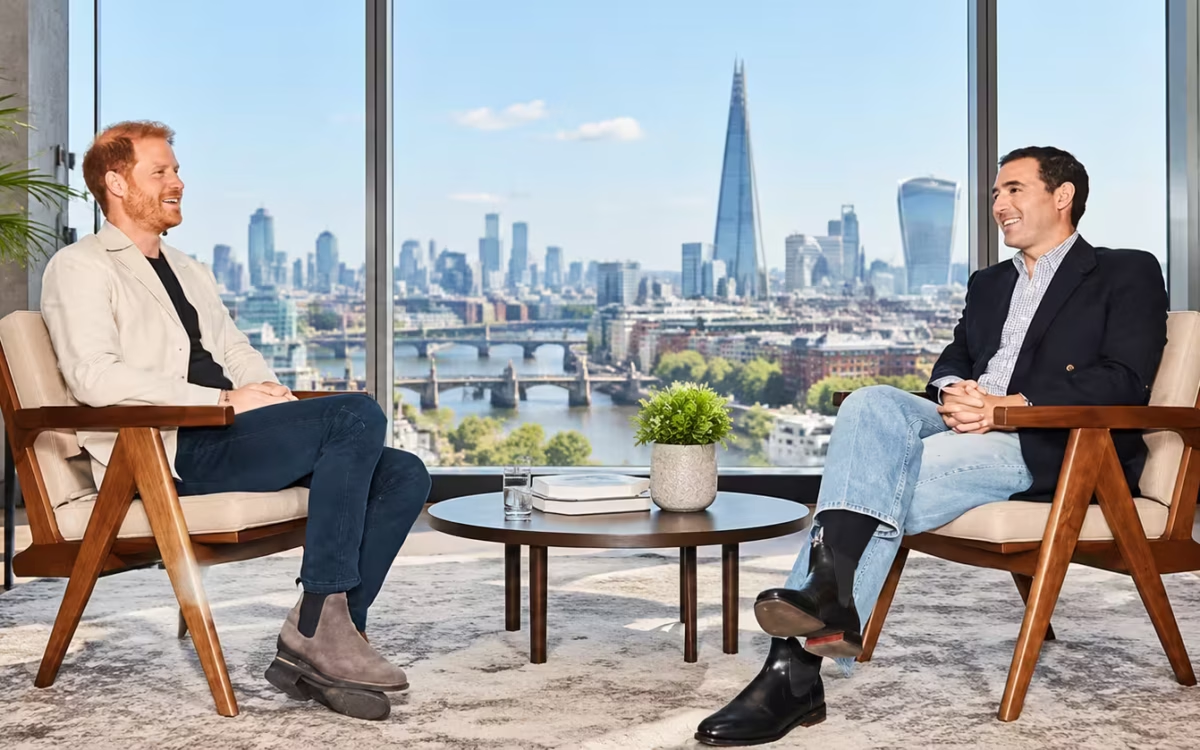
Table of Contents
Prince Harry has made a renewed public appeal for reconciliation with the Royal Family, speaking candidly about his fractured relationships with King Charles III and Prince William in a revealing GQ interview
The Duke of Sussex, 42, said repairing family relationships had become increasingly important to him as he reflected on years of disagreements, personal grief and the possibility of rebuilding trust with his father and brother.
Speaking to journalist Zach Baron for GQ’s One More Question series, Harry acknowledged the emotional consequences of his family estrangement and explained why he believes that reconciliation should take priority over continuing old disputes.
The interview, recorded in New York in late September and released on Tuesday, 20 October 2026, comes after Harry, Meghan Markle and their children returned to the United Kingdom following six years based in California.
His latest remarks have renewed interest in whether a meaningful reconciliation with the monarchy could finally be possible, particularly as reports suggest his relationship with King Charles has improved while his separation from Prince William continues.
Prince Harry Says He Wants His Family Relationships to Work Out
The most revealing exchange came when GQ interviewer Zach Baron asked Harry directly about his relationship with his father and older brother.
Baron asked: “Is that something that you grieve?”
Harry answered: “Yes, of course.”
The duke explained that strained relationships between siblings and parents are familiar experiences for many families, even when those disagreements attract little public attention.
He acknowledged that people frequently approach him with their own stories of family conflict, suggesting that the fascination surrounding his relationship with William and Charles partly reflects problems that ordinary families recognise.
When the conversation turned towards the possibility of repairing those relationships, Harry made his position clear.
“I want it to work out,” he said.
He added that “the most important thing is to reconcile”, making clear that he sees resolving family differences as a priority.
His comments mark another public expression of his desire to make peace with relatives after several years of highly publicised disagreements.
However, his willingness to pursue reconciliation does not necessarily mean that other members of the family are ready to follow the same approach.
The situation became more sensitive when Harry observed that some people do not want relationships to improve.
That remark prompted speculation about whether he was referring specifically to Prince William.
A spokesperson for the Duke of Sussex subsequently clarified that the comment was “absolutely not intended as a swipe at his brother or any other member of his family”.
The spokesperson explained that Harry had been discussing family disagreements generally rather than criticising a particular royal relative.
The clarification is important because Harry’s relationship with William remains one of the most closely scrutinised aspects of the royal dispute.
The brothers were once publicly regarded as exceptionally close, having supported each other through their mother’s death, military careers and royal responsibilities.
Their relationship deteriorated in the years surrounding Harry’s marriage to Meghan Markle and their decision to step away from senior royal duties in 2020.
Harry later discussed the tensions in his Netflix documentary, television interviews and his 2023 memoir, Spare, which included allegations about disagreements with William.
Those disclosures have continued to shape public perceptions of the brothers’ relationship.
Royal Experts Question Whether Reconciliation Is Close
Despite Harry’s optimistic language, royal commentators remain divided over whether his latest interview represents a meaningful breakthrough.
Royal author Russell Myers, who has reported extensively on the relationship between the Sussexes and the Prince and Princess of Wales, previously offered a much less optimistic assessment of William’s position.
Speaking to People magazine in a recent royal feature, Myers said William had no plans to rebuild relations with Harry and Meghan.
Discussing William’s reported position, he said “he will have no relationship with them, in a working or private capacity whatsoever”.
That assessment suggests that Prince Harry’s willingness to move forward may not immediately produce a corresponding change in his brother’s approach.
Royal biographer Hugo Vickers offered another critical perspective following the GQ interview.
Speaking to Page Six about Prince Harry’s renewed appeal for reconciliation, Vickers questioned whether repeated public interviews were helping the situation.
“He has made the situation very difficult, and he has only himself to blame,” Vickers said.
Vickers also suggested that Harry’s public appearances could create a different impression from the private reconciliation he says he wants.
His comments highlight an important obstacle: rebuilding trust may require quieter conversations between family members rather than continued public discussion of their disagreements.
However, these assessments represent the views of royal commentators and should not be treated as direct statements from Prince William.
There has been no public confirmation that William has agreed to a reconciliation meeting following the latest interview.
Harry’s relationship with King Charles appears more encouraging.
The King reportedly reunited with Harry, Meghan and their children during the summer of 2026, and there have been reports of further communication between father and son.
Nevertheless, improved communication with Charles does not establish that the wider royal rift has been resolved.
For Harry, rebuilding the relationship with his father may prove a different challenge from repairing his bond with his brother.
Princess Diana, Returning to Britain and Harry’s Hopes for the Future
Another emotional aspect of the GQ interview concerned Princess Diana, whose death in August 1997 continues to influence Harry’s understanding of family relationships and grief.
Harry was just 12 when his mother died following a car crash in Paris.
Speaking about how her absence continues to affect his life, the duke explained that he sometimes wonders how his family might have developed had Diana survived.
He also discussed how he has worked through his grief over the years and how his experiences now influence his relationship with his own children.
The interview accompanied his involvement in a MasterClass programme on grief and resilience, developed with grief researcher Dr Mary-Frances O’Connor.
Harry described the importance of recognising emotional difficulties rather than allowing them to remain unresolved.
His discussion also touched on the emotional pressures associated with losing a parent and the experience of watching another parent face serious illness.
When Baron raised the subject of King Charles’s cancer diagnosis, Harry indicated that his father’s condition was improving.

The monarch’s health has previously contributed to renewed public discussion about whether the family should attempt to resolve its differences.
Harry has repeatedly emphasised that time with family is valuable, although he has also acknowledged that some past experiences cannot simply be forgotten.
In the GQ conversation, he recognised that “scars stick around forever”, while arguing that people’s attitudes towards painful experiences can change.
The duke also said that remaining involved in prolonged family disagreements was no longer worthwhile.
He has previously expressed similar sentiments. During a BBC interview in May 2025, Harry spoke about his desire for reconciliation after losing a legal challenge concerning his security arrangements in Britain.
His new comments therefore reinforce an established position rather than signalling an entirely new willingness to make peace.
What has changed significantly, however, is the family’s living situation.
Following their return to Britain in August 2026, Harry and Meghan have been establishing a new routine for their children, Prince Archie, seven, and Princess Lilibet, five.
Harry explained that enrolling the children in British schools had become particularly meaningful to him.
He said he wanted Archie and Lilibet to experience the country where he grew up while also benefiting from their upbringing in the United States.
The Duke described the children as enjoying their new school experience and spending time with friends.
For Harry, the decision also means spending longer periods in Britain rather than making occasional short visits.
That geographical change potentially creates more opportunities for the Sussex children to develop connections with relatives on both sides of their family.
Yet physical proximity alone will not resolve the disagreements that have emerged since 2020.
The interview also addressed Harry’s troubled relationship with sections of the British press.
After years of legal disputes, public criticism and allegations involving media intrusion, Harry indicated that he hoped those involved could begin moving beyond previous conflicts.
He acknowledged that his attitude had changed during his time abroad, while remaining hopeful that relationships and circumstances could also change.
The duke presented his current approach as one focused on respect, emotional growth and allowing people to move forward.
The interview’s publication coincided with a state visit by the Sultan of Oman, during which King Charles, Queen Camilla and the Prince and Princess of Wales carried out official duties at Windsor Castle.
Harry’s representatives denied that the interview had deliberately been scheduled to coincide with the royal engagement, explaining that GQ controlled the publication date.
For now, the central question is whether Harry’s latest words can develop into private discussions with his relatives.
The GQ interview confirms Harry’s desire for reconciliation, but it does not confirm an agreement, a new meeting with William or a resolution of the royal family’s longstanding disagreements.
The Duke of Sussex has once again made his intentions publicly clear. Whether those intentions result in a lasting reconciliation with King Charles and Prince William remains uncertain.
About the Journalist
Henry is the editorial head and lead author at Londoner. He oversees the publication’s editorial direction, article quality, source verification and corrections process. He also reviews major stories before publication to ensure they meet Londoner’s standards for accuracy, fairness and transparency.