Energy Bill Support UK Budget: Millions Could Get £250 Discount As Winter Bills Set To Rise
 Published By
Lucy
Published:
Updated:

20 October 2026
Millions of British households could receive additional energy bill support in the upcoming UK Budget as Chancellor John Healey faces growing pressure to protect families from another sharp increase in electricity and gas costs this winter.
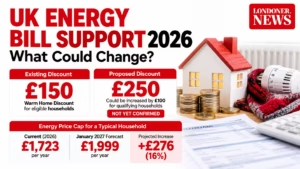
The Treasury is reportedly considering a support package worth more than £1 billion, with proposals to increase the existing £150 Warm Home Discount to £250 for qualifying households. However, no final decision has been announced ahead of the Budget on 28 October.
The potential intervention comes as energy consultancy Cornwall Insight forecasts that the annual energy price cap for a typical household could reach £1,999 in January 2027, compared with the current £1,723.
The projected 16% increase would add approximately £276 to annualised costs for a typical household paying by direct debit, raising concerns about affordability during the coldest months of the year.
Pressure on the government has intensified following new polling by More in Common, reported on 20 October, which identifies reducing energy bills as the public’s leading Budget priority.
Despite strong demand for intervention, only 9% of respondents believe Labour will deliver meaningful relief, while 77% fear government policies could increase energy costs further.
Luke Tryl, UK director of More in Common, warned:
“Worry about bills now runs right across the income spectrum.”
His comments highlight growing concerns that support limited to benefit recipients could overlook working households struggling with rising living costs.
Could Energy Bill Support Increase to £250 in the UK Budget?
The most significant proposal under consideration involves increasing the Warm Home Discount, which currently provides a one-off £150 reduction to eligible households’ electricity bills.
Reports suggest ministers could add another £100 to the existing discount, potentially bringing the total to £250.
The proposed increase would particularly benefit households receiving qualifying means-tested benefits, including Universal Credit, Pension Credit and Housing Benefit.
The existing scheme reaches millions of households across Great Britain, with around six million eligible for support this winter.
Unlike a direct cash payment, the discount is normally applied through an energy supplier. Eligibility and administration differ between England, Wales and Scotland.
The additional £100 has not yet been approved, and households should not assume they will receive £250 until the government confirms the details.
Jonny Marshall, principal economist at the Resolution Foundation, said:
“Rising energy bills will be the most pressing cost of living concern this winter.”
Marshall welcomed preparations for targeted assistance but also raised concerns about households earning too much to qualify for benefits while still struggling to heat their homes.
That concern is becoming increasingly important as the Treasury weighs support for vulnerable households against the financial cost of extending help to the wider population.
The government has already introduced two measures intended to reduce domestic energy costs.
An average £150 of policy costs was removed from household bills following the November 2025 Budget, with the reduction taking effect in April 2026.
A further change introduced by Prime Minister Andy Burnham removed the 5% VAT charge from domestic electricity bills from 1 October 2026, generating estimated average savings of £45 a year.
However, those reductions have not prevented wholesale energy costs from pushing the price cap higher.
The temporary VAT relief is currently funded until 31 March 2027. Reports suggest the Chancellor may postpone a decision on extending it beyond that date.
Meanwhile, the projected January price increase threatens to overwhelm some of the relief households have already received.
Dr Craig Lowrey, principal consultant at Cornwall Insight, warned:
“These prices are going to hit households hard.”
Cornwall Insight attributes much of the anticipated increase to disruption in international gas markets linked to the continuing conflict in the Middle East.
Its £1,999 projection is a forecast rather than an official price cap announcement. Ofgem will confirm the January 2027 cap separately, and actual household bills will still depend on consumption, tariff and payment method.
Experts Call for Wider Energy Bill Support
Consumer groups, economists and energy campaigners are also urging the government to consider longer-term reforms rather than relying entirely on seasonal discounts.
One proposal involves introducing a social energy tariff, offering households on low incomes a reduced energy rate.
Another would provide a lower price for an essential block of household energy consumption, although critics have warned that consumption-based pricing could disadvantage people living in poorly insulated properties or households with higher unavoidable energy needs.
Energy Secretary Miatta Fahnbulleh has also advocated examining how renewable energy policy costs are funded.
Removing further levies from household electricity bills and transferring those costs to general taxation could potentially reduce bills more broadly, but would require additional Treasury funding.
These options remain under discussion, and none should be treated as confirmed Budget policy.
The debate extends beyond household finances. Businesses facing higher electricity costs have warned that sustained increases could affect hiring, investment and consumer prices.
The Trades Union Congress recently estimated that British households had faced nearly £14,000 in additional mortgage, borrowing, energy and water costs combined since 2021.
Its general secretary, Paul Nowak, said:
“Eye-watering bill rises have hammered household budgets, squeezing consumer spending.”
The findings have strengthened calls for a Budget that addresses both immediate household affordability and the wider economic consequences of expensive energy.
For London households, where housing costs already absorb a substantial proportion of income, further increases in winter heating expenses could place additional pressure on disposable income.
Renters in poorly insulated properties may face particularly difficult choices because they often have limited control over major energy-efficiency improvements.
Northern Ireland has a different electricity market and support arrangements.
Its government has separately confirmed a £63 household electricity discount beginning in October 2026, rather than applying Great Britain’s domestic price cap arrangements.
For households seeking immediate help, the existing £150 Warm Home Discount remains available to those who qualify.
Eligible customers in England and Wales should receive notification between late October 2026 and early January 2027, with most discounts applied automatically.
The central question ahead of the Budget is whether the Chancellor will restrict additional assistance to the poorest households or introduce measures capable of reducing costs for a broader range of bill-payers.
With energy prices forecast to rise again in January and public confidence in government action remaining low, the announcement on 28 October could become a significant test of Labour’s commitment to easing the cost of living.
For now, the possible £250 discount remains a proposal. The precise amount, eligibility conditions and funding arrangements will only become clear when the Treasury publishes its final decisions.
About the Journalist
Lucy reports on London’s boroughs and the capital’s sporting community. Her coverage includes council decisions, neighbourhood developments, community issues, football, tennis, cricket and major sporting events. She focuses on stories that connect local communities and highlight the people and organisations shaping London.