Qatar Airways Flight Met By Police At Gatwick After Disruptive Passenger Report
 Published By
Ben
Published By
Ben
Published:
Updated:
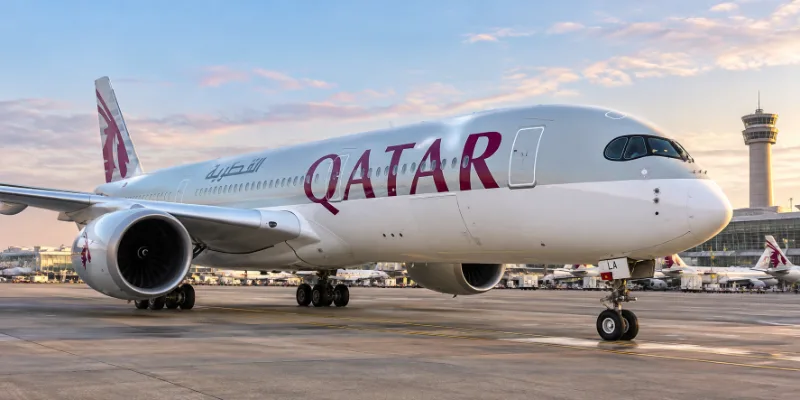
Table of Contents
A Qatar Airways flight travelling from Doha to London Gatwick was met by security personnel after its crew reported a disruptive passenger and requested police assistance before landing.
Flight QR329 was approaching the UK on Thursday, 17 September 2026, when the pilots contacted authorities and asked for airport security and police to be available when the aircraft arrived at Gatwick.
The Boeing 787-9 Dreamliner continued to London rather than diverting and landed without a major delay.
What Happened On Qatar Airways Flight QR329?
The incident occurred aboard Qatar Airways flight QR329, which operates between Hamad International Airport in Doha and London Gatwick.
According to aviation reports, the aircraft was flying over Switzerland when the crew alerted authorities to a disruptive individual on board.
The pilots reportedly requested that security staff and police meet the aircraft once it reached Gatwick.
Despite the onboard problem, QR329 was able to continue towards London and arrived at Gatwick’s North Terminal around its scheduled arrival time.
| Detail | Information |
| Airline | Qatar Airways |
| Flight | QR329 |
| Route | Doha to London Gatwick |
| Date | 17 September 2026 |
| Aircraft | Boeing 787-9 Dreamliner |
| Incident | Disruptive passenger reported |
| Crew Response | Police and security requested |
| Arrival Airport | London Gatwick |
| Arrest Confirmed | No public confirmation |
The precise behaviour that led the crew to request assistance has not been publicly disclosed.
There is currently no verified information showing whether the incident involved threats, violence, alcohol or a refusal to follow cabin crew instructions.
Police And Security Requested At London Gatwick
One of the most significant details in the Qatar Airways disruptive passenger Gatwick incident is that the request for assistance was reportedly made while the aircraft was still approaching Britain.
That allowed security personnel to prepare for the aircraft’s arrival rather than leaving cabin crew to deal with the situation alone once passengers began leaving the plane.
However, requesting police attendance does not automatically mean an arrest has taken place.
As of 18 September, there has been no confirmed public statement saying the passenger was arrested, charged or taken into custody after QR329 arrived in London.
There have also been no confirmed reports of injuries linked to the incident.
Qatar Airways Flight Continued To Gatwick Without Diversion
Serious passenger disturbances can occasionally force pilots to divert to another airport, particularly when the safety of passengers or crew could be affected.
That did not happen in this case.
QR329 continued towards London Gatwick and completed its scheduled journey, suggesting the crew was able to manage the situation sufficiently until ground assistance became available.
The following QR329 service between Doha and Gatwick also continued operating, with no indication that the incident caused wider disruption to the route.
For passengers using the service, this means the incident appears to have been contained to the individual flight rather than becoming a prolonged operational problem.
Aviation Industry Takes Disruptive Behaviour Seriously
Disruptive behaviour on aircraft can range from refusing to follow safety instructions to verbal abuse, harassment or physical violence.
The UK Civil Aviation Authority warns that serious incidents can create safety risks for passengers and crew and may result in criminal action.
Passengers responsible for severe disruption can potentially face:
- Arrest Or Criminal Investigation
- Fines Or Prison Sentences
- Airline Travel Bans
- Liability For Diversion Costs
- Further Restrictions On Future Travel
The Civil Aviation Authority has previously warned that passengers could even be required to meet substantial costs where their behaviour forces an aircraft to divert.
There is no suggestion that Qatar Airways flight QR329 was diverted or that such costs were incurred in this incident.
Experts Call For Firm Action Against Serious Disruption
The Gatwick incident comes as airlines, aviation groups and policymakers continue to discuss tougher measures against disruptive passengers.
Tim Alderslade, chief executive of Airlines UK, has previously said:
“UK airlines have a zero-tolerance approach to disruptive behaviour.”
His comments came amid wider discussions about whether passengers involved in the most serious incidents should face restrictions extending beyond a ban from just one airline.
Airlines currently have their own procedures for handling passengers considered a safety or security risk.
There has also been debate over whether greater cooperation between airlines could prevent people responsible for particularly serious incidents from simply booking with a different carrier.
Rory Boland, editor of Which? Travel, has previously highlighted the impact that serious passenger disruption can have on other travellers, describing some alcohol-related incidents as:
“Wreaking havoc for other passengers.”
Neither Alderslade nor Boland was commenting specifically on Qatar Airways flight QR329.
There is also no confirmed evidence that alcohol played any role in the Gatwick incident.
Their comments instead reflect wider aviation industry concerns about disruptive passenger behaviour and its effect on safety, flight operations and other travellers.
Why Can Pilots Request Police Before Landing?
When cabin crews are dealing with a passenger whose behaviour may require further intervention, pilots can notify authorities before reaching their destination.
This gives airport security or police time to prepare to meet the aircraft.
The response required can depend heavily on what happened during the flight.
Some cases may end with airport security speaking to the passenger, while more serious allegations can lead to arrest, investigation or criminal proceedings.
Pilots can also decide whether the situation requires an immediate diversion.
In the case of Qatar Airways QR329, the flight continued to Gatwick, where ground personnel were requested to deal with the situation after arrival.
Disruptive Passenger Cases Remain A Wider Aviation Concern
The International Air Transport Association has repeatedly identified unruly passenger behaviour as an issue affecting airlines worldwide.
Reported incidents can involve passengers refusing to follow crew instructions, smoking where prohibited, verbal abuse, intoxication, harassment or physical confrontation.
Although such behaviour involves only a small proportion of passengers, even one serious incident can disrupt an entire aircraft.
Cabin crew may have to stop their normal duties to manage the situation, while pilots can be forced to consider delays, diversions or police involvement.
It is one reason airlines generally adopt strict policies where behaviour begins to affect aircraft safety or the ability of crew members to carry out their duties.
What Is Still Unknown About The Gatwick Incident?
Several important details surrounding QR329 remain unconfirmed.
Authorities have not publicly established exactly what the passenger allegedly did, whether the individual was formally detained or whether any further investigation is taking place.
The passenger’s identity has also not been publicly confirmed.
Until Qatar Airways, Gatwick Airport or the relevant police force releases further information, reports suggesting an arrest, criminal charge or specific cause of the incident should be treated cautiously.
What is confirmed from available reporting is that the Qatar Airways crew reported a disruptive passenger, requested security and police assistance at London Gatwick and successfully completed the flight without a major diversion.
About the Journalist
Ben covers business, transport and global developments for Londoner. His reporting focuses on London’s economy, major companies, infrastructure, public transport and international stories that may affect people and businesses across the capital. He explains complex developments clearly using reliable sources and relevant context.