EU Entry/Exit System: What Changes For UK Travellers From 6 September 2026?
 Published By
Henry
Published By
Henry
Published:
Updated:
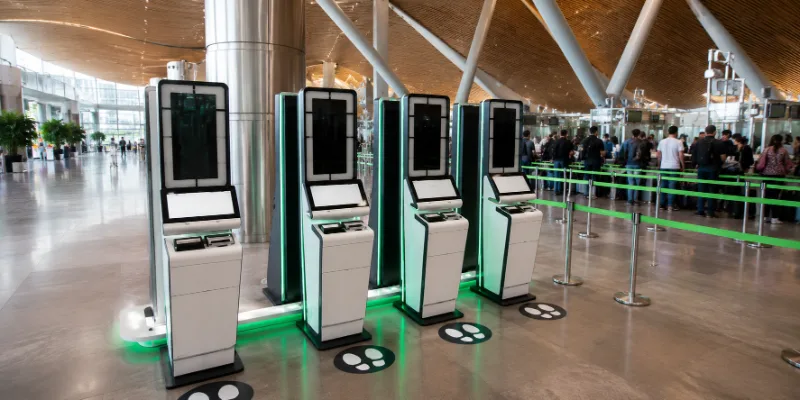
Table of Contents
From 6 September 2026, UK travellers entering the Schengen Area could face longer border queues as a temporary measure allowing some biometric checks to be eased during severe congestion ends. The EES is already fully operational, while ETIAS is a separate system and is not yet in use.
British travellers heading to Europe from Sunday, 6 September, are being warned to allow more time at border controls as a temporary measure designed to ease pressure during severe congestion comes to an end.
The change does not mean the EU Entry/Exit System (EES) is launching on 6 September. EES has already been fully operational at external Schengen borders since 10 April 2026.
What is changing is a temporary flexibility that has allowed border authorities, in exceptional circumstances, to suspend some biometric data collection for limited periods when queues become excessive.
The change could be particularly important for UK holidaymakers travelling to popular Schengen destinations including Spain, France, Portugal and Greece during the busy autumn travel period.
What Changes to EU Entry and Exit Checks on 6 September?
Under the legislation governing the EES rollout, border authorities were given temporary powers to partially suspend EES biometric collection for up to six hours at a particular border crossing when traffic became so intense that waiting times were excessive.
During such a partial suspension, other EES information could still be recorded, but authorities did not have to collect biometric data.
The initial post-rollout period was capable of being automatically extended by another 60 days, and that additional flexibility is due to expire on 6 September 2026.
The Majorca Daily Bulletin reported on 29 August that countries including Spain, France, Portugal and Greece have used the flexibility when queues became particularly severe, warning that congestion could worsen once it ends.
Aviation organisations have also been pressing Brussels for more flexibility.
The International Air Transport Association (IATA) called for the partial-suspension arrangement to continue beyond early September and advised passengers, while the system is experiencing difficulties, to leave two to three hours to get through airports.
The significance, therefore, is not that British passport holders suddenly become subject to EES on 6 September.
They already are. Instead, busy borders may have less scope to temporarily omit biometric collection simply because queues have become excessive.
What Do UK Travellers Have to Do Under EES?
EES applies principally to non-EU nationals making short visits to the 29 countries using the system. It electronically records entries and exits and is designed to help enforce the normal 90 days in any 180-day period limit for short stays.
For most British tourists, registration happens at the border and there is no EES application to complete or fee to pay before travelling.
Passport details and a facial image are recorded, while travellers aged 12 and over can also be required to provide fingerprints.
UK government guidance says registration is generally linked to the traveller for a rolling three-year period, or until the passport expires.
Those travelling through Eurostar at St Pancras, LeShuttle at Folkestone or the Port of Dover encounter the French EES border process before leaving Britain rather than after arriving on the Continent.
Not everyone with a British passport is necessarily processed as an ordinary short-stay visitor.
The EU lists exemptions that include holders of qualifying residence permits and long-stay visas, among several other categories. Travellers who believe they are exempt should carry the documentation proving their status.
Why Travellers Are Being Warned About Queues?
The concern follows months of reports of uneven experiences since EES became fully operational.
The Guardian reported on 23 August that some British travellers had encountered lengthy queues, problems with fingerprint machines and apparent discrepancies in their electronic entry or exit records.
One traveller reported that an exit initially appeared not to have been recorded, raising concerns about how the system was calculating remaining permitted days.
These are individual reported experiences rather than evidence that the same problems affect every border crossing.

The European Commission, meanwhile, says EES has been operating across all external Schengen border crossing points since April.
By 6 August, it said the system had already registered more than 150 million entries and exits, presenting EES as an important tool for detecting identity fraud, overstays and security risks.
For passengers, the practical lesson is that processing times can vary substantially by airport, port and time of day.
Travellers should check advice from their airline, ferry operator or rail company and leave additional time where recommended rather than assuming previous passport-control timings will still apply.
EES is Not the Same as ETIAS
Another source of confusion is ETIAS, the EU’s forthcoming travel-authorisation scheme.
EES is the border registration system already operating. ETIAS will be a separate pre-travel authorisation for eligible visa-exempt visitors, including most British tourists.
As of 31 August 2026, ETIAS is not operating, and applications are not being accepted.
The European Commission says it is scheduled for the final quarter of 2026, with the precise start date to be announced separately. Travellers should therefore be wary of websites implying that they already need to purchase an ETIAS authorisation.
For UK travellers using the EU Entry/Exit System, the immediate issue from 6 September is much simpler: EES remains in place, but one temporary mechanism for easing biometric checks during excessive queues is due to disappear.
Anyone travelling at busy periods should allow extra time and follow current guidance from their transport operator and the official EU travel website.
About the Journalist
Henry is the editorial head and lead author at Londoner. He oversees the publication’s editorial direction, article quality, source verification and corrections process. He also reviews major stories before publication to ensure they meet Londoner’s standards for accuracy, fairness and transparency.