Top 20 Museums In London: Best Museums To Visit In 2026
 Published By
Olivia
Published By
Olivia
Published:
Updated:
Table of Contents
London has an extraordinary concentration of museums, galleries and historic collections. A visitor can spend the morning examining ancient Egyptian objects, the afternoon walking beneath a blue whale skeleton and the evening surrounded by modern art, often without paying for general admission.
The top 20 museums in London cover far more than conventional history. The capital has internationally important collections devoted to art, natural history, science, aviation, transport, warfare, design, maritime history and everyday life. Many of London’s national museums remain free to enter, although temporary exhibitions and special experiences can carry separate charges.
For first-time visitors, the British Museum, Natural History Museum, V&A, Science Museum, National Gallery and Tate Modern provide an excellent introduction to London’s museum scene. Travellers with more time should also consider smaller institutions such as Sir John Soane’s Museum, the Wallace Collection and the Museum of the Home.
The ranking below considers the quality and breadth of the collections, historical importance, visitor experience, family appeal and how distinctive each museum feels compared with other attractions in London.
Top 20 Museums in London at a Glance
| Rank | Museum | Area | Best for | General admission |
| 1 | British Museum | Bloomsbury | World history and archaeology | Free |
| 2 | Natural History Museum | South Kensington | Dinosaurs and natural history | Free |
| 3 | Victoria and Albert Museum | South Kensington | Art, fashion and design | Free |
| 4 | Science Museum | South Kensington | Science and technology | Free |
| 5 | National Gallery | Trafalgar Square | European art | Free |
| 6 | Tate Modern | Bankside | Modern and contemporary art | Free |
| 7 | Imperial War Museum London | Lambeth | War and social history | Free |
| 8 | Churchill War Rooms | Westminster | Second World War history | Paid |
| 9 | National Maritime Museum | Greenwich | Naval and maritime history | Free |
| 10 | London Museum Docklands | Canary Wharf | History of London | Free |
| 11 | London Transport Museum | Covent Garden | Transport and family visits | Paid |
| 12 | Tate Britain | Millbank | British art | Free |
| 13 | National Portrait Gallery | Central London | Portraiture and British history | Free |
| 14 | Design Museum | Kensington | Modern design | Free collection |
| 15 | Wallace Collection | Marylebone | Fine and decorative arts | Free collection |
| 16 | Sir John Soane’s Museum | Holborn | Architecture and unusual collections | Free |
| 17 | RAF Museum London | Hendon | Aviation history | Free |
| 18 | Horniman Museum and Gardens | Forest Hill | Families and world cultures | Free museum |
| 19 | The Postal Museum | Clerkenwell | Postal history and Mail Rail | Paid |
| 20 | Museum of the Home | Hoxton | Domestic and social history | Free |

Admission arrangements can change and ticketed exhibitions may cost extra even at museums with free permanent collections. The admission status above reflects official museum information available in August 2026.
1. British Museum

Best for: World history, archaeology and ancient civilisations
Location: Bloomsbury
General admission: Free
For travellers interested in human civilisation, the British Museum is arguably the most important museum to visit in London. Its galleries take visitors across cultures and historical periods, making it possible to move from ancient Egypt and Greece to the Middle East, Asia, Africa and Europe within a single building.
Among its best-known objects are the Rosetta Stone, the Parthenon sculptures and treasures associated with the Sutton Hoo burial. The museum itself recommends routes ranging from a short one-hour highlights visit to longer explorations, which gives some indication of the scale of the collection.
One of the building’s most memorable spaces is the Great Court, where the historic Reading Room sits beneath an expansive glass-and-steel roof.
Trying to see everything in one visit is rarely practical. A better strategy is to choose two or three subjects perhaps Egypt, Greece and the Middle East and explore those galleries properly.
Permanent collection admission is free, although the museum encourages visitors to reserve free entry tickets in advance and charges separately for some special exhibitions.
For a first visit to London, the British Museum is one of the strongest all-round choices in the capital.
2. Natural History Museum
Best for: Dinosaurs, animals, geology and families
Location: South Kensington
General admission: Free
The Natural History Museum combines serious scientific collections with one of London’s most spectacular museum buildings.
Visitors entering Hintze Hall are greeted by Hope, the museum’s 25-metre blue whale skeleton, suspended above the central hall. The museum’s collections extend into dinosaurs, mammals, minerals, meteorites, marine life, evolution and the natural processes that have shaped Earth.
It is particularly successful as a family attraction because impressive specimens are combined with accessible explanations of subjects such as biodiversity, extinction and Earth’s geological history.
The building is also an attraction in its own right. Its grand Romanesque architecture, decorated interiors and cathedral-like central hall make the museum memorable even before visitors begin examining the collections.
General admission is free, and the museum currently operates daily opening, although individual exhibitions and activities can have separate ticketing arrangements.
Because the Natural History Museum is one of London’s most popular family attractions, visiting earlier in the day can make the busiest galleries easier to explore.
3. Victoria and Albert Museum
Best for: Fashion, decorative arts, furniture, jewellery and design
Location: South Kensington
General admission: Free
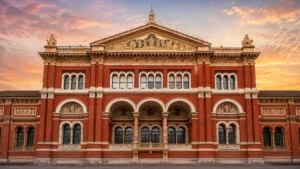
The Victoria and Albert Museum, usually known simply as the V&A, is the standout London museum for anyone interested in how people create beautiful and useful things.
Its collections span around 5,000 years of human creativity and encompass an unusually broad range of media. Fashion, textiles, sculpture, jewellery, ceramics, furniture, photography, architecture, theatre and decorative art all sit within the museum’s remit.
This breadth makes the V&A very different from a traditional fine-art gallery. Visitors can move from historic clothing to furniture, religious sculpture, metalwork and objects illustrating changing approaches to design.
Fashion enthusiasts are particularly well served, while those interested in global decorative arts can spend hours exploring the museum’s collections. For example, its South and South-East Asian holdings include textiles, sculpture, paintings, furniture, jewellery, ceramics and other decorative objects.
General admission to V&A South Kensington is free and advance booking is not normally required, although major temporary exhibitions are frequently ticketed separately.
Its location is another major advantage: the Natural History Museum and Science Museum are only a short walk away.
4. Science Museum
Best for: Technology, engineering, space and children
Location: South Kensington
General admission: Free
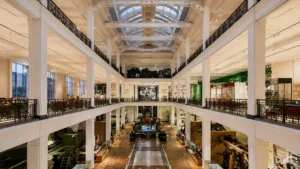
The Science Museum tells the story of scientific discovery through machines, inventions, experiments and objects connected with major technological developments.
Its galleries cover areas including engineering, communication, medicine, mathematics and space exploration. Significant objects associated with the museum’s collections include the Apollo 10 Command Module and Stephenson’s Rocket.
What distinguishes the Science Museum from many traditional museums is its emphasis on interaction. Families can combine object-based galleries with hands-on experiences that make difficult scientific concepts easier to understand.
Wonderlab is a particularly prominent interactive area, with live demonstrations and dozens of exhibits, although it is a separate paid experience rather than part of the standard free visit.
The museum currently offers five floors of galleries that can be explored without an admission charge, while optional experiences such as Wonderlab and IMAX screenings are ticketed separately.
For families trying to choose between London’s major museums, the Science Museum is especially suitable for children who enjoy experimenting, building and discovering how things work.
5. National Gallery
Best for: Classical European paintings
Location: Trafalgar Square
General admission: Free
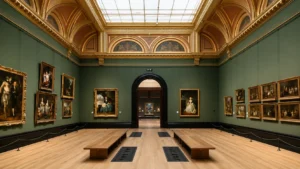
Standing directly on Trafalgar Square, the National Gallery is one of London’s essential destinations for art.
Its national collection focuses on paintings in the Western European tradition from the 13th to the early 20th centuries, providing visitors with a broad journey through centuries of changing styles, techniques and artistic movements.
Rather than trying to represent every form of art, the National Gallery’s concentration on painting gives it a clear identity. Visitors can examine religious paintings, Renaissance works, portraits, landscapes and later European masterpieces while tracing how Western painting developed over time.
Even travellers who do not normally spend much time in art galleries can make the experience manageable by selecting a particular era or a small number of rooms rather than attempting the whole collection.
General admission remains free, while selected temporary exhibitions are ticketed. Walk-up admission is possible, but the gallery recommends booking a free general admission ticket for quicker entry.
Its central location also makes it easy to combine with the National Portrait Gallery, Leicester Square, Covent Garden or Westminster.
6. Tate Modern
Best for: Modern and contemporary art
Location: Bankside
General admission: Free
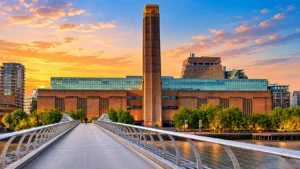
The former Bankside Power Station is now home to Tate Modern, London’s most prominent destination for international modern and contemporary art.
Even before considering the collection, the sheer scale of the building creates a distinctive experience. Its vast industrial spaces are capable of accommodating works and installations that would be difficult to display in a conventional gallery.
The collection provides an introduction to major developments in modern and contemporary art rather than simply arranging everything as a chronological procession. Painting, sculpture, photography, film, installation and other forms can all feature.
Visitors who are unsure about contemporary art may find Tate Modern easier to enjoy by treating it as an opportunity to explore ideas rather than expecting every work to follow conventional standards of realism or beauty.
Entry to Tate Modern’s collection is free. Major temporary exhibitions can require paid tickets, while access to the main collection does not normally require a free timed booking.
The riverside location also makes the museum easy to combine with the South Bank, Millennium Bridge, Shakespeare’s Globe and views towards St Paul’s Cathedral.
7. Imperial War Museum London
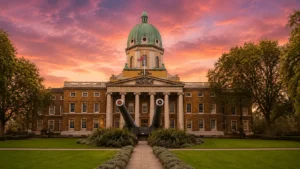
Best for: Military history and the human consequences of conflict
Location: Lambeth
General admission: Free
The Imperial War Museum London, or IWM London, examines conflict through the experiences of the people affected by it.
Its scope stretches from the First World War to more recent conflicts, placing military events within wider political, technological and social contexts. The museum’s official description emphasises people’s experiences of war rather than treating its collections solely as displays of military equipment.
That approach gives the museum considerable depth. Visitors encounter stories involving soldiers and civilians alongside objects, documents, photographs and other historical material.
It can be a particularly valuable museum for older children and teenagers studying twentieth-century history, although some subject matter is inevitably serious.
The museum should not be confused with the Churchill War Rooms, which are another branch of Imperial War Museums. IWM London provides the broader interpretation of warfare, while Churchill War Rooms preserve a very specific wartime location.
For visitors interested in twentieth-century British and global history, IWM London deserves considerably more time than a quick walk-through.
8. Churchill War Rooms
Best for: Winston Churchill, wartime government and the Second World War
Location: Westminster
General admission: Paid
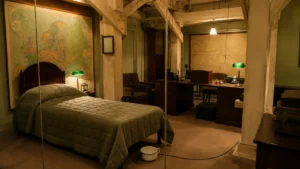
The Churchill War Rooms offer something that conventional museum galleries cannot easily recreate: visitors enter the actual underground complex used by Britain’s wartime government during the Second World War.
Historic rooms reveal how ministers, military personnel and staff worked below Westminster during the conflict. Imperial War Museums describes the site as the place where visitors can explore the rooms in which Churchill and the people around him worked, ate and sometimes slept.
The preserved setting is the key reason to visit. Instead of viewing wartime history only through objects inside glass cases, visitors move through the environment in which major decisions were made.
A substantial museum devoted to Churchill adds biographical context, helping visitors understand his political career and wartime leadership.
Unlike IWM London, Churchill War Rooms charges admission. Current adult tickets start from £29.75, according to Imperial War Museums, so booking in advance is sensible when planning a trip.
For visitors particularly interested in the Second World War, the Churchill War Rooms are one of London’s most immersive historical attractions.
9. National Maritime Museum
Best for: Ships, exploration and Britain’s maritime history
Location: Greenwich
General admission: Free
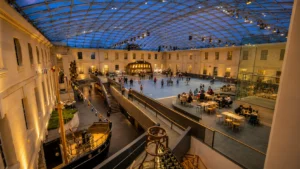
The National Maritime Museum explores the enormous influence that oceans, ships and maritime trade have had on Britain and the wider world.
Located in Greenwich, it forms part of the wider Royal Museums Greenwich complex. Collections and exhibitions cover subjects ranging from naval history and exploration to maritime communities and Britain’s relationship with the sea. The museum is also home to the Caird Library and Archive, which Royal Museums Greenwich describes as a major maritime research resource.
Greenwich is particularly suitable for a full cultural day rather than a single museum visit. The National Maritime Museum can be combined with the Queen’s House, Greenwich Park, Cutty Sark and the Royal Observatory.
General admission to the National Maritime Museum is free. Visitors do not have to pre-book, although free advance reservations are available and some special exhibitions are charged separately.
Families, maritime enthusiasts and visitors wanting to spend a day outside central London’s busiest tourist areas should place it high on the list.
10. London Museum Docklands
Best for: London’s docks, trade and East End history
Location: West India Quay, near Canary Wharf
General admission: Free
Anyone wanting to understand London itself should consider London Museum Docklands.
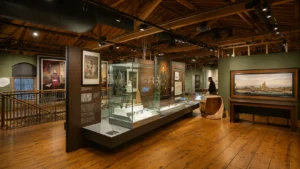
Housed in a historic warehouse at West India Quay, the museum examines the relationship between London, the Thames, its port and the communities that developed around the Docklands.
Nine free galleries explore different themes connected with London’s river, port and people, with the museum recommending that visitors follow them broadly chronologically.
Its location is particularly effective. After exploring the historical Docklands, visitors step outside into the modern towers of Canary Wharf, producing an immediate contrast between the area’s commercial past and present.
Entry is free and advance booking is not normally required for the main galleries.
There is also an important distinction for 2026 visitors. The former Museum of London site at London Wall is no longer the main visitor museum; the new London Museum at Smithfield is scheduled to open on 28 November 2026. London Museum Docklands remains open in the meantime.
11. London Transport Museum

Best for: London Underground history, buses and families
Location: Covent Garden
General admission: Paid
London’s transport network is such an important part of the city’s identity that it has an entire museum devoted to it.
The London Transport Museum follows roughly two centuries of London’s transport development through vehicles, signs, maps, engineering material, photographs, posters and other objects. Its wider collection contains more than 500,000 items relating to the city and its transport system.
For visitors interested in the London Underground, the museum provides valuable context for the development of the Tube network, its distinctive visual design and its effect on London’s growth.
It is also one of the stronger central London museums for families because buses, trains and interactive material give younger visitors plenty to investigate.
Unlike many of London’s national museums, general entry is paid. The museum’s standard admission operates as an annual pass, while children receive free museum entry under its current ticketing system.
Its Covent Garden location makes the museum particularly convenient for tourists who want an indoor attraction between sightseeing, shopping or a West End performance.
12. Tate Britain
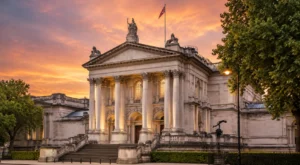
Best for: British painting and art history
Location: Millbank
General admission: Free
While Tate Modern concentrates on international modern and contemporary art, Tate Britain is the natural choice for visitors wanting to understand the history of British art.
Tate describes its wider remit as caring for the UK’s collection of British art from 1500 alongside international modern art, with Tate Britain providing the principal home for the British collection.
That makes the gallery useful for seeing how artistic styles and subjects have changed across several centuries. Rather than focusing on one movement, visitors can follow the development of British painting and other art through changing historical periods.
Tate Britain generally feels calmer than some of London’s headline museums, which can make it particularly rewarding for visitors who prefer to spend time examining individual works.
Entry to the main gallery is free and visitors do not need to reserve a general admission ticket. Temporary exhibitions can have separate charges.
Its Millbank location also puts it within reach of Westminster, making it relatively easy to combine art with major political and historical landmarks.
13. National Portrait Gallery
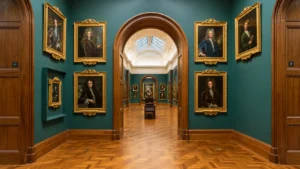
Best for: British history through famous people
Location: St Martin’s Place
General admission: Free
The National Portrait Gallery approaches history through people rather than events.
Portraits of monarchs, politicians, scientists, writers, performers, campaigners, athletes and other prominent figures allow visitors to follow changes in Britain through the individuals who influenced or represented different periods.
The primary collection includes more than 11,000 portrait paintings, drawings, miniatures and sculptures, while the institution’s broader searchable holdings encompass a far larger body of portrait material.
Its galleries are particularly useful for travellers who enjoy history but find conventional chronological museums overwhelming. Looking at individual lives provides an immediate route into wider political, cultural and social stories.
The collection is arranged broadly chronologically, allowing visitors to progress through British history while also observing how portraiture itself has changed.
General entry is free, although some temporary exhibitions require tickets. Advance free booking is recommended if visitors want to guarantee admission at a particular time.
14. Design Museum
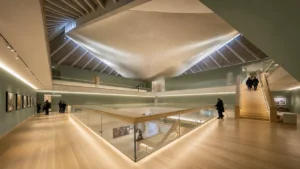
Best for: Product design, architecture, fashion and technology
Location: Kensington
General admission: Free permanent display
The Design Museum examines the objects and systems people use every day and asks why they look and function the way they do.
Its permanent Designer Maker User display examines modern design from three perspectives: the person creating something, the process through which it is produced and the individual ultimately using it.
Almost 1,000 items feature in the display, spanning disciplines including architecture, engineering, fashion, graphics and the digital world.
It is an especially interesting museum for designers, architects, entrepreneurs and anyone interested in the relationship between aesthetics, technology and practical problem-solving.
The permanent collection display and several other displays are free and do not require standard visitor tickets, while major temporary exhibitions are usually ticketed separately.
Compared with huge encyclopaedic museums such as the British Museum or V&A, the Design Museum is easier to cover in a relatively short visit.
15. Wallace Collection
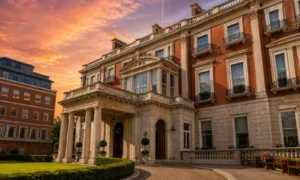
Best for: Paintings, furniture, porcelain and armour
Location: Marylebone
General admission: Free permanent collection
The Wallace Collection is an excellent choice for visitors who want major artworks without the enormous scale and crowds associated with London’s biggest national museums.
Located at Hertford House in Marylebone, its collection encompasses paintings, sculpture, furniture, porcelain, decorative arts and an important collection of arms and armour.
Part of its appeal comes from presentation. The historic interiors and densely arranged rooms create the feeling of exploring a grand private collection rather than walking through a conventional modern gallery.
It works particularly well as a second or third museum visit after travellers have already seen London’s larger institutions.
Entry to the permanent collection is free and normally unticketed. Temporary exhibitions may require paid admission.
The museum also currently operates free daily collection highlights tours, subject to availability, which can be useful for visitors who would prefer an expert introduction.
For a quieter cultural experience in central London, the Wallace Collection is difficult to beat.
16. Sir John Soane’s Museum
Best for: Architecture, interiors and unusual collections
Location: Lincoln’s Inn Fields
General admission: Free
Few museums in London feel quite like Sir John Soane’s Museum.
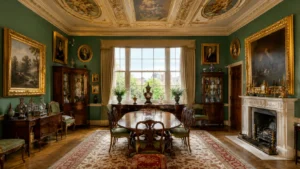
The museum occupies the former home of architect Sir John Soane and preserves an extraordinary combination of architecture, antiquities, paintings, sculpture, books and architectural material.
Instead of neutral gallery spaces, visitors move through rooms in which objects, mirrors, architectural fragments and artworks are arranged densely around Soane’s own interiors. The building and collection therefore work together as a single experience.
Its relatively intimate scale is part of the appeal, but it also means capacity is limited.
Entry is free and visitors can normally walk in without pre-booking. The museum warns that its popularity and limited space can result in queues, while specific tours and larger groups require advance arrangements.
This is one of the best museums in London for architecture students, interior-design enthusiasts and repeat visitors searching for something less conventional than the major national institutions.
17. Royal Air Force Museum London

Best for: Aircraft, engineering and military aviation
Location: Hendon
General admission: Free
The Royal Air Force Museum London is worth travelling beyond central London for, particularly for visitors interested in aircraft or engineering.
Large hangars allow the museum to display historic aircraft at a scale impossible in most central London museums. Exhibitions place those machines within the wider history of the Royal Air Force and military aviation.
The physical size of the exhibits gives the museum strong family appeal. Children who may have little patience for display cases can stand beside full-size aircraft and better understand their engineering and dimensions.
Entry to all museum areas is currently free, although advance ticket booking is recommended. The London site is in Hendon, with Colindale Underground station providing one of the main public-transport routes to the area.
Because it is outside the usual central London museum cluster, visitors should allow enough time to make the journey worthwhile rather than squeezing it into a short sightseeing schedule.
For aviation enthusiasts, however, it can easily justify half a day.
18. Horniman Museum and Gardens
Best for: Families, global cultures and a museum-and-gardens day out
Location: Forest Hill
General admission: Free museum and gardens
The Horniman Museum and Gardens offers one of the most varied museum experiences in London.
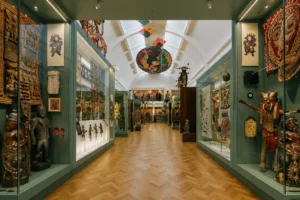
Rather than concentrating narrowly on a single academic subject, the Horniman brings together global cultures, anthropology and natural-world themes within a museum surrounded by substantial gardens.
Its collection contains hundreds of thousands of objects, although only a proportion can be displayed at any one time.
Families can therefore combine indoor galleries with outdoor time, making the Horniman particularly attractive when spending an entire day inside a conventional museum would be difficult.
The main museum and gardens are free to visit. Additional attractions including the Aquarium and Butterfly House, as well as some temporary exhibitions and events, carry separate charges.
There is one important consideration for 2026 visitors: the Horniman’s Natural History Gallery is currently closed for refurbishment and is expected to remain closed until early 2027.
Even with that temporary closure, the combination of collections, gardens and family activities makes the Horniman a strong alternative to the central London museum circuit.
19. The Postal Museum
Best for: Mail Rail, engineering and unusual London history
Location: Clerkenwell
General admission: Paid
Postal history may initially sound specialised, but The Postal Museum turns it into one of London’s most unusual museum experiences.
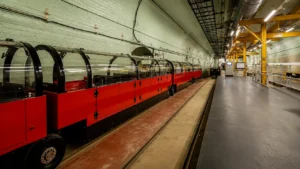
Its major attraction is Mail Rail, the underground railway that once transported post beneath London. The railway carried mail through tunnels beneath the capital between 1927 and 2003.
Visitors can now ride through part of that former network, offering an experience substantially different from an ordinary gallery visit.
The wider museum examines how Britain’s postal service developed, how letters and parcels moved around the country and how communications connected people.
Current standard museum tickets include the exhibitions and a Mail Rail ride, with the exhibition element providing repeat entry for a year under the museum’s existing ticket structure.
Families are particularly well served, although some children’s experiences require separate tickets.
For tourists who have already visited London’s major national institutions, The Postal Museum is a good choice because its subject and underground railway experience feel genuinely different.
20. Museum of the Home

Best for: Everyday life, interiors and social history
Location: Hoxton
General admission: Free
History is often told through kings, wars and major political events. The Museum of the Home takes a different approach by examining something nearly everyone can relate to: how people live at home.
The museum explores changing domestic life through rooms, objects, gardens and personal stories. Its Rooms Through Time concept uses period settings to consider how homes and the meaning of home have changed across generations.
That makes the collection useful not only for people interested in furniture and interiors but also for visitors interested in social history. Domestic spaces reveal changing attitudes towards family life, work, technology, comfort, identity and society.
The museum’s galleries are free, with no standard advance booking required for individual visitors. It is normally open Tuesday to Sunday and on Bank Holidays.
Its location directly beside Hoxton station also makes it relatively straightforward to reach from central London.
For visitors searching for a smaller London museum with a clear and distinctive subject, the Museum of the Home is an excellent final entry in the top 20.
Which London Museum Is Best for First-Time Visitors?
For a first trip, the British Museum is probably the strongest overall choice because it combines enormous historical breadth, famous objects and free general admission. Visitors more interested in nature should choose the Natural History Museum, while the V&A is stronger for fashion and design and Tate Modern is the obvious starting point for contemporary art.
Families with younger children may find the Natural History Museum and Science Museum particularly accessible because of their large-scale displays and interactive experiences. The Science Museum offers extensive free galleries alongside optional paid experiences such as Wonderlab.
No single museum, however, represents the entire London museum experience. Choosing according to personal interests generally produces a better visit than simply selecting the most famous attraction.
What Are the Best Free Museums in London?
London is unusually good for travellers trying to keep sightseeing costs under control. The British Museum, Natural History Museum, V&A, Science Museum, National Gallery, Tate Modern, Tate Britain, National Portrait Gallery, IWM London, National Maritime Museum and London Museum Docklands all provide free access to their principal collections or galleries, although paid exhibitions and optional experiences may be offered.
Smaller free choices include Sir John Soane’s Museum, the Wallace Collection, RAF Museum London and the Museum of the Home.
This means a visitor could build several full sightseeing days around museums while spending little or nothing on admission.
What Are the Best Museums in London for Children?
The Natural History Museum is one of the easiest recommendations for families because dinosaurs, mammals, fossils and Hope the blue whale provide immediate visual appeal. The Science Museum is another strong choice, particularly for children who prefer interactive science and technology.
London Transport Museum works especially well for young visitors interested in buses and trains, while RAF Museum London offers the excitement of seeing full-size aircraft. The Horniman combines museum galleries with gardens and optional family attractions, making it useful for families wanting greater variety during the day.
The Postal Museum is also distinctive because the standard experience includes a journey on Mail Rail.
What Are the Best London Museums for Art?
Visitors interested in traditional European painting should begin at the National Gallery, while those wanting British art should go to Tate Britain. Tate Modern is the stronger choice for international modern and contemporary work.
The V&A sits somewhere different because it crosses the boundaries between art and design, covering subjects including sculpture, textiles, fashion, jewellery, ceramics and furniture.
The Wallace Collection is an excellent smaller alternative, while the National Portrait Gallery is particularly useful for anyone interested in the intersection between visual art, biography and British history.
Which London Museums Are Close to Each Other?
South Kensington provides the easiest museum combination in London. The Natural History Museum, Science Museum and V&A are all within a short walk of one another, and general admission to all three is free.
Around Trafalgar Square, the National Gallery and National Portrait Gallery can easily be combined. In the Bloomsbury and Holborn area, the British Museum and Sir John Soane’s Museum can form another practical pairing.
Greenwich works particularly well for a full-day itinerary because the National Maritime Museum sits close to other Royal Museums Greenwich attractions and Greenwich Park.
Trying to visit three enormous museums properly in one day, however, can become exhausting. Two major museums — or one large institution combined with a smaller collection is usually a more comfortable pace.
How Long Should Visitors Spend in London’s Museums?
Large museums such as the British Museum, Natural History Museum, V&A and Science Museum can occupy several hours and still leave substantial parts unexplored. Visitors interested in a particular collection could comfortably spend most of a day in any one of them.
Smaller museums such as Sir John Soane’s Museum can work well within a shorter itinerary, while London Museum Docklands recommends at least an hour and suggests around two hours for exploring its nine galleries chronologically.
The most effective approach is to prioritise particular galleries rather than treating every museum as something that must be completed.
Are London’s Museums Really Free?
Many are, but free admission does not necessarily mean that everything inside a museum is free.
National institutions frequently provide free permanent collections while charging for temporary exhibitions, immersive experiences or special events. The Natural History Museum, for example, offers free general admission but can charge for temporary exhibitions, while the Science Museum has free galleries alongside ticketed attractions.
The same principle applies to institutions such as the V&A, National Gallery and Tate galleries.
Visitors should therefore check the relevant museum’s official website shortly before travelling, particularly if a specific exhibition is the main reason for going.
What Is the Most Famous Museum in London?
The British Museum and Natural History Museum are among London’s most internationally recognisable museums, but they offer very different experiences.
The British Museum is the stronger option for archaeology and human history, whereas the Natural History Museum centres on the natural world. The latter is particularly recognisable for its dramatic Hintze Hall and suspended blue whale skeleton.
For modern art, Tate Modern has similarly become one of London’s defining cultural institutions.
What Is the Best Museum Area in London?
For sheer convenience, South Kensington is the best museum district for most visitors.
The V&A, Natural History Museum and Science Museum are clustered together, all provide substantial free collections, and each covers a completely different subject.
A visitor could therefore spend an entire day in the neighbourhood, although trying to explore all three comprehensively would be unrealistic.
For art, the Trafalgar Square area is particularly convenient because the National Gallery and National Portrait Gallery are almost neighbours.
Final Thoughts on the Top 20 Museums in London
London’s greatest advantage as a museum destination is variety. Someone interested in ancient civilisation can disappear into the British Museum, a family can spend hours exploring dinosaurs and science in South Kensington, an art lover can move between the National Gallery and Tate, while visitors wanting something unconventional can descend into Mail Rail or wander through Sir John Soane’s extraordinary former home.
For most first-time travellers choosing from the top 20 museums in London, the British Museum, Natural History Museum, V&A, Science Museum and National Gallery provide the strongest starting point. Repeat visitors can then explore institutions such as London Museum Docklands, the Wallace Collection, Horniman Museum and Museum of the Home for more specialised perspectives on the capital and its collections.
Perhaps most importantly, London’s extensive network of free museums means exploring world-class culture does not have to be one of the expensive parts of visiting the city. General admission remains free at many of the capital’s most important national collections, allowing visitors to build an itinerary around their interests rather than their admission budget.
FAQs About the Top 20 Museums in London
What is the number one museum to visit in London?
The British Museum is one of the strongest choices for a first visit because of the scale and historical importance of its collection. Visitors can explore objects connected with ancient Egypt, Greece, Rome, Asia, Africa and many other cultures.
Which museums in London are free?
Many major London museums offer free general admission, including the British Museum, Natural History Museum, Science Museum, V&A, National Gallery, Tate Modern, Tate Britain, Imperial War Museum London and National Maritime Museum. Some temporary exhibitions and special experiences may require paid tickets.
Which London museums are best for children?
The Natural History Museum and Science Museum are among the best options for children. London Transport Museum, RAF Museum London, Horniman Museum and Gardens and The Postal Museum are also popular with families because they include large exhibits, interactive displays or unusual experiences.
What is the best museum in London for dinosaurs?
The Natural History Museum is the best-known London museum for dinosaurs. Its collections cover prehistoric animals, fossils, evolution, mammals, minerals and the wider natural world.
Which museum in London is best for history?
The British Museum is one of the best choices for global history, while Imperial War Museum London focuses on modern conflict. Churchill War Rooms is particularly suitable for Second World War history, and London Museum Docklands explores the history of London and its river.
What is the best art museum in London?
The National Gallery is an excellent choice for European paintings, Tate Modern specialises in modern and contemporary art, and Tate Britain focuses on British art. The V&A is particularly good for decorative art, fashion and design.
Are London museums open every day?
Many major museums are open seven days a week, although opening hours differ between institutions and can change during public holidays, special events or maintenance periods. Visitors should check the museum’s official website before travelling.
Do visitors need to book London museums in advance?
Advance booking is not compulsory at every museum, but it can be useful for popular attractions, busy weekends and school holidays. Ticketed exhibitions, special experiences and attractions such as Churchill War Rooms or Mail Rail are more likely to require advance reservations.
How many museums can visitors see in one day in London?
Most visitors can comfortably explore one or two major museums in a day. Large institutions such as the British Museum, Natural History Museum, V&A and Science Museum can each take several hours, so visiting too many in one day can feel rushed.
What are the best museums near South Kensington?
The three main museums in South Kensington are the Natural History Museum, Science Museum and Victoria and Albert Museum. Together they cover natural history, technology, science, art, fashion and design.
Which London museum is best for aviation enthusiasts?
The Royal Air Force Museum London in Hendon is one of the best choices for aviation enthusiasts. It displays historic aircraft and explores the development of the RAF and military aviation.
What is the best transport museum in London?
London Transport Museum in Covent Garden is the main museum dedicated to the history of London’s transport network. It explores buses, trains, the Underground, transport design and the role public transport played in shaping the capital.
Is the British Museum or Natural History Museum better?
The British Museum is better suited to visitors interested in archaeology, ancient civilisations and world history. The Natural History Museum is a stronger choice for dinosaurs, animals, fossils and Earth sciences. Families with younger children may find the Natural History Museum particularly engaging.
What museums should first-time visitors see in London?
First-time visitors should consider the British Museum, Natural History Museum, V&A, Science Museum, National Gallery and Tate Modern. These institutions provide a broad introduction to London’s history, art, science and culture.
What is the most unusual museum in London?
Sir John Soane’s Museum is one of the most unusual because it preserves the architect’s historic home and densely arranged personal collection. The Postal Museum is another distinctive option because visitors can experience Mail Rail, the former underground railway used to transport post beneath London.
When is the best time to visit museums in London?
Weekday mornings are often a good choice for visitors hoping to avoid the busiest periods. Weekends, public holidays and school holidays can be considerably busier, particularly at major free attractions such as the Natural History Museum and British Museum.
About the Journalist
Olivia covers London life, culture and lifestyle for Londoner. Her work includes food, shopping, neighbourhood trends, attractions, local experiences and practical guides for residents and visitors. She focuses on engaging stories that reflect everyday life across the capital.