Sergey Lavrov UK Future Comments: Russian Foreign Minister Questions ‘What Will Become’ Of Britain
 Published By
Henry
Published By
Henry
Published:
Updated:
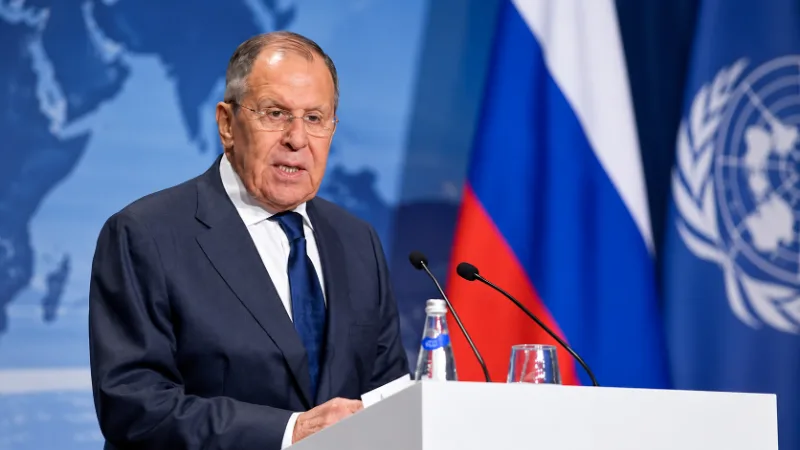
Table of Contents
Russian Foreign Minister Sergey Lavrov has questioned the future of the United Kingdom, pointing to renewed constitutional campaigns in Scotland, Wales and Northern Ireland as part of a wider argument that Britain’s international position has changed dramatically since the creation of the United Nations.
The remarks, which have triggered fresh interest around the search term “Sergey Lavrov UK future comments”, were originally delivered during a 16 September event in Yekaterinburg but gained wider attention in Britain at the end of September after being reported by UK media.
Lavrov told the audience:
“I do not know what will become of the country called Great Britain.”
He went on to refer to what he called “the Celts”, naming Wales, Ireland and Scotland and saying they were seeking referendums.
The wording requires some context. The Republic of Ireland is not part of the United Kingdom.
The immediate political developments Lavrov appeared to be referring to involve Scotland, Wales and Northern Ireland, where nationalist parties have been pressing different forms of constitutional change.
His comments came shortly after SNP leader and Scottish First Minister John Swinney, Plaid Cymru leader and Welsh First Minister Rhun ap Iorwerth, Sinn Féin vice-president Michelle O’Neill and Sinn Féin president Mary Lou McDonald met in Cardiff.
The nationalist parties signed an agreement asserting their nations’ right to determine their constitutional future.
The agreement said each would pursue change according to its own circumstances and timetable rather than setting out one common route to leaving the UK.
That distinction is important because Lavrov’s remarks could otherwise create the impression that simultaneous referendums across Britain are already scheduled. They are not.
Scotland, Wales and Northern Ireland have different constitutional arrangements, different political movements and different legal processes surrounding any future vote.
Why Lavrov Was Talking About Britain?
Lavrov was not discussing the UK simply as a domestic constitutional issue.
His comments formed part of a much broader argument about reforming the United Nations Security Council, where Britain remains one of five permanent members alongside the United States, France, China and Russia.
Lavrov argued that the composition of the Security Council no longer properly reflects the balance of global political and economic power.
He said Western states were over-represented and called for stronger representation for developing countries in Asia, Africa and Latin America.
Russia has separately backed countries including India and Brazil for permanent representation as part of any future Security Council expansion.
Britain therefore featured in Lavrov’s argument for two connected reasons: the UK’s changing constitutional politics and what Moscow presents as the declining relative influence of established Western powers.
He pointed to the enormous reduction in the geographical size of the former British Empire since the UN was established in 1945.
That does not, however, mean Russia has formally called for Britain to lose its permanent UN Security Council seat.
Lavrov specifically said Moscow was not advocating the removal of existing permanent members. His argument was instead that additional influence should shift towards countries outside the traditional Western powers.
Welsh Nationalists Push Back At Kremlin Intervention
Plaid Cymru responded by making clear that Lavrov’s intervention should not determine the Welsh independence debate.
The party said Wales’ constitutional future was “a matter for the people of Wales” and was “not for the Kremlin to endorse, oppose or exploit”.
That response highlights an important distinction between Russia commenting favourably on constitutional tensions inside another country and the positions of the nationalist parties themselves.
The Cardiff gathering involved parties that support constitutional change, but their respective governments and parties have also criticised Russia over its invasion of Ukraine.
The separate Cardiff Agreement between the Welsh and Scottish governments describes the two nations as being on different constitutional journeys while emphasising their governments’ belief that voters should ultimately determine their futures.
The broader nationalist-party agreement likewise acknowledged that each country would decide its future “in its own way and in its own time”.
Experts Warn Against Viewing The Comments In Isolation
Lavrov’s comments also sit within a much wider debate about how Moscow communicates about political divisions inside Western countries.
Sophie Williams-Dunning, a research analyst at the Royal United Services Institute, previously described Russia as “one of the most prolific actors” conducting hybrid campaigns intended to influence politics in other countries, including Britain.
RUSI says such activity can combine information operations, cyber activity and other methods intended to produce political or social effects.
That assessment was not written specifically in response to Lavrov’s latest comments, but it provides context for why British security analysts pay close attention when Russian officials highlight existing political divisions within the UK.
RFE/RL reported on 27 September that Russian state-linked media had already presented the Cardiff meeting as evidence of British instability, with some pro-Kremlin commentary discussing possible UK “disintegration”.
Again, that should not be confused with evidence that Russia created the constitutional movements themselves. Scottish independence, Welsh nationalism and Irish reunification campaigns all substantially pre-date the current deterioration in
Ed Arnold, senior associate fellow at RUSI, has separately argued that defence and security would feature much more prominently in any future Scottish independence referendum than they did during the 2014 campaign.
That is particularly relevant because Scotland hosts strategically important military infrastructure, including the UK’s nuclear deterrent at Faslane, while the geopolitical environment in northern Europe has changed substantially since Russia’s full-scale invasion of Ukraine.
The Timing Is Particularly Sensitive
The renewed attention surrounding Lavrov’s UK comments comes amid unusually strained relations between London and Moscow.
Britain continues to support Ukraine militarily, while Russia has repeatedly accused the UK and other European governments of escalating the conflict.
Earlier in September, the UK summoned Russia’s chargé d’affaires following what Britain described as Russian involvement in a drone attack on Leipzig airport. Moscow has rejected Western allegations surrounding such incidents.
Lavrov has also been in New York for the UN General Assembly, where Russia’s relationship with European governments has remained a major subject.
On 26 September, he held talks with German Foreign Minister Johann Wadephul, their first bilateral meeting since Russia’s 2022 full-scale invasion of Ukraine.
The meeting highlighted how severely relations between Moscow and major European capitals remain strained.
That backdrop explains why remarks about Britain’s constitutional future are being interpreted as more than casual observations about Scottish, Welsh or Irish politics.
They form part of a much larger dispute over Russia, NATO, Ukraine, Europe’s security architecture and whether institutions created after the Second World War still reflect today’s distribution of international influence.
For now, Lavrov’s comments do not establish that the UK is heading towards an imminent break-up.
What they demonstrate is that Britain’s internal constitutional debate has increasingly become part of international geopolitical messaging.
The questions of Scottish independence, Welsh independence and Irish reunification will ultimately depend on domestic democratic and legal processes.
Russia’s foreign minister has now chosen to cite those debates publicly as evidence supporting Moscow’s argument that Britain’s relative position in the world has changed.
About the Journalist
Henry is the editorial head and lead author at Londoner. He oversees the publication’s editorial direction, article quality, source verification and corrections process. He also reviews major stories before publication to ensure they meet Londoner’s standards for accuracy, fairness and transparency.