Prince Andrew Sandringham Exile: What His New Life In Norfolk Means After Leaving Royal Lodge
 Published By
Lucy
Published:
Updated:
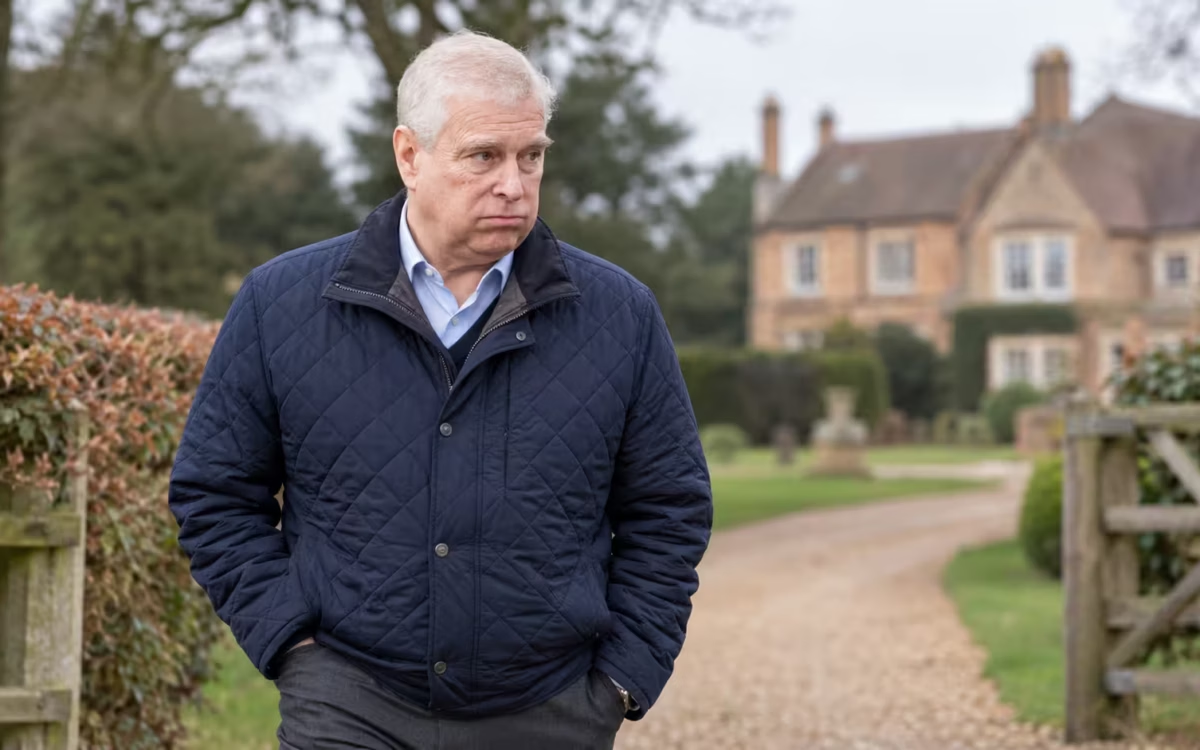
Table of Contents
Prince Andrew’s Sandringham exile refers to his move away from Royal Lodge in Windsor to Marsh Farm on King Charles III’s privately owned Sandringham Estate in Norfolk. Now officially known as Andrew Mountbatten-Windsor, he is living a far more private life away from official royal duties while an ongoing police investigation continues.
Although “exile” is not an official royal or legal term, it reflects how significantly his position within the Royal Family has changed.
The move followed Buckingham Palace’s October 2025 announcement that King Charles had begun the process of removing Andrew’s style, titles and honours.
Andrew was also formally required to surrender his lease on Royal Lodge, bringing an end to more than two decades at the Windsor property.
His relocation to Sandringham has therefore become more than a simple change of address.It represents Andrew’s separation from the visible working monarchy, while allowing him to remain on privately owned royal property as he deals with continuing legal and reputational pressure.
Why Was Prince Andrew Moved to Sandringham?
Andrew’s move followed a major change in his royal status during 2025. Buckingham Palace confirmed on 30 October that formal steps were being taken to remove his remaining style, titles and honours and that notice had been served for him to give up Royal Lodge.
The Palace said Andrew would move to alternative private accommodation. Sandringham was eventually chosen, with Andrew first staying at Wood Farm before moving into Marsh Farm.
Sandringham is privately owned by King Charles rather than forming part of the Crown Estate. The distinction means Andrew can live there through private arrangements involving the King rather than occupying an official royal residence.
The estate also provides considerably more privacy than Windsor. Its large rural setting keeps Andrew away from many of the locations most closely associated with public royal duties.
The arrangement also reflects the difference between Andrew’s position and that of a working member of the Royal Family.
While Sandringham remains one of the monarchy’s best-known estates, Andrew’s accommodation there is private rather than part of an official role.
The estate forms part of King Charles’s personal wealth and privately owned property, alongside assets such as Balmoral.
What Happened to Andrew’s Royal Lodge Home?
Andrew had lived at Royal Lodge on the Windsor Estate for more than 20 years under a 75-year lease agreed in 2003.
The property became increasingly controversial as questions were raised about its upkeep, the terms of Andrew’s lease and whether he should continue occupying such a significant Windsor residence after stepping away from public royal duties.
That arrangement officially ended in October 2026.
The Crown Estate confirmed on 9 October that Andrew had fully vacated Royal Lodge and surrendered the lease more than 50 years before it was due to expire.
A financial settlement was also required. According to the Crown Estate, £1.8 million was due for dilapidations relating to the condition of the property.
Under the lease terms, Andrew was entitled to approximately £302,000 compensation because the agreement was being surrendered during its first 25 years.
The resulting amount payable to the Crown Estate was therefore around £1.5 million.
Reports later stated that King Charles covered that amount from private funds.
The surrender makes Andrew’s departure from Windsor substantially more permanent. Royal Lodge is no longer simply a residence he has temporarily left.
The property has returned to the Crown Estate, which is considering how it could be used in the future.
Marsh Farm has consequently become Andrew’s main private residence rather than a short-term retreat.
What Is Prince Andrew’s Life Like at Sandringham?
Andrew’s life at Sandringham is much less public than the one he previously led at Windsor.
Marsh Farm sits within the wider Norfolk estate, allowing him to live away from much of the public attention associated with royal residences closer to London.
Reports have suggested that he continues to meet privately with friends and family, although detailed descriptions of his everyday routine often rely on unnamed sources and have not been officially confirmed.
What is clear is that Andrew no longer performs royal engagements or represents the King.
Buckingham Palace now refers to him as Andrew Mountbatten-Windsor rather than by the princely title he used for most of his life.
He nevertheless remains eighth in the line of succession. That constitutional position is separate from whether somebody performs official duties and does not restore any of Andrew’s former public responsibilities.
The Sandringham arrangement therefore leaves him close to the Royal Family geographically and personally while keeping him removed from the institution’s public-facing work.
How Does the Police Investigation Affect His Sandringham Exile?
The biggest uncertainty surrounding Andrew now concerns the continuing police investigation.
Andrew was arrested in February 2026 on suspicion of misconduct in public office and questioned before being released under investigation. He has not been charged, and he denies wrongdoing.
The investigation has examined allegations concerning his time as the UK’s special representative for international trade and investment, including questions about whether sensitive information was shared with Jeffrey Epstein.
Police have also examined other allegations connected with Andrew, including the separately reported Prince Andrew Royal Ascot allegation concerning claims about his behaviour at the 2002 event. Those claims have not resulted in a criminal conviction.
The case took another turn in October 2026 when search warrants previously used at Andrew’s Sandringham residence and former Windsor home were quashed by the High Court after Thames Valley Police accepted that they had been unlawfully obtained.
However, the decision did not bring the wider investigation to an end.
Further legal proceedings are expected to address what should happen to material obtained during the searches and whether investigators can continue using any of it.
Andrew is therefore settled into his new Norfolk residence while still facing considerable legal uncertainty.
Is Prince Andrew’s Sandringham Exile Likely to Be Permanent?
There is currently little indication that Andrew will return to Royal Lodge or resume his former position within the monarchy.
The surrender of the Royal Lodge lease makes a return to his Windsor home particularly unlikely. The property is back under Crown Estate control, while Marsh Farm has become his established residence.
His loss of royal titles and official responsibilities also appears to be a long-term change rather than a temporary arrangement.
That distinguishes Andrew’s position from some other disputes involving members of the Royal Family. Recent discussion around Prince Harry and possible reconciliation with King Charles and Prince William centres mainly on personal and family relationships.
Andrew’s situation involves the loss of his Windsor residence, removal of titles and an ongoing police investigation.
For now, Sandringham appears to represent the Royal Family’s long-term solution. Andrew remains privately accommodated on property belonging to his brother while being kept separate from official royal life.
The description “Sandringham exile” may not be an official term, but it captures the scale of the change.
Andrew has moved from one of Windsor’s most prominent royal residences to a secluded Norfolk property where his life is increasingly private and disconnected from the public monarchy.
About the Journalist
Lucy reports on London’s boroughs and the capital’s sporting community. Her coverage includes council decisions, neighbourhood developments, community issues, football, tennis, cricket and major sporting events. She focuses on stories that connect local communities and highlight the people and organisations shaping London.