Over 65 Savings Interest Tax Changes: Rates to Rise From April 2027
 Published By
Ben
Published By
Ben
Published:
Updated:

Table of Contents
Older savers could face higher tax bills on taxable savings interest from 6 April 2027, when the UK introduces higher Income Tax rates specifically for savings income.
Under rules already legislated through the Finance Act 2026, the savings basic rate will rise from 20% to 22%, the savings higher rate from 40% to 42%, and the savings additional rate from 45% to 47% for the 2027/28 tax year.
The change has particular relevance for pensioners and other older people who hold substantial sums in taxable savings accounts.
However, there is an important distinction: there is no separate over 65 savings interest tax. The higher rates will apply to taxable savings income generally, regardless of age.
At the same time, people aged 65 and over are set to receive more favourable treatment under forthcoming Cash ISA rules, retaining access to a £20,000 annual Cash ISA limit when a lower £12,000 limit is introduced for younger savers.
What Is Changing to Savings Interest Tax From April 2027?
The main change takes effect at the start of the 2027/28 tax year on 6 April 2027.
Savings income that falls outside available tax-free allowances will be taxed at higher rates.
| Savings Income Tax Rate | 2026/27 | From 6 April 2027 | Change |
| Savings basic rate | 20% | 22% | +2 percentage points |
| Savings higher rate | 40% | 42% | +2 percentage points |
| Savings additional rate | 45% | 47% | +2 percentage points |
The Government has confirmed that these new savings rates will apply across the UK.
This means someone with taxable savings interest above their available allowances could pay more tax from April 2027 even if the amount of interest they receive remains unchanged.
Is the Over 65 Savings Interest Tax Increasing?
There is no tax rate specifically imposed on people because they are aged 65 or over.
Instead, the change affects the rate charged on taxable savings income.
A person’s actual savings tax position depends on several factors, including:
- their total taxable income;
- the amount of savings interest received;
- their Personal Savings Allowance;
- whether they qualify for the starting rate for savings; and
- whether their savings are held inside tax-free accounts such as ISAs.
Age alone does not determine whether savings interest is taxable.
Therefore, describing the April 2027 change simply as a new “over-65 tax” would be misleading.
The more accurate position is that over-65 savers who already have taxable savings interest may face higher rates from April 2027.
What Is the Personal Savings Allowance?
The Personal Savings Allowance allows many people to receive a certain amount of savings income without paying Income Tax on it.
For the 2026/27 tax year, the allowances are:
| Taxpayer position | Personal Savings Allowance |
| Basic-rate taxpayer | £1,000 |
| Higher-rate taxpayer | £500 |
| Additional-rate taxpayer | £0 |
The Government has confirmed that the Personal Savings Allowance will remain unchanged when the new savings tax rates take effect in 2027/28.
This is an important point for older savers.
The higher 22%, 42% and 47% rates do not mean that every pound of bank interest will automatically be taxed at those rates. Tax generally becomes relevant only after the person’s applicable allowances have been taken into account.

Example of How the 2027 Increase Could Affect a Saver
Consider a basic-rate taxpayer who receives £1,500 in taxable savings interest during a year and has a £1,000 Personal Savings Allowance.
Assuming the full allowance is available, £500 of the interest would be taxable.
Under the current 20% savings basic rate:
£500 × 20% = £100 tax
At the 22% savings basic rate from April 2027:
£500 × 22% = £110 tax
That represents a £10 increase.
For larger amounts of taxable interest, the cash difference becomes greater.
For example, £5,000 of savings interest subject to the savings basic rate would generate:
- £1,000 tax at 20%
- £1,100 tax at 22%
That is an increase of £100.
These are simplified examples and do not account for every individual’s income, Personal Allowance, starting-rate entitlement or other circumstances.
Will the £5,000 Starting Rate for Savings Be Removed?
No change to the starting rate for savings has been announced as part of the April 2027 increase.
The starting rate is currently 0% on up to £5,000 of qualifying savings income, although eligibility depends on the amount of other income a person receives.
The Finance Act 2026 also fixes the £5,000 starting-rate limit through the relevant future tax years.
Government guidance has confirmed that both the starting rate for savings and Personal Savings Allowance remain unchanged alongside the 2027 rate increase.
This provision can be particularly relevant to some pensioners and other people with relatively low non-savings income.
However, receiving a State Pension does not automatically mean someone qualifies for the full £5,000 starting rate. Pension and other non-savings income can reduce or eliminate the amount available.
Why Could the Change Matter to Pensioners?
The April 2027 increase could be significant for some retired households because pension income and savings interest are considered together when determining a person’s Income Tax position.
The standard Personal Allowance remains £12,570 for 2026/27 and 2027/28 under existing rules.
Private pension income, workplace pensions and the State Pension can therefore use some or all of an individual’s Personal Allowance.
Any taxable savings interest must then be considered alongside the separate savings allowances.
People who receive enough pension or other income to become higher-rate taxpayers also receive a smaller Personal Savings Allowance of £500 rather than £1,000.
That makes the interaction between pension income and savings interest increasingly important for older households with significant cash deposits.
Over-65s Set to Keep a £20,000 Cash ISA Limit
Although savings tax rates are increasing, people aged 65 and over are also set to receive an important advantage under the Government’s forthcoming ISA reforms.
For the 2026/27 tax year, individuals can currently put up to £20,000 into ISAs, subject to the relevant ISA rules. Money saved inside an ISA can generally grow free of UK Income Tax and Capital Gains Tax.
From 6 April 2027, the Government has decided to introduce a lower £12,000 annual Cash ISA limit for people under 65.
Those aged 65 and over will retain a £20,000 Cash ISA limit.
HMRC has further clarified that entitlement to the £20,000 over-65 Cash ISA limit will apply from the start of the tax year in which the individual turns 65.
Draft regulations designed to implement these changes were published for consultation in August 2026, so the detailed implementation rules are still going through that process at the time of writing.
Why Are Cash ISAs Becoming More Important?
Interest earned within a Cash ISA is generally tax-free, meaning it does not use up a person’s Personal Savings Allowance.
That could become increasingly important once tax rates on savings income rise.
For example, a pensioner with substantial cash savings outside an ISA could generate enough interest to exceed their Personal Savings Allowance.
Moving eligible savings into an ISA, within the applicable subscription rules, could protect future interest from Income Tax.
However, tax treatment is only one consideration. Savers may also want to compare interest rates, withdrawal restrictions, fixed-term conditions and Financial Services Compensation Scheme protection when deciding where to hold their money.
How Much Can Someone Save Before Paying Tax on Interest?
There is no single savings balance that automatically triggers tax.
What matters is the interest generated, rather than simply the amount in the bank.
For example, assuming a basic-rate taxpayer has their full £1,000 Personal Savings Allowance available:
| Savings balance | Example interest rate | Annual interest |
| £10,000 | 4% | £400 |
| £20,000 | 4% | £800 |
| £25,000 | 4% | £1,000 |
| £30,000 | 4% | £1,200 |
| £50,000 | 4% | £2,000 |
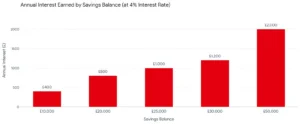
At an illustrative 4% rate, £25,000 would generate £1,000 of annual interest.
For a basic-rate taxpayer with the full £1,000 Personal Savings Allowance, that would match the allowance.
But someone with a £500 Personal Savings Allowance would reach that amount of interest with a considerably smaller savings balance.
Actual savings rates change frequently, so these figures are examples rather than forecasts.
How Does HMRC Know About Savings Interest?
Banks and building societies normally pay savings interest without deducting Income Tax first.
That does not mean the interest is necessarily tax-free.
HMRC receives information about interest paid by banks and building societies and uses it to determine whether additional tax may be due.
HMRC also provides an online service allowing taxpayers to check how much tax they may owe on dividends and savings interest. The service was updated for the 2026/27 tax year in April 2026.
Depending on a person’s circumstances, tax can be dealt with through a tax-code adjustment or Self Assessment.
What Should Over-65 Savers Check Before April 2027?
Older savers do not need to assume that the higher rates mean they will automatically receive a tax bill.
Instead, it is useful to establish how much taxable interest is being generated across all savings accounts.
Someone approaching or exceeding their Personal Savings Allowance may want to check:
- how much savings interest they expect to receive;
- whether they have unused Personal Allowance;
- whether the starting rate for savings applies;
- which Personal Savings Allowance applies to them;
- how much money is already held within ISAs; and
- whether unused ISA subscription capacity is available.
The impact will vary significantly from one household to another.
Over 65 Savings Interest Tax Changes at a Glance
| Rule | 2026/27 | From April 2027 |
| Savings basic rate | 20% | 22% |
| Savings higher rate | 40% | 42% |
| Savings additional rate | 45% | 47% |
| Basic-rate Personal Savings Allowance | £1,000 | Unchanged |
| Higher-rate Personal Savings Allowance | £500 | Unchanged |
| Starting rate for savings | Up to £5,000 at 0% | Unchanged |
| Overall ISA allowance | £20,000 | £20,000 |
| Cash ISA limit for 65+ | £20,000 | £20,000 |
| Planned Cash ISA limit for under-65s | £20,000 | £12,000 |
What Happens From April 2027?
The biggest confirmed change for savers is straightforward: taxable savings income will be charged at higher rates from 6 April 2027.
The basic savings rate rises to 22%, the higher rate to 42% and the additional rate to 47%. These increases are contained in the Finance Act 2026 rather than merely being proposals.
For people aged over 65, however, there is no new age-specific savings tax.
The financial impact will depend on how much taxable interest an individual receives after allowances. At the same time, the Government’s ISA reforms are designed to allow those aged 65 and over to continue putting as much as £20,000 a year into Cash ISAs, giving older savers a potentially valuable way to shelter savings interest from tax.
For pensioners with significant savings outside ISAs, the combination of frozen tax thresholds and higher savings-income tax rates makes 6 April 2027 a date worth preparing for.
About the Journalist
Ben covers business, transport and global developments for Londoner. His reporting focuses on London’s economy, major companies, infrastructure, public transport and international stories that may affect people and businesses across the capital. He explains complex developments clearly using reliable sources and relevant context.



One reader comment