Midea Sees European Air Conditioner Demand Surge in Heatwave
 Published By
Adam
Published By
Adam
Published:
Updated:
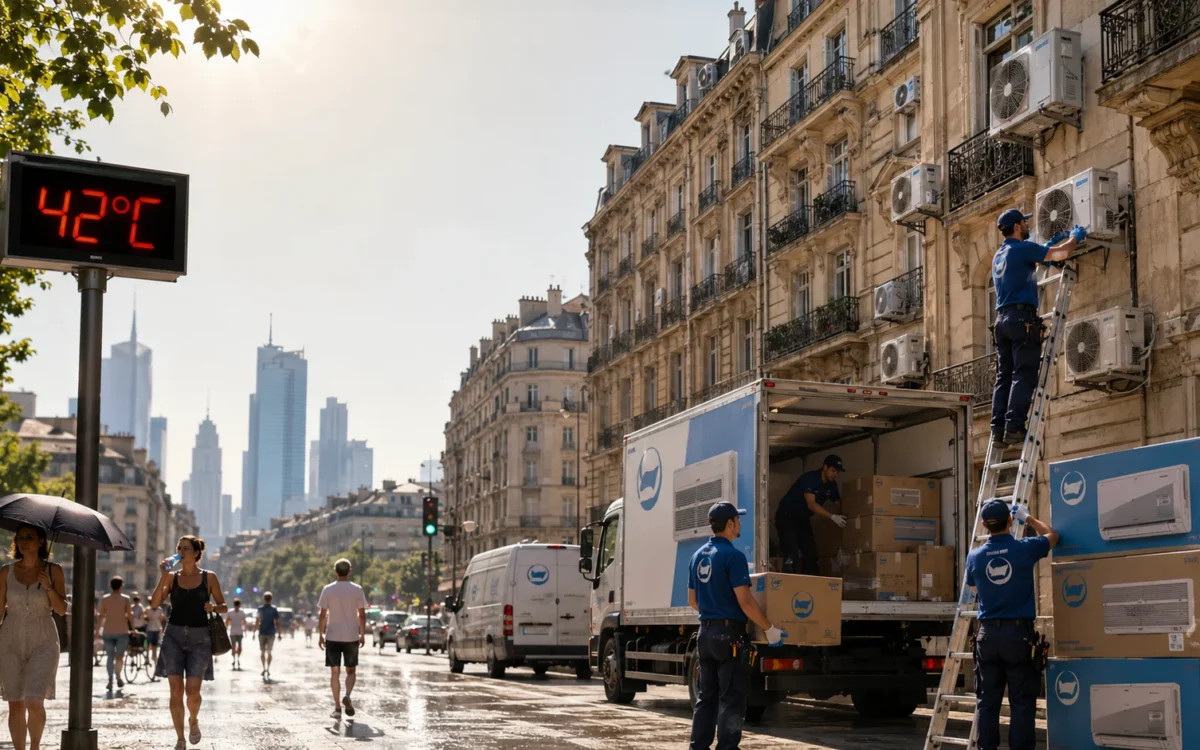
Chinese appliance maker Midea has reported steep growth in European cooling sales as repeated heatwaves change household demand, with the trend carrying particular significance for London’s large stock of heat-vulnerable homes.
Midea is experiencing a surge in European air conditioner demand, with sales and shipments rising sharply across Germany, France and Spain as households seek relief from unusually intense summer heat.
The company said sales through German e-commerce channels increased by about 37% year on year in May, while shipments to France and Spain were 108% higher.
Demand was particularly strong for its PortaSplit mobile split air conditioner, which sold out through some retailers. Midea also said used units were being offered for more than the price of new models.
The figures show how quickly cooling is moving from an occasional purchase towards a more established household appliance in parts of Europe. Air conditioning remains far less common across the continent than in countries with traditionally hotter climates: the International Energy Agency estimates European ownership at about 20%.
Midea is not the only Asian manufacturer benefiting. Samsung reported double-digit first-half sales growth in Italy, Spain and France, while LG said a South Korean air conditioner production facility had been running at full capacity since April. Mitsubishi Electric also reported strong demand in France, Spain, Germany and the UK.
Portable Design Addresses an Installation Barrier
Midea’s PortaSplit combines an indoor unit with a smaller outdoor component connected through a window or door opening. The company markets it as requiring no drilling, tools or professional installation, distinguishing it from permanently fitted systems that may involve building work and approval from landlords or freeholders.
That difference matters in European cities, where older buildings and large numbers of flats can make conventional air conditioning difficult or expensive to install. Midea told Reuters that fitting a traditional system can cost more than €1,000, before the price of the unit itself, and may involve lengthy waits for an installer.
The company’s UK model is advertised as both an air conditioner and heat pump, with an A++ cooling energy rating and a claimed noise level of 39 decibels in silent mode. Those specifications are manufacturer claims rather than independent performance findings, but they show how brands are adapting cooling equipment for European homes where space, noise and energy costs can strongly influence purchasing decisions.
London Faces a Wider Overheating Challenge
For London, growing air conditioner sales are part of a broader debate about how the capital should prepare for more frequent extreme heat. The Greater London Authority’s Heat Ready London plan, published on 25 June, estimates that around one million homes may already face a high risk of overheating. It also identifies 1,361 schools, 60 hospitals and 351 care homes in high-risk areas.
London experienced a red heat-health alert in June, when the UK Health Security Agency warned of possible effects on transport, energy supplies, businesses and people outside the groups normally considered most vulnerable. A further yellow alert covering London ended on Friday, 17 July.
The demand reported by Midea therefore points to more than a temporary retail boost. It suggests that European households are increasingly willing to pay for mechanical cooling, while cities including London face difficult questions about affordability, electricity use and homes that were not designed for prolonged high temperatures.
Midea and its competitors are likely to keep expanding their European cooling ranges as heatwaves become more frequent. For policymakers, however, the next step is wider than increasing appliance supply: London’s heat plan calls for building retrofits, accessible cool spaces and stronger infrastructure resilience alongside household cooling.
About the Journalist
Adam reports on London news, events and local developments. His coverage includes festivals, exhibitions, public announcements, community stories and important updates affecting people across the city. He aims to provide timely and accessible reporting on what is happening in London.