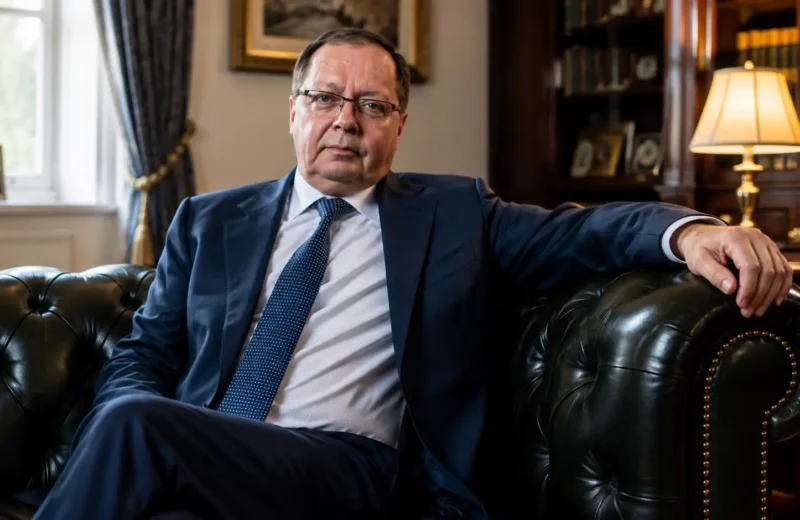
Andy Burnham Faces RMT Rail Dispute Over Driver-only East West Rail Trains
 Published By
Jermaine
Published By
Jermaine
Published:
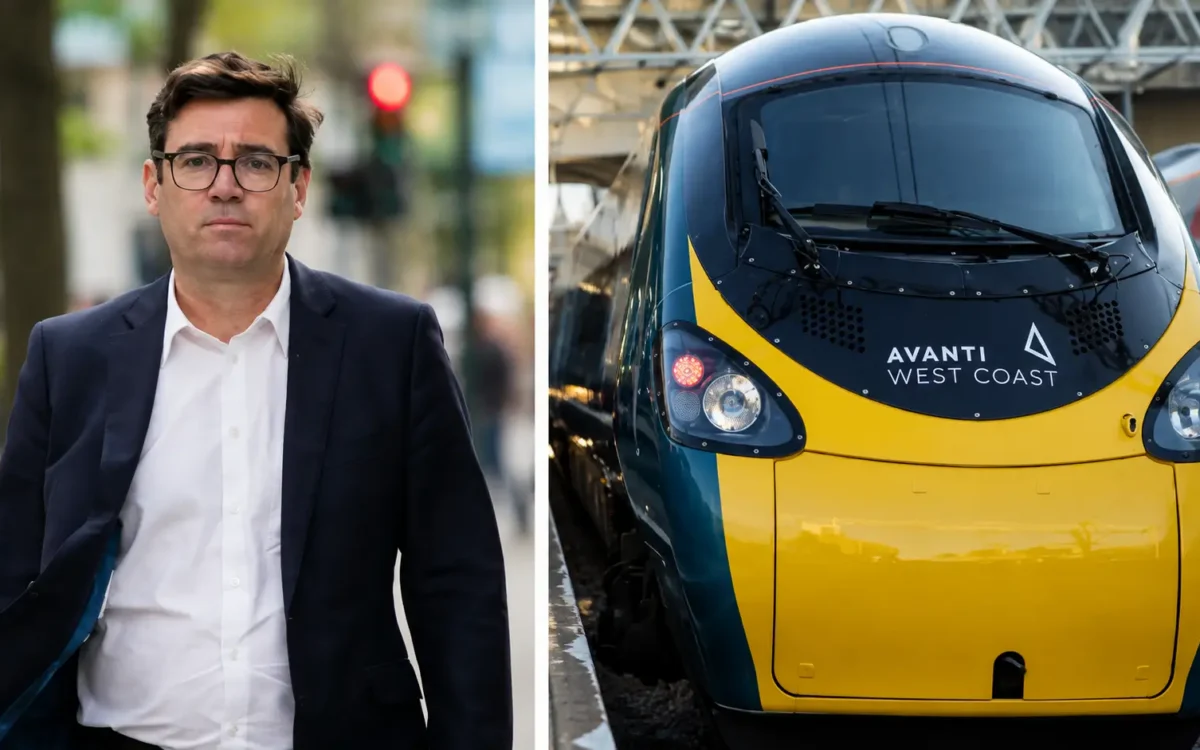
Table of Contents
The Prime Minister is under pressure to intervene in a staffing dispute that has helped delay passenger services between Oxford and Milton Keynes. The RMT has threatened to use its political and industrial strength, although no strike ballot or walkout dates have been announced.
Prime Minister Andy Burnham is facing an early confrontation with the RMT after the rail union rejected plans to operate new East West Rail services without a guaranteed second safety-critical member of staff.
The dispute centres on Chiltern Railways’ proposed operating arrangements for trains between Oxford and Milton Keynes. The route was expected to begin carrying passengers in 2025, but remains without a confirmed opening date despite the completion of most major infrastructure work.
In a statement issued on Wednesday, 5 August, the RMT demanded a commitment that the services would not use Driver Only Operation, commonly known as DOO.
General secretary Eddie Dempsey said the union would “use all of the political and industrial strength available to defend safety on the railway”. The statement did not announce a strike ballot, industrial action dates or disruption to existing Chiltern services.
The disagreement has become one of Burnham’s first significant tests involving Labour’s trade union allies since he became Prime Minister on 20 July 2026.
Why Does the RMT Oppose Driver-only Trains?
Driver Only Operation allows the driver to control the train and, depending on the route and operating model, undertake duties such as opening and closing the doors without a guard being required on every service.
The RMT argues that a second safety-critical employee should be guaranteed onboard each train. It says that worker would help passengers during emergencies, assist disabled and older travellers, respond to antisocial behaviour and support evacuations or other fast-moving incidents.
Dempsey said passengers valued the reassurance provided by onboard staff and called for a clear commitment from Chiltern that every East West Rail train would carry a second safety-critical employee.
The union’s opposition predates Burnham’s premiership. In December 2025, Labour MP John McDonnell tabled an early day motion calling on the government to instruct Chiltern to withdraw its plans for driver-only trains.
The motion attracted 15 signatures, including support from Labour, Green and independent MPs. It argued that onboard staff perform important security, accessibility, dispatch and emergency-response duties. Early day motions allow MPs to draw attention to an issue but do not compel the government to change policy.
How Has the Disagreement Delayed Passenger Services?
The first stage of East West Rail will connect Oxford, Oxford Parkway, Bicester Village, Winslow, Bletchley and Milton Keynes Central.
When Chiltern was appointed as operator in March 2025, the Department for Transport said the service would begin later that year and create almost 100 jobs. It was promoted as the first direct passenger connection between Oxford and Milton Keynes in nearly 60 years.
That timetable was not met. Chiltern says the infrastructure needed to run trains became operational in December 2024, but further work is required before passengers can use the route.
The company has trained 44 drivers, created a staff facility at Bletchley and worked on the new step-free station at Winslow. However, trains still need to be prepared and tested, work at Winslow must be completed and the operating arrangements must be settled.
Chiltern has therefore said it is unable to start passenger services and has not provided a replacement launch date. Once fully operational, the route is expected to have two trains an hour using Class 196 trains.
The Department for Transport acknowledged in parliamentary answers in March and April 2026 that future staffing arrangements remained unresolved. Ministers said a start date could not be confirmed until talks with unions were concluded and the remaining work on trains and infrastructure was complete.
The staffing dispute is therefore not the only outstanding issue, but official statements indicate that it is one of the obstacles preventing the service from opening.
Nationalisation Raises Political Pressure on Burnham
The confrontation is complicated by Chiltern Railways’ scheduled transfer into public ownership on 20 September 2026.
Under the government’s rail programme, Chiltern will become a subsidiary of the publicly owned DfT Operator Limited before eventually forming part of Great British Railways.
That means the government will soon have more direct responsibility for the operator at the centre of the dispute. The RMT and supporting MPs are likely to argue that a Labour administration bringing services into public ownership should also be able to determine their staffing model.
Public ownership does not automatically settle employment or operational disputes, however. The government must still consider costs, contractual arrangements, accessibility, safety assessments and the ability to operate a reliable timetable.
Burnham must decide whether to intervene before the transfer, require changes once Chiltern enters public ownership or leave negotiations to the operator and unions.
Any commitment to place a second safety-critical worker on every train could increase staffing requirements and operating costs. Proceeding with driver-only services, however, would risk a prolonged dispute with the RMT and opposition from MPs on Labour’s left.
What the Dispute Means for London Passengers?
East West Rail’s first passenger service will run between Oxford and Milton Keynes rather than directly into London.
Nevertheless, Chiltern operates trains from London Marylebone to destinations including Oxford, Bicester and Buckinghamshire. Several stations on the new route are therefore already connected to the capital through Chiltern’s wider network.
The East West Rail service could give passengers from London new interchange options for journeys towards Winslow, Bletchley and Milton Keynes without travelling through central London or relying on existing north-south routes.
There is currently no confirmed disruption at Marylebone arising from the dispute. The RMT has not announced a strike ballot, and its 5 August statement referred specifically to the operating model for the new route.
A wider effect on London passengers would depend on whether the disagreement develops into industrial action involving employees across Chiltern’s existing network. No such action had been confirmed by Thursday, 6 August.
For now, the most immediate consequence is continued uncertainty over when passengers will be able to use the Oxford-to-Milton Keynes line. Chiltern says discussions with the government, trade unions and industry partners are continuing, while the RMT insists that services should not begin without a guaranteed second safety-critical employee.
About the Journalist
Jermaines covers crime, legal affairs and money-related stories for Londoner. His reporting includes police updates, court cases, consumer rights, personal finance and cost-of-living issues. He handles sensitive subjects carefully and clearly distinguishes confirmed facts from allegations, estimates and ongoing investigations.