Martin Lewis Sunscreen Advice: The Second Rating Shoppers Should Check On Every Bottle
 Published By
Olivia
Published By
Olivia
Published:
Updated:
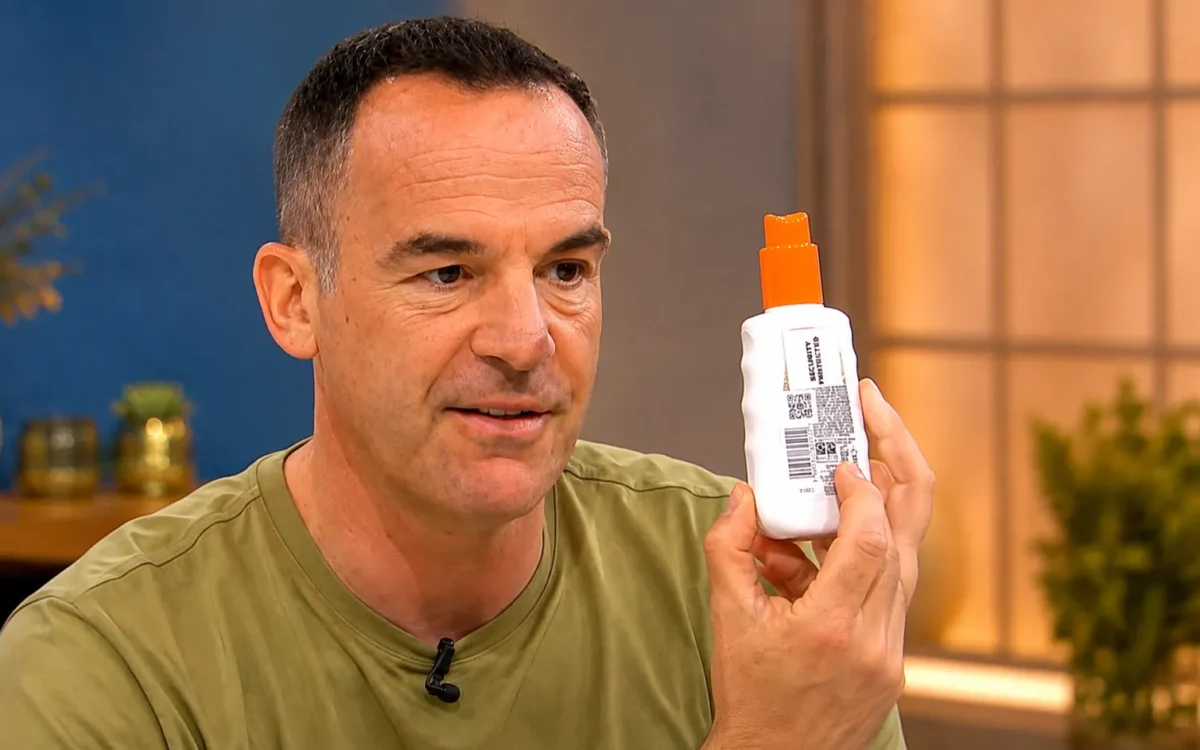
Table of Contents
Martin Lewis has urged sunscreen buyers to look beyond the prominent SPF number and check the UVA protection shown elsewhere on the packaging — a step supported by current NHS guidance.
The consumer campaigner has warned shoppers not to rely only on the large SPF number printed on the front of a bottle. Sunscreen products can display their level of protection against UVA radiation separately, often in smaller lettering or symbols on the reverse of the packaging.
Lewis’s central point is that effective sun protection requires shoppers to check both ratings. A high SPF can indicate strong protection against UVB radiation, but it does not automatically tell buyers how well the product protects against UVA.
Current NHS guidance supports that advice. It recommends choosing sunscreen with an SPF of at least 30 and a UVA protection rating of four stars or more. Some products instead display the letters “UVA” inside a circle, showing that they meet the relevant European standard for UVA protection.
Why SPF Is Only Part of the Label?
SPF stands for sun protection factor. It measures how much protection a sunscreen offers against UVB radiation, which is the main cause of sunburn and also contributes to skin cancer.
However, SPF does not provide a complete picture of a product’s protection. UVA radiation penetrates more deeply into the skin and is associated with premature skin ageing as well as an increased risk of skin cancer.
This means a bottle carrying a high SPF may not necessarily offer the level of UVA protection a shopper expects. Checking the separate UVA rating helps buyers establish whether the sunscreen provides balanced, broad-spectrum protection.
What the UVA Star Rating Means?
In the UK, many sunscreen bottles use a star system to show their UVA protection. The scale runs from one to five stars, with a higher rating indicating stronger UVA protection in relation to the product’s stated UVB protection.
The British Skin Foundation recommends choosing broad-spectrum sunscreen with an SPF of at least 30 and a UVA rating of four or five stars.
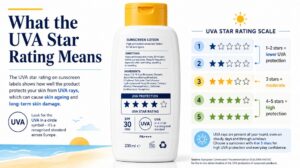
Shoppers may also see a UVA logo consisting of the letters inside a circle. This symbol is another recognised way of showing that the product meets minimum European requirements for UVA protection relative to its SPF.
The important point is that the SPF number and UVA rating measure different things. Both should be checked before a product is placed in the shopping basket.
Expensive Sunscreen Is Not Always More Protective
The difference between SPF and UVA protection is also important when comparing prices.
MoneySavingExpert’s previous sunscreen research found that lower-priced products can carry strong SPF and UVA ratings. Paying more for a well-known or premium brand does not automatically mean the buyer receives greater protection from the sun.
More expensive products may offer different textures, fragrances, ingredients or packaging, but those features should not be confused with a higher level of UV protection.
Lewis’s advice encourages shoppers to compare the information on the label rather than assuming that price, branding or the size of the SPF number tells the whole story.
A budget sunscreen carrying SPF 30 or higher and at least four UVA stars may therefore meet the recommended protection levels just as well as a more expensive alternative with the same ratings.
Why the Advice Matters in London?
Sunscreen is often treated as something needed mainly on beach holidays or during periods of exceptionally hot weather. However, UVA exposure is not limited to cloudless summer days.
UVA radiation can pass through cloud and glass, meaning people may still be exposed while walking around London, eating outside, driving or sitting near a sunny window.
For residents, commuters and workers in the capital, sun protection may therefore be relevant during ordinary daily routines as well as trips abroad.
Sunscreen should still form only one part of a broader sun-safety approach. Clothing, shade, sunglasses and a suitable hat can provide additional protection, particularly during the strongest periods of sunlight.
Check the Open-Jar Symbol as Well
Another useful detail may be found on the back of the bottle: the period-after-opening symbol, also known as the PAO symbol.
It normally appears as a small open-jar image containing a figure such as “12M” or “24M”. The figure indicates the number of months for which the product is intended to remain usable after it has been opened.
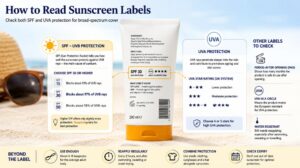
For example, “12M” means the manufacturer recommends using the product within 12 months of opening. The symbol is separate from the product’s expiry date and should not be confused with either the SPF or UVA rating.
Sunscreen that has been stored for a long period, particularly in hot conditions, may not perform as intended. Checking when the bottle was opened and following the storage instructions can therefore be as important as choosing the correct ratings at the point of purchase.
Applying Enough Sunscreen Is Essential
Even a highly rated sunscreen cannot provide its stated protection when too little is applied.
NHS guidance says an average adult needs approximately six to eight teaspoons of sunscreen to cover the entire body. Areas that can easily be missed include the ears, neck, shoulders, feet and the edges of clothing or swimwear.
Sunscreen should also be reapplied regularly, particularly after swimming, sweating, towel-drying or any activity that may cause it to rub off.
Water-resistant products still need to be reapplied. The description means they can offer some protection during water exposure, not that a single application will remain effective throughout the day.
The practical check for shoppers is therefore simple: look for SPF 30 or higher, at least four-star UVA protection or the UVA circle logo, and a clear period-after-opening symbol.
Price and branding may influence how a sunscreen feels or smells, but the protection it offers should be judged primarily by the information printed on the label.
About the Journalist
Olivia covers London life, culture and lifestyle for Londoner. Her work includes food, shopping, neighbourhood trends, attractions, local experiences and practical guides for residents and visitors. She focuses on engaging stories that reflect everyday life across the capital.