Ministerial Appointments July 2026: Who Is in the New UK Government?
 Published By
Jermaine
Published By
Jermaine
Published:
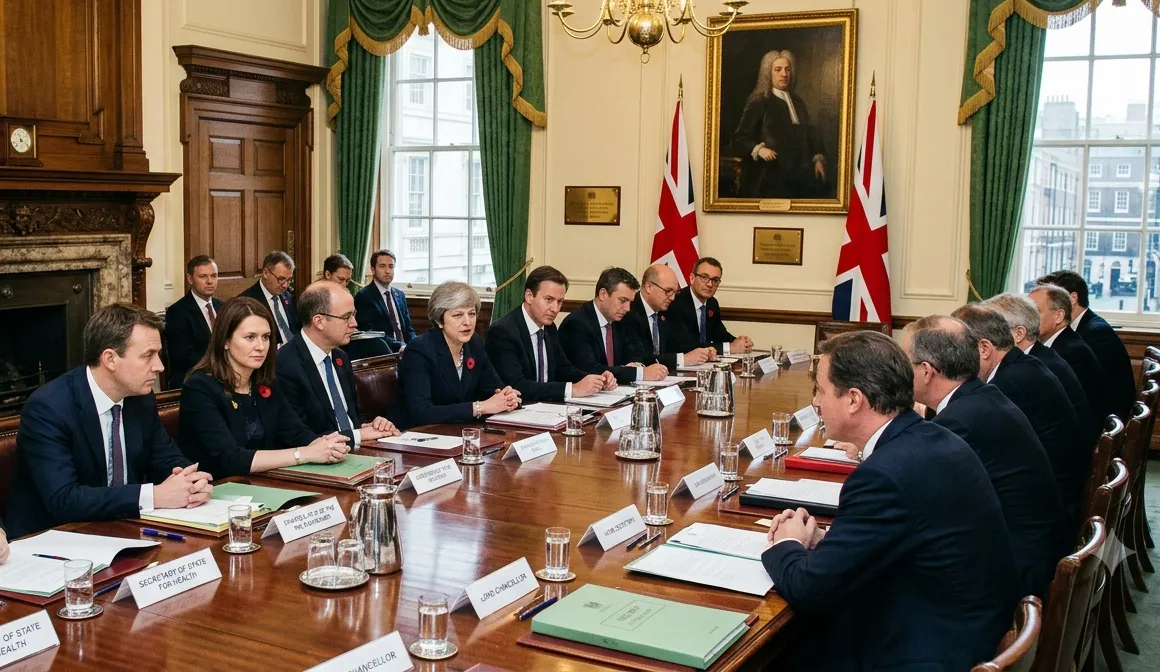
Table of Contents
The ministerial appointments of July 2026 established the government led by Prime Minister Andy Burnham following his arrival at Downing Street on 20 July.
Among the most significant appointments, John Healey became Chancellor of the Exchequer, Ed Miliband became Foreign Secretary, Louise Haigh was named First Secretary of State and Yvette Cooper took charge of the Department of Health and Social Care.
The changes also introduced new ministerial responsibilities covering artificial intelligence, regional growth, European relations and government delivery.
According to the official Downing Street ministerial appointments record, the King approved the appointments on the Prime Minister’s recommendation. The publication was issued on 20 July and expanded through several updates, with the latest additions recorded on 23 July 2026.
What Were the Main Ministerial Appointments in July 2026?
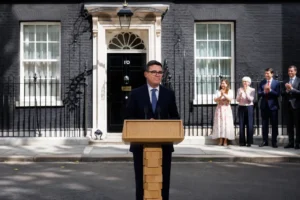
The appointments followed Andy Burnham becoming Prime Minister on 20 July 2026. He had returned to Parliament as the MP for Makerfield in June and was elected Labour leader on 16 July, according to the Prime Minister’s official government profile.
The senior appointments included:
| Government position | Minister appointed |
| Prime Minister and First Lord of the Treasury | Andy Burnham MP |
| Chancellor of the Exchequer | John Healey MP |
| First Secretary of State, Chancellor of the Duchy of Lancaster and Minister for the Cabinet Office | Louise Haigh MP |
| Foreign Secretary | Ed Miliband MP |
| Home Secretary | Shabana Mahmood MP |
| Defence Secretary | Wes Streeting MP |
| Lord Chancellor and Justice Secretary | Alex Norris MP |
| Health and Social Care Secretary | Yvette Cooper MP |
| Education Secretary | Lucy Powell MP |
| Minister for Women and Equalities | Bridget Phillipson MP |
| Housing, Communities and Local Government Secretary | Angela Rayner MP |
| Energy Security and Net Zero Secretary | Miatta Fahnbulleh MP |
| Work and Pensions Secretary | Pat McFadden MP |
| Business, Innovation, Science and Trade Secretary | Jonathan Reynolds MP |
| Environment, Food and Rural Affairs Secretary | Dame Angela Eagle MP |
| Transport Secretary | Heidi Alexander MP |
| Digital, Culture, Media and Sport Secretary | Lisa Nandy MP |
| Northern Ireland Secretary | Sir Chris Bryant MP |
| Scotland Secretary | Douglas Alexander MP |
| Wales Secretary | Stephen Kinnock MP |
| Leader of the House of Commons | Sir Alan Campbell MP |
| Leader of the House of Lords | Baroness Smith of Basildon |
| Chief Whip | Anneliese Midgley MP |
| Chief Secretary to the Treasury | Emma Reynolds MP |
| Attorney General | Ellie Reeves KC MP |
The current Cabinet list maintained by the UK Parliament provides a live record of Cabinet ministers, their departments and parliamentary constituencies.
What Were the Biggest Cabinet Changes?
The July 2026 appointments involved substantial movement across the Treasury, foreign affairs, defence, health, housing and technology portfolios.
John Healey Became Chancellor of the Exchequer
John Healey moved from the Ministry of Defence to HM Treasury, replacing Rachel Reeves as Chancellor of the Exchequer.
He is responsible for the Treasury at a time when the government is expected to focus heavily on economic growth, public spending, taxation and regional investment.
Emma Reynolds was appointed Chief Secretary to the Treasury and will attend Cabinet. James Murray became Financial Secretary to the Treasury and Paymaster General, while Lucy Rigby became Economic Secretary to the Treasury.
Dan Tomlinson was appointed Parliamentary Secretary jointly in the Cabinet Office and HM Treasury, serving as Exchequer Secretary to the Treasury. Lord Pitt-Watson also joined the Treasury as a Parliamentary Secretary.
Ed Miliband Became Foreign Secretary
Ed Miliband moved from energy policy to become Secretary of State for Foreign, Commonwealth and Development Affairs.
His appointment places him in charge of the UK’s diplomatic relations, international development policy and engagement with allies and international institutions.
Kirsty McNeill was appointed as a Minister of State in the Foreign Office, while Uma Kumaran became a Parliamentary Under-Secretary of State and Assistant Whip.
Lord Wood of Anfield and Baroness Winterton of Doncaster also received junior ministerial appointments in the Foreign, Commonwealth and Development Office.
Wes Streeting Moved to Defence
Wes Streeting was appointed Defence Secretary after previously serving as Health Secretary.
Luke Pollard and Lord Coaker were reappointed as Defence Ministers, while Calvin Bailey and Louise Sandher-Jones remained Parliamentary Under-Secretaries of State at the Ministry of Defence.
Yvette Cooper Took Over Health and Social Care
Yvette Cooper became Secretary of State for Health and Social Care.
The department’s wider ministerial team includes Dame Diana Johnson, Chris McDonald and Alison McGovern as Ministers of State. James Frith and Baroness Merron hold Parliamentary Under-Secretary roles, while Karin Smyth was reappointed as a Minister of State.
Chris McDonald will also continue serving as a Minister of State in the Department for Business, Innovation, Science and Trade, giving him responsibilities across two departments.
Angela Rayner Returned to the Housing Brief
Angela Rayner was appointed Secretary of State for Housing, Communities and Local Government.
Matthew Pennycook remained a Housing Minister and will attend Cabinet. Florence Eshalomi was appointed as a Minister of State, while Jim McMahon, Baroness Blake of Leeds and Simon Lightwood received junior ministerial responsibilities in the department.
Sir Stephen Timms will serve jointly as a Housing Minister responsible for equalities while remaining a Minister of State in the Department for Work and Pensions.
Satvir Kaur and Lord Collins of Highbury were also given joint Home Office and housing department responsibilities relating to equalities.
What Is the New Minister for Artificial Intelligence Role?
Kanishka Narayan was appointed Minister of State for Artificial Intelligence, working jointly across the Cabinet Office and the Department for Business, Innovation, Science and Trade. He will attend Cabinet.
The appointment forms part of broader changes to the structure of government. The Cabinet Office’s machinery of government announcement confirms that responsibility for national AI strategy, public-sector AI adoption and the AI Security Institute is moving to the Cabinet Office.
A new AI Taskforce will operate within the Office for the Prime Minister and Cabinet. The Cabinet Office will also lead efforts to increase AI adoption across the Civil Service.
The creation of a Cabinet-attending AI minister indicates that artificial intelligence will be treated as a cross-government economic, security and public-service issue rather than being confined to a single technology department.
How Did Government Departments Change?
The July appointments were accompanied by a wider reorganisation of government responsibilities.
Business, Innovation, Science and Trade
The Department for Business and Trade was renamed the Department for Business, Innovation, Science and Trade.
Jonathan Reynolds became Secretary of State for the expanded department. Its responsibilities now connect business support, international trade, research, science, innovation and emerging industries.
Kate Dearden and Anas Sarwar were appointed Ministers of State. Blair McDougall, Lord Leong and Baroness Lloyd of Effra received Parliamentary Under-Secretary roles.
Anas Sarwar is expected to receive a life peerage before taking up his parliamentary ministerial position.
Digital, Culture, Media and Sport
Lisa Nandy became Secretary of State for Digital, Culture, Media and Sport.
The expanded department brings together culture, telecoms, media, online safety and the Government Digital Service. Some responsibilities previously held by the Department for Science, Innovation and Technology have been redistributed into this department.
Ian Murray was appointed a Minister of State. Vicky Foxcroft, Stephanie Peacock, Baroness Lloyd of Effra and Ruth Mackenzie were appointed to junior ministerial roles.
Ruth Mackenzie is also expected to receive a life peerage.
Office for the Prime Minister and Cabinet
The government created an Office for the Prime Minister and Cabinet incorporating Number 10, Number 10 North and core Cabinet Office functions.
Number 10 North will focus on devolution, regional economic growth and local government empowerment. Responsibility for local growth strategy is being transferred from the housing department and the Treasury into the new structure.
A OneGov Delivery Agency will also manage shared government operations such as recruitment, pensions administration, security vetting and the Government Car Service.
Which Ministers Were Reappointed?
Several senior ministers remained in their existing positions:
| Minister | Continuing position |
| Shabana Mahmood | Home Secretary |
| Heidi Alexander | Transport Secretary |
| Pat McFadden | Work and Pensions Secretary |
| Bridget Phillipson | Minister for Women and Equalities |
| Douglas Alexander | Scotland Secretary |
| Sir Alan Campbell | Leader of the House of Commons |
| Baroness Smith of Basildon | Leader of the House of Lords |
| Matthew Pennycook | Housing Minister attending Cabinet |
| Stephen Doughty | Foreign Office Minister |
| Sarah Jones | Home Office Minister |
| Lord Hanson of Flint | Home Office Minister |
| Sarah Sackman | Justice Minister |
| Luke Pollard | Defence Minister |
| Lord Coaker | Defence Minister |
| Michael Shanks | Energy Minister |
| Georgia Gould | Education Minister |
| Sir Stephen Timms | Work and Pensions Minister |
| Karin Smyth | Health Minister |
| Lord Hendy of Richmond Hill | Transport Minister |
The official record contains 42 reappointment entries as of the 23 July update. Some ministers retained one role while also receiving an additional appointment in another department.
Who Left the Government in July 2026?
The Downing Street publication identifies 35 people who left the government during the formation of the new administration.
They include several former Cabinet ministers:
| Former minister | Former senior area |
| Rachel Reeves | Treasury |
| Darren Jones | Prime Ministerial delivery and Treasury |
| Nick Thomas-Symonds | Cabinet Office |
| Peter Kyle | Business and technology |
| Steve Reed | Housing and local government |
| Liz Kendall | Environment and rural affairs |
| David Lammy | Foreign affairs |
| Hilary Benn | Northern Ireland |
| Lord Hermer | Attorney General’s Office |
| Jo Stevens | Wales |
Other departures named in the official record were Rachel Blake, Sir Nicholas Dakin, Baroness Chapman of Darlington, Lord Livermore, Lord Stockwood, Lord Whitehead, Lord Vallance, Lord Timpson, Chris Ward, Seema Malhotra, Natalie Fleet, Mike Tapp, Catherine Atkinson, Olivia Bailey, Preet Kaur Gill, Sharon Hodgson, Nesil Caliskan, Samantha Dixon, Mary Creagh, Matthew Patrick, Baroness Levitt, Baroness Wheeler, Deirdre Costigan, Taiwo Owatemi and Imogen Walker.
Leaving government does not necessarily mean that an MP or peer has left Parliament. In most cases, the person continues serving as an MP or member of the House of Lords but no longer holds a government office.
How Are UK Ministers Formally Appointed?
The Prime Minister chooses the members of the government and advises the Sovereign on whom to appoint.
The wording used in official announcements that the King has been pleased to approve the appointments reflects the constitutional process under which ministerial appointments are made through the royal prerogative.
The House of Commons Library’s explanation of government formation states that a government can be formed following an election or when the Prime Minister changes during a Parliament. It also distinguishes the formation of a new government from a smaller change to an existing government, normally called a reshuffle.
Cabinet ministers and certain senior office-holders may need to take oaths, join the Privy Council or receive official seals before every formality associated with their office is complete.
By convention, ministers normally sit in either the House of Commons or the House of Lords. A person who is not yet a member of either House can be appointed in anticipation of receiving a peerage, as applies to Anas Sarwar and Ruth Mackenzie.
What Do the July 2026 Appointments Mean for Government Policy?
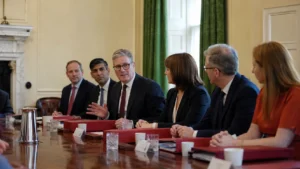
Ministerial appointments do not, by themselves, introduce new laws, taxes, benefits or spending programmes. Policy changes still require the appropriate government decisions and, where necessary, parliamentary approval.
However, the structure of the new government indicates several immediate priorities:
- Economic growth and regional government: Number 10 North has been established to connect devolution, local leadership and regional economic policy more closely with central government.
- Artificial intelligence: A Cabinet-attending AI minister and a Prime Ministerial AI Taskforce have been created, while responsibility for public-sector AI adoption is moving to the Cabinet Office.
- Business and science: Business, science, innovation and trade have been brought together in a larger economic department.
- Digital regulation: Telecoms, online safety, digital government, media and culture have been consolidated within an expanded DCMS.
- Government delivery: The Office for the Prime Minister and Cabinet and the OneGov Delivery Agency are intended to strengthen central coordination and operational delivery.
These structural changes provide evidence of the government’s areas of emphasis, but their practical impact will depend on subsequent budgets, legislation, departmental plans and policy announcements.
Were the Ministerial Appointments Updated After 20 July?
Yes. The first appointments were published on 20 July 2026, but the list was not completed in a single update.
The official publication history records:
| Date | Update |
| 20 July 2026 | Initial publication and several rounds of appointments |
| 21 July 2026 | Additional appointments added |
| 22 July 2026 | Further appointments added |
| 23 July 2026 | Final recorded additions to the published list |
The page should therefore be read using its 23 July 2026 version, rather than relying only on names announced during the first day.
Frequently Asked Questions
Who Became Chancellor in the July 2026 Ministerial Appointments?
John Healey became Chancellor of the Exchequer on 20 July 2026, succeeding Rachel Reeves.
Who is the UK Foreign Secretary After the July 2026 Appointments?
Ed Miliband is the Secretary of State for Foreign, Commonwealth and Development Affairs.
Who Became Health Secretary in July 2026?
Yvette Cooper was appointed Secretary of State for Health and Social Care.
Who is the Defence Secretary?
Wes Streeting was appointed Secretary of State for Defence.
Who is the Home Secretary?
Shabana Mahmood remained Home Secretary and was formally reappointed as part of the new government.
Who is the New UK AI Minister?
Kanishka Narayan was appointed Minister of State for Artificial Intelligence. The joint role sits across the Cabinet Office and the Department for Business, Innovation, Science and Trade, and he attends Cabinet.
Did Angela Rayner Return to the Cabinet?
Yes. Angela Rayner was appointed Secretary of State for Housing, Communities and Local Government.
Did Rachel Reeves Leave the Government?
Yes. Rachel Reeves is included in the official list of people who left the government during the July 2026 appointments.
Is the Department for Science, Innovation and Technology Still Operating in the Same Form?
No. Its responsibilities are being redistributed across the Cabinet Office, the Department for Business, Innovation, Science and Trade and the expanded Department for Digital, Culture, Media and Sport.
Can the Ministerial List Change Again?
Yes. Ministers can resign, be dismissed, receive additional responsibilities or move between departments. The GOV.UK ministerial pages and the UK Parliament’s government directory should be checked for the latest confirmed positions.
About the Journalist
Jermaines covers crime, legal affairs and money-related stories for Londoner. His reporting includes police updates, court cases, consumer rights, personal finance and cost-of-living issues. He handles sensitive subjects carefully and clearly distinguishes confirmed facts from allegations, estimates and ongoing investigations.