Prince William Drives Electric Rickshaw In Mumbai With Kate Middleton During Earthshot Prize Visit
 Published By
Jermaine
Published:
Updated:
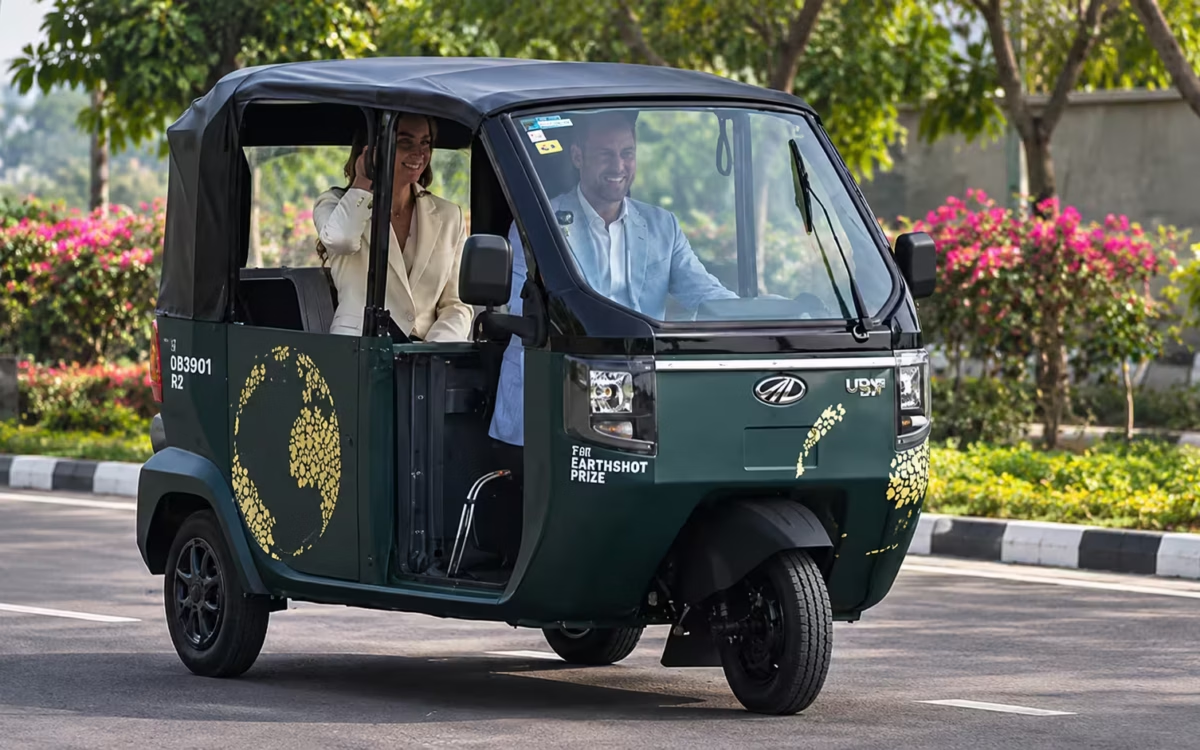
Table of Contents
Prince William surprised onlookers in Mumbai on 17 November 2026 when he took the wheel of an electric rickshaw, driving his wife, Kate Middleton, along the city’s waterfront during their official visit to India.
The Prince and Princess of Wales arrived in the three-wheeled vehicle to meet finalists of the 2026 Earthshot Prize, turning an otherwise formal royal engagement into a memorable demonstration of sustainable transport.
The light-hearted journey attracted attention as William joked about his driving skills and praised the electric vehicle.
However, the appearance carried a more significant environmental message, highlighting India’s efforts to tackle urban air pollution through affordable electric transport.
Prince William Takes the Wheel of an Electric Rickshaw in Mumbai
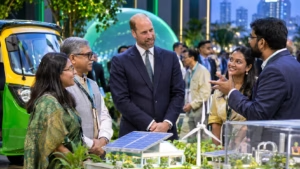
The Prince and Princess of Wales began their second day of engagements in Mumbai with an unusual arrival at the Bandra-Worli Sea Link Promenade, where they were scheduled to meet the 15 Earthshot Prize finalists.
Instead of travelling in a conventional royal vehicle, William drove an electric auto-rickshaw while Catherine sat comfortably in the passenger compartment behind him.
The journey provided an informal moment during a visit centred on environmental innovation and international cooperation.
After completing the drive, William appeared delighted with the experience and shared his impressions with those gathered at the venue.
Speaking about the journey, he said:
“It was quite good fun, really good fun.”
The Prince also joked about successfully handling the vehicle when he met Suman Mishra, chief executive of Mahindra Last Mile Mobility, the company responsible for manufacturing it.
“I didn’t crash your vehicle, so you’re OK.”
William explained that he had enjoyed the experience so much that he wanted additional space to test the vehicle’s capabilities.
He praised its quiet operation and ease of handling, describing it as “brilliant”.
Catherine appeared equally comfortable during the journey, telling those present that the passenger seat was “very comfortable”.
The couple’s relaxed interaction demonstrated how an everyday form of Indian transport could become part of a high-profile royal engagement.
The Princess had reportedly not been expected at that particular morning engagement initially, making her participation another notable feature of the visit.
Her appearance also continued a period of joint royal activities, following her surprise appearance alongside Prince William in Liverpool earlier in 2026, where they supported a mental health and suicide prevention initiative.
In Mumbai, however, the focus was firmly on environmental solutions and the role electric vehicles could play in reducing pollution.
Why Prince William’s Electric Rickshaw Was Important to the Earthshot Prize?
The electric rickshaw was not simply an unusual choice of transport for a visiting royal.
It was manufactured by Mahindra Last Mile Mobility, an Indian company selected as one of the 15 finalists for the 2026 Earthshot Prize.
The business specialises in electric three-wheelers and smaller commercial vehicles designed to make cleaner transportation accessible to drivers and businesses.
According to Mahindra, more than 400,000 electric last-mile vehicles have already been sold, demonstrating the growing demand for alternatives to conventional petrol and diesel-powered transport.
The company says its electric vehicles have collectively travelled more than nine billion kilometres and helped avoid approximately 185,000 metric tonnes of carbon dioxide emissions.
These figures highlight the potential environmental impact when cleaner transport becomes commercially practical on a large scale.
For cities such as Mumbai, where heavy traffic contributes to air quality problems, replacing conventional vehicles with electric alternatives could help reduce roadside exhaust emissions.
The company’s ambitions also extend beyond environmental protection.
Its business model aims to make electric transport financially accessible to drivers whose livelihoods depend on affordable, reliable vehicles.
This combination of environmental and economic benefits closely reflects the objectives behind the Earthshot Prize.
Before the Mumbai ceremony, William had already emphasised the need to accelerate practical solutions to environmental problems.
His warning that efforts to repair the planet were not moving fast enough highlighted the importance of supporting innovations capable of achieving measurable results.
The Mumbai rickshaw journey offered a visible example of that approach.
Rather than merely discussing the potential of electric vehicles, William experienced a product already being used by drivers across India.
Mahindra’s achievement received further recognition later that evening when it won the 2026 Earthshot Prize in the Clean Our Air category.
The company received £1 million to help expand its electric mobility initiatives.
Mahindra subsequently confirmed plans to use the funding to support women drivers, improve access to affordable financing and expand charging infrastructure in underserved communities.
Its success transformed the royal rickshaw ride from a publicity moment into a demonstration of an award-winning environmental project.
Mumbai Earthshot Prize 2026 Highlights India’s Environmental Innovation
The 2026 Earthshot Prize ceremony took place in Mumbai on 17 November, marking the sixth annual presentation of the environmental awards founded by Prince William in 2020.
The programme was established to identify practical solutions addressing some of the world’s most urgent environmental problems.
Each year, five winners receive £1 million to help develop and expand their projects.
The awards recognise achievements across five environmental categories covering nature conservation, clean air, ocean protection, waste reduction and climate action.
Mumbai’s selection as the host city reflected India’s growing involvement in environmental innovation and the development of technologies capable of serving large populations.
During their three-day visit, William and Catherine participated in engagements highlighting local communities, sustainability and cultural connections between Britain and India.
Their activities included meeting young people, playing street cricket and interacting with prominent figures from Indian sport and entertainment.
The Earthshot ceremony brought together environmental innovators, business leaders and well-known personalities.
Guests included cricket legend Sachin Tendulkar, Bollywood stars Alia Bhatt and Sonam Kapoor, and actor Rami Malek.
The evening also featured performances celebrating Indian and international music.
Alongside Mahindra Last Mile Mobility, the other four winners were Bhutan, Niue Ocean Wide Trust, PFAS-Free France and Ørsted.
Their projects addressed issues ranging from protecting natural ecosystems to reducing chemical pollution and expanding renewable energy.
During the ceremony, William highlighted the importance of recognising environmental progress already taking place.
“Change is not only possible. It is already happening.”
His remarks reinforced the central message of the Earthshot initiative: environmental challenges require urgent action, but successful solutions are already emerging.
The awards also reflected a wider tradition of royal involvement in environmental protection and public service.
King Charles has spent decades supporting conservation and community initiatives, with his continuing involvement in outdoor and community activities reflecting another aspect of those interests.
For William, Earthshot represents a major part of his own public responsibilities as Prince of Wales.
The decision to showcase an electric rickshaw in Mumbai helped connect that environmental mission with a practical technology developed in India.
What Prince William’s Mumbai Rickshaw Ride Means for Cleaner Transport?
Although the journey itself was brief, Prince William’s electric rickshaw experience drew international attention to a transport technology that could contribute to cleaner urban mobility.
Electric three-wheelers are particularly relevant in India because of their role in short-distance passenger journeys and local commercial transportation.
Unlike conventional combustion-engine vehicles, battery-electric rickshaws produce no exhaust emissions while operating.
Their overall environmental benefits still depend on factors including electricity generation, battery production and vehicle lifespan.
Nevertheless, reducing exhaust pollution in heavily populated urban areas can provide important benefits for local air quality.
For operators, the transition must also make economic sense.
Vehicle affordability, charging access, maintenance costs and dependable battery performance all influence whether drivers can adopt electric alternatives.
Mahindra’s Earthshot recognition acknowledges its efforts to address these challenges while expanding electric mobility.
The company has set an ambition to put one million electric vehicles on Indian roads by 2030, supported by further investment and improved infrastructure.
Its success could also offer lessons for cities beyond India, including London, where cleaner transport remains an important environmental priority.
However, the two cities face different transport needs, regulatory systems and infrastructure requirements, meaning India’s electric rickshaw model cannot simply be transferred without adaptation.
The wider significance lies in demonstrating how affordable electric transport can be developed for everyday commercial use.
For Prince William, the Mumbai experience provided an opportunity to draw attention to these practical innovations through a memorable public appearance.
Catherine’s participation added to the visibility of the engagement, while the couple’s relaxed reactions helped make a serious environmental subject accessible to a wider audience.
More importantly, Mahindra’s £1 million Earthshot Prize victory provided tangible support for expanding the technology beyond its existing reach.
As the Earthshot initiative moves towards its 2030 objectives, the challenge will be ensuring that recognised projects can secure the investment, infrastructure and partnerships necessary to deliver lasting results.
William’s electric rickshaw journey may be remembered for its humour and unusual royal setting, but its lasting importance could be the attention it brought to cleaner transport solutions already making an impact.
The Mumbai visit demonstrated how a simple royal engagement could help spotlight environmental innovation, local enterprise and the potential for sustainable mobility to improve everyday life.
About the Journalist
Jermaines covers crime, legal affairs and money-related stories for Londoner. His reporting includes police updates, court cases, consumer rights, personal finance and cost-of-living issues. He handles sensitive subjects carefully and clearly distinguishes confirmed facts from allegations, estimates and ongoing investigations.