Andy Burnham Prime Minister Speech Promises Cost-of-living Action and Push to End Rough Sleeping
 Published By
Adam
Published By
Adam
Published:
Updated:
The first Andy Burnham prime minister speech promised rapid help with household costs, a ten-year national plan and action on homelessness. For London, the rough-sleeping pledge addresses a crisis still close to record levels.
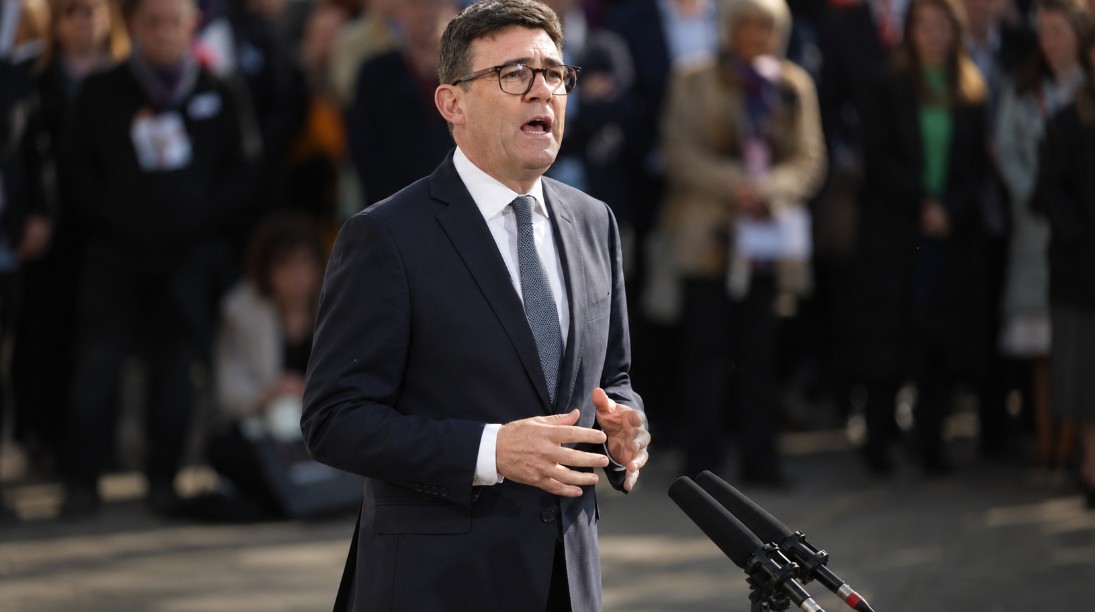
Andy Burnham used his first speech outside 10 Downing Street on Monday, 20 July, to promise new cost-of-living measures within days, a ten-year plan for Britain later in 2026 and an immediate drive to end rough sleeping.
Burnham formally became prime minister after succeeding Keir Starmer, whose final Downing Street address said the incoming Labour leader had his full support. The government’s official ministerial record confirms Burnham took office on 20 July.
The new prime minister acknowledged public frustration with repeated political upheaval, saying the country’s leaders had “not been good enough” and needed to improve. He presented his arrival in Number 10 as a potential “circuit breaker for Britain”, while promising a more collaborative style of government focused on solving problems rather than political point-scoring.
What Burnham Promised in His First Speech?
The most immediate announcement concerned the cost of living. Burnham said his government would give households “some breathing space now”, with measures and details of how they will be funded due to be published this week. He did not use the speech to identify specific tax, benefit, energy or housing changes.
His longer-term programme is expected to include changes to education, greater mental health support, more council housing and measures intended to help young people enter employment. Burnham argued that this approach could reduce welfare spending while allowing the government to retain its fiscal rules and meet defence commitments.
He also promised to move power away from Westminster and give communities greater control, while placing essential services under stronger public oversight to make them more affordable. However, the address contained no detailed timetable for transferring powers or explanation of what the settlement would mean for the London government and the capital’s 32 boroughs.
The ten-year plan is due later this year. Until it is published, major questions remain about its cost, legislative programme and how Burnham will balance greater spending on housing and public services with the government’s existing financial rules.
Rough-Sleeping Pledge Carries Particular Weight in London
Burnham said his first instruction inside Downing Street would be to end rough sleeping. The commitment is especially significant for London, where outreach workers recorded 12,938 people sleeping rough between April 2025 and March 2026.
Although that total was 2% below the previous year, it was still the second-highest figure recorded by the capital’s Combined Homelessness and Information Network. It was also 60% higher than the equivalent total a decade earlier.
Westminster alone accounted for 2,583 people, or one-fifth of London’s total. Outreach teams also recorded 227 people sleeping rough at Heathrow Airport, 71 on buses and five on the London Underground during the year.
The figures show why ending rough sleeping will require more than emergency accommodation. More than half of those assessed had a mental health support need, while 21% of people newly recorded on the streets had arrived after leaving asylum-support accommodation.
Taken together, the data suggests a London strategy would need to combine permanent housing with health services, borough outreach work and better coordination when people leave government accommodation.
Burnham has established broad priorities, but the test will be whether this week’s cost-of-living package provides measurable help and whether the ten-year plan turns his housing, devolution and homelessness promises into funded policies. Those announcements are now the next confirmed stages of his premiership.
About the Journalist
Adam reports on London news, events and local developments. His coverage includes festivals, exhibitions, public announcements, community stories and important updates affecting people across the city. He aims to provide timely and accessible reporting on what is happening in London.