UK Government Emergency Preparedness: Britons Urged to Stock Up on Food and Water for Three Days
 Published By
Olivia
Published:
Updated:
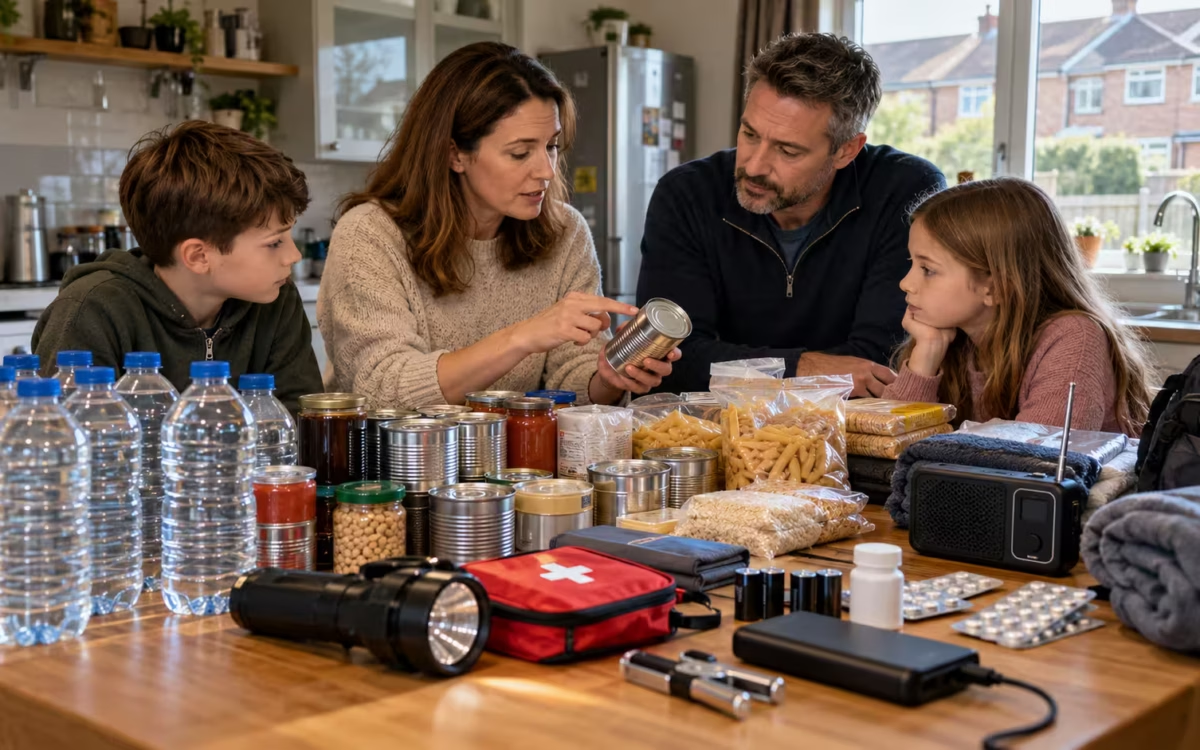
Table of Contents
Published: 23 October 2026 | UK News
The UK government has launched a nationwide emergency preparedness campaign, urging households to keep at least three days’ worth of essential supplies as Britain prepares for potential disruption caused by extreme weather, cyberattacks and failures affecting critical infrastructure.
The new “Be Ready” campaign, announced by the Cabinet Office on 22 October 2026, encourages families to store bottled water, non-perishable food and basic emergency equipment so they can manage temporary interruptions to electricity, water, communication networks and other essential services.
The initiative marks the beginning of a three-year public awareness campaign designed to strengthen the country’s resilience. Ministers say the advice is intended to make everyday emergency planning a normal part of household life rather than a response to an immediate crisis.
Security Minister Dan Jarvis has emphasised that better household preparedness could ease pressure on emergency services during major incidents, allowing responders to concentrate on vulnerable residents and people facing immediate danger.
The announcement follows a period of severe weather, including damaging winter storms and wildfires during summer 2026, alongside growing government concerns about cyber threats and disruption to essential services.
Defence Secretary Wes Streeting also addressed national resilience on Thursday, warning that Britain must prepare for increasingly sophisticated cyber threats and potential disruption to supply chains.
Speaking about the government’s approach, Streeting said the public should be “alert but not alarmed”, stressing that advance preparation should not be confused with panic buying or an expectation that a major emergency is imminent.
The latest guidance builds on household preparedness advice first introduced in May 2024, but the new campaign significantly expands the government’s efforts to communicate it across the country.
Why Is the UK Government Asking People to Prepare for Emergencies?
The government’s renewed focus on emergency preparedness follows research revealing that many British households lack the supplies or arrangements needed to cope with prolonged disruption.
According to the Cabinet Office’s 2026 preparedness survey, just 13% of respondents considered their households largely or completely prepared for an emergency or disaster.
Meanwhile, 50% reported feeling only slightly prepared or not prepared at all.
The survey, conducted between 27 February and 11 May 2026, included 10,791 adults in its core UK sample.
It also found that 84% believed it was important for the government to provide information about actions people could take to protect their households during major emergencies.
One particularly significant finding concerned drinking water. When researchers calculated supplies using an allowance of three litres per person daily, only 4% of respondents had sufficient bottled water for at least three days.
These findings help explain why ministers are concentrating on practical household preparation rather than relying exclusively on national emergency response arrangements.
The campaign is also intended to bring the UK closer to countries such as France, Ireland and the Netherlands, where public authorities already encourage households to prepare for approximately 72 hours of disruption.
Lord Harris, chairman of the National Preparedness Commission, had previously raised concerns about the British public’s dependence on essential infrastructure.
Speaking to LBC in September 2026, he warned:
“We all need to be prepared for those circumstances when the things we just take for granted are no longer available.”
His comments highlighted how a major electricity failure could trigger wider problems involving mobile communications, water infrastructure and electronic payment systems.
For London households, such disruption could affect everything from lifts in residential buildings and contactless payments to home working, public transport information and communication with family members.
Authorities are therefore encouraging residents to consider what they would do if several everyday services became unavailable simultaneously.
What Should UK Households Keep in an Emergency Kit?
The government’s official emergency preparedness guidance recommends having enough essential supplies to manage three days without normal access to everyday services.
Households are encouraged to consider keeping bottled drinking water, food that does not require refrigeration or cooking, a manual tin opener, a battery-powered or wind-up torch, a radio, spare batteries, a first-aid kit, necessary medication and supplies for babies or pets.
A recommended planning allowance of three litres of drinking water per person each day means a three-day supply would amount to approximately nine litres per person.
Additional water may be necessary for hygiene, cooking, medical needs and caring for children or animals.
Residents are also encouraged to maintain a written list of important telephone numbers, keep essential documents accessible and consider having a charged portable power bank.
For people who depend on electrical medical equipment, the guidance is particularly important because an extended power cut may require alternative arrangements agreed in advance with healthcare providers or utility companies.
The government has made clear that households do not need to purchase everything immediately. Families can gradually build supplies according to their circumstances, using products they already buy and replacing them as needed.
Officials also recognise that some people cannot afford extra supplies or may have limited storage space, particularly those living in temporary accommodation or experiencing financial hardship.
Another major part of the campaign involves the Priority Services Register, which allows eligible customers to inform utility providers that they may require additional assistance during interruptions.
The register is relevant to people with certain medical conditions, disabilities, additional communication needs or other circumstances that make service disruption more difficult to manage.
Equivalent customer support arrangements operate in Northern Ireland.
British Red Cross Director for UK Resilience Laura Scott supported the campaign’s emphasis on practical planning and community cooperation.
In comments published alongside the government announcement, Scott said:
“We can’t control when emergencies happen, but we can all take some simple steps to be prepared.”
She also highlighted the importance of clear information for people at greater risk during emergencies, explaining that accessible advice could reduce the impact of crises and potentially save lives.
The British Red Cross has consistently emphasised that community networks matter during emergencies, particularly when residents need to support neighbours, older relatives or people who cannot easily leave their homes.
What Happens Next?
More than 500 organisations, including charities, businesses, emergency services and community groups, have already agreed to support the government’s preparedness campaign.
The Cabinet Office plans to expand public awareness through online information, social media and radio advertising over the coming months.
Families with young children and older people are among the audiences expected to receive particular attention.
The campaign is being developed with the devolved administrations, local authorities and resilience organisations to ensure that advice can be adapted to different communities and their needs.
It also forms part of the government’s wider Resilience Action Plan, which includes measures addressing national infrastructure, supply chains, severe weather and the ability of public services to respond to major disruption.
The updated National Risk Register, published in July 2026, examines threats ranging from extreme weather and cyber incidents to wider national security risks.
However, the publication of preparedness advice does not mean the local government has announced an imminent attack, nationwide blackout or immediate shortage of essential supplies.
Instead, ministers are asking households to make affordable, practical arrangements before a disruption occurs.
For Londoners, the advice is particularly relevant to residents who depend heavily on transport networks, digital payment systems, broadband connections and electricity-powered household services.
Although emergency services and local authorities remain responsible for responding to major incidents, keeping basic supplies and planning how to contact family members could make a meaningful difference during the first few days of disruption.
The government’s central message is that emergency preparedness should become a routine household consideration, much like checking smoke alarms or arranging home insurance.
As the three-year campaign develops, attention will increasingly turn to whether improved public information produces measurable changes in household preparedness, particularly among communities with the fewest resources.
For now, households can review the latest official advice through the government’s Be Ready service and decide which precautions are appropriate for their circumstances.
About the Journalist
Olivia covers London life, culture and lifestyle for Londoner. Her work includes food, shopping, neighbourhood trends, attractions, local experiences and practical guides for residents and visitors. She focuses on engaging stories that reflect everyday life across the capital.