Russia Ambassador UK Withdrawal: Andrey Kelin Leaves London Post
 Published By
Ben
Published By
Ben
Published:
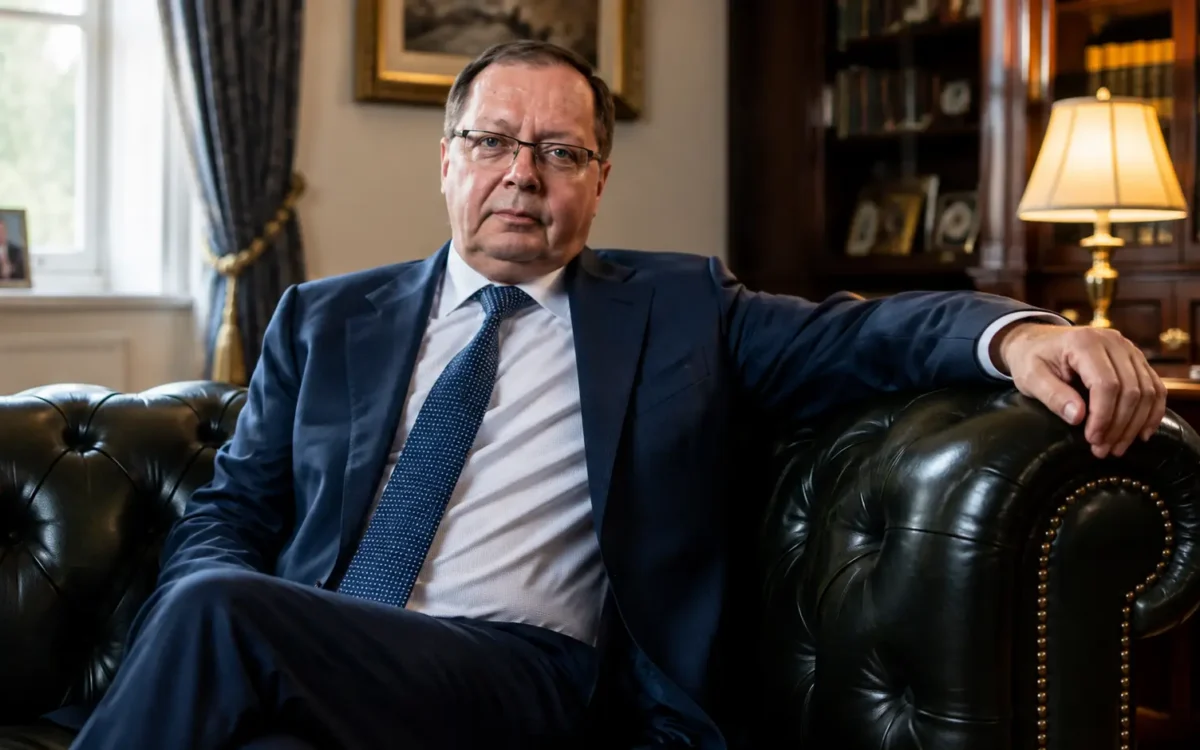
Table of Contents
Russia has withdrawn its ambassador to the UK, Andrey Kelin, leaving Moscow without a permanent ambassador in London at a time of sharply worsening tensions between the two countries over the war in Ukraine.
The Russia ambassador UK withdrawal involving Andrey Kelin emerged publicly on Sunday, 23 August, although the Russian Embassy has confirmed that Kelin’s diplomatic mission formally ended on 21 July 2026.
Kelin had served as Russia’s ambassador to the United Kingdom for more than seven years. Moscow has not yet publicly named a replacement, with the embassy currently being led by its chargé d’affaires, Vasily A Tsyganov.
The development comes against an increasingly hostile backdrop between London and Moscow, including disputes over British military support for Ukraine, diplomatic expulsions, sanctions and recent Russian warnings of consequences over UK-made drones reportedly used by Ukrainian forces.
However, the Russian Embassy has denied that Kelin’s departure means Moscow has formally decided to downgrade diplomatic relations with Britain.
What Happened to Russian Ambassador Andrey Kelin?
Andrey Kelin left his diplomatic post in Britain on 21 July after serving as Moscow’s senior representative in the UK for more than seven years.
His departure attracted greater attention after it became clear that Russia had not immediately nominated another ambassador to take his place.
The Russian Embassy’s online list of senior diplomatic staff now identifies Vasily A Tsyganov as chargé d’affaires, meaning he is overseeing the mission while there is no ambassador in post.
According to the embassy, Kelin’s mission was concluded by Moscow. Russian officials have blamed Britain for the deterioration in bilateral relations, describing relations between the countries as having reached an exceptionally low point.
The embassy also said Kelin had sought to preserve channels of communication during his period in London despite increasingly difficult relations.
It said he left Britain hoping that a more constructive relationship might eventually become possible if the UK changed its policies towards Russia.
Russia Ambassador UK Withdrawal: Key Facts
| Detail | Latest position |
| Ambassador | Andrey Kelin |
| Role | Russian Ambassador to the United Kingdom |
| Mission ended | 21 July 2026 |
| Time in post | More than seven years |
| Replacement announced | No replacement publicly confirmed |
| Embassy currently headed by | Vasily A Tsyganov, chargé d’affaires |
| Diplomatic relations formally downgraded? | Russian Embassy says no |
| Main source of current tensions | Ukraine war and UK support for Kyiv |
The absence of an immediate successor has inevitably raised questions over whether Moscow intends to reduce the level of its diplomatic relationship with London.
For now, Russia is rejecting that interpretation.
The embassy subsequently clarified that comments surrounding Kelin’s departure should not be interpreted as indicating an intention to formally downgrade diplomatic relations with the UK.
Why Has Andrey Kelin Left the UK?
Russia has confirmed that Kelin’s diplomatic mission ended, but there has been no announcement establishing that his withdrawal was a formal severing or downgrading of diplomatic ties.
That distinction matters.
Countries regularly replace ambassadors, and periods in which an embassy is managed by a chargé d’affaires are not unprecedented. What makes Kelin’s departure particularly significant is the political environment in which it has happened and the fact that Moscow has yet to nominate a successor.
UK-Russia relations have deteriorated dramatically since Russia launched its full-scale invasion of Ukraine in February 2022.
Britain has become one of Kyiv’s most prominent international supporters, providing military assistance, financial support and sanctions targeting Russian individuals, companies and strategic sectors.
The UK Government imposed another package of Russia-related sanctions on 6 August 2026. The Foreign Office said more than 500 individuals, entities and ships had been sanctioned under the Russia regime during 2026 alone, bringing the overall number of UK sanctions listings associated with the regime to more than 3,400.
UK-Made Drones Add to Tensions With Moscow
The timing of Kelin’s departure has become particularly important because tensions escalated further during August.
Russia reacted angrily to reports that Ukrainian forces had used unmanned aircraft manufactured by British companies to strike targets inside Russia.
The Russian Embassy accused London of deliberately escalating its involvement in the conflict and warned that Britain’s actions would have consequences.
Moscow has repeatedly criticised the UK for supplying weapons and military technology to Ukraine, while Britain maintains that Kyiv has the right to defend itself against Russia’s invasion.
Prime Minister Andy Burnham has said Russian warnings will not change Britain’s support for Ukraine, arguing that the UK remains committed to helping the country defend itself.
What Has the UK Government Said About Kelin’s Withdrawal?
The Foreign, Commonwealth and Development Office has treated the decision over Kelin’s position as a matter for Russia.
A Foreign Office spokesperson said Britain continues to maintain both an ambassador and an embassy in Moscow, allowing UK officials to engage directly with the Russian government and raise concerns.
The Government also reiterated its support for Ukraine and its position that Kyiv has the right to defend itself.
That indicates Britain is not currently responding to Kelin’s departure by reducing its own diplomatic presence in Russia.
Diplomatic relations have nevertheless been under severe pressure for months.
Kelin was summoned to the Foreign Office several times during 2026.
In April, the UK summoned the Russian ambassador and revoked the accreditation of a Russian diplomat in a reciprocal move following Moscow’s expulsion of another British diplomat.
The Foreign Office warned at the time that any further Russian actions targeting British diplomatic staff would be viewed as an escalation.
Kelin was summoned again on 3 June following Russian attacks on Ukraine and an incident in which a drone struck a residential building in Romania after entering NATO airspace.
British officials used the meeting to condemn Russia’s actions and reaffirm the UK’s commitment to Ukraine and its NATO allies.
Who Is Andrey Kelin?
Andrey Kelin is a veteran Russian diplomat whose career stretches back to the Soviet era.
He entered the Soviet diplomatic service in 1979 and went on to hold a series of senior diplomatic roles before becoming ambassador to the United Kingdom.
Kelin took up the London post in 2019 and remained one of the most visible Russian diplomatic figures in Britain throughout the deterioration in UK-Russia relations following the invasion of Ukraine.
He regularly appeared in British media interviews defending Moscow’s policies and challenging Western accounts of the conflict.
His long tenure meant he remained in London through some of the most confrontational years in modern UK-Russia relations.
Does the Withdrawal Mean Russia and the UK Are Cutting Diplomatic Ties?
No formal break in diplomatic relations has been announced.
This is an important distinction in the Russia ambassador UK withdrawal story.
The absence of a Russian ambassador could signal a prolonged period of reduced diplomatic engagement, particularly if Moscow does not nominate a successor. However, the Russian Embassy has specifically rejected suggestions that its statements indicate a formal diplomatic downgrade.
The embassy remains operational in London under a chargé d’affaires, while Britain continues to operate its embassy in Moscow.
That means official diplomatic channels between the two governments remain open, even if political relations are exceptionally poor.
Why the Withdrawal Matters for London?
The development has particular significance for London because the capital is at the centre of the UK’s diplomatic relationship with Moscow.
The Russian Embassy in Kensington has remained operational throughout the war in Ukraine despite growing restrictions, sanctions and political confrontation between the governments.
An ambassador is normally the most senior official representing one government to another. Leaving the position vacant for a prolonged period would therefore be politically notable, even if relations were not formally downgraded.
It could also reduce the level at which routine diplomatic engagement takes place between Moscow and Whitehall.
For London, Kelin’s departure therefore represents more than a routine personnel change. It comes while Britain and Russia are exchanging increasingly hostile accusations and while the UK Government is strengthening its military and economic support for Ukraine.
What Happens Next?
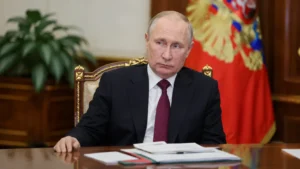
Attention will now turn to whether President Vladimir Putin’s government nominates another ambassador to Britain.
A replacement would normally have to proceed through the diplomatic appointment process before taking up the post in London.
If Moscow leaves the position vacant for an extended period, speculation over a deliberate reduction in diplomatic engagement is likely to continue.
The immediate evidence, however, does not establish that Russia has severed or formally downgraded diplomatic relations with the UK. Moscow’s embassy remains open and Russian officials have explicitly denied that Kelin’s departure should be interpreted in that way.
What is clear is that the relationship is under exceptional pressure.
Britain is continuing to support Ukraine militarily and economically, while Moscow is increasingly portraying the UK as one of the Western countries most directly involved in supporting Kyiv.
Kelin’s departure therefore arrives at a sensitive moment, and the decision over whether and when Russia appoints another ambassador will be closely watched in both London and Moscow.
Conclusion
The Russia ambassador UK withdrawal involving Andrey Kelin has left Moscow without a permanent ambassador in London after Kelin’s diplomatic mission ended on 21 July 2026.
Russia has not yet publicly confirmed his successor, leaving chargé d’affaires Vasily A Tsyganov in charge of the embassy.
Although the development has fuelled speculation about a further deterioration in UK-Russia relations, Moscow has denied that it intends to formally downgrade diplomatic ties.
The next major signal will be whether Russia nominates a replacement. Until then, Kelin’s departure stands as another sign of how strained relations between London and Moscow have become as Britain continues its support for Ukraine.
About the Journalist
Ben covers business, transport and global developments for Londoner. His reporting focuses on London’s economy, major companies, infrastructure, public transport and international stories that may affect people and businesses across the capital. He explains complex developments clearly using reliable sources and relevant context.