Recycling Rules in SW London – 5 Things to Know in 2026
 Published By
Henry
Published By
Henry
Published:
Updated:
Table of Contents
For residents across Southwest London, managing household waste can sometimes feel like a puzzle with all the changes and updates.
With different boroughs often having distinct collection rules, knowing exactly what goes into which bin is essential for keeping our neighbourhoods green and reducing the pressure on local landfill capacity.
London aims to be a zero-waste city, sending no biodegradable or recyclable waste to landfill by 2026, and recycling 65% of London’s municipal waste by 2030.
As we contribute to this goal, here are 5 essentials to know about recycling in Southwest London.
What Are the Most Important Recycling Rules in SW London for Households to Follow?
1. Know Your SW LondonBorough’s “BinSmart” Rules
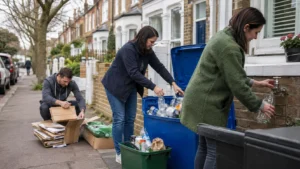
While it would be convenient if every borough followed the exact same recycling protocol, subtle differences exist between areas like Kingston, Richmond, Wandsworth, and Merton.
Many boroughs participate in the South London Waste Partnership, which provides a “BinSmart” directory.
Before you toss an item, take a moment to check your specific borough’s portal. Generally, most councils accept mixed recycling (plastic bottles, tins, cans, and glass), but they are often strict about “wish-cycling” putting non-recyclable items like soft plastics, crisp packets, or polystyrene into the green bin, which can contaminate an entire load and force it to be sent to landfill.
2. The “Rinse and Flatten” Rule
Efficiency is the cornerstone of effective recycling. Simply rinsing out your yoghurt pots, meat trays, and glass jars is one of the most impactful things you can do.
Food residue is a primary cause of recycling contamination. Additionally, flattening cardboard boxes and plastic bottles helps save valuable space in your collection bin and allows for more efficient transport, reducing the number of collection trips needed.
3. Manage Specific Waste Responsibly
Standard curb side collections are excellent for weekly waste, but they aren’t designed for large-scale household clear-outs, construction debris, or bulky furniture.
Trying to force these items into standard bins or worse, leaving them beside your bin or on your street usually results in them not being collected and even being fined for fly-tipping.
For larger volumes of different types of waste, professional rubbish removal services are a vital resource to ensure the adequate recycling.
Using professional recycling services like household clearance by Snappy Rubbish Removals, same day waste removals by expresswasteremovals.co.uk, and garage clearance by manandvanrubbishremoval.co.uk provide an effective solution for disposing of items that your local council won’t collect and recycle.
These services are particularly helpful because they specialize in sorting waste at local licensed transfer stations, ensuring that as much material as possible is reused or recycled rather than dumped at landfill.
4. Understanding the Urban Waste Challenges & Solutions
Managing waste in a dense urban environment like London is significantly more complex than it appears on the surface.
In an interview with the London Business News Magazine, Stoyan Staykov, founder of Snappy Rubbish Removals, highlighted that many Londoners are unaware of the logistical hurdles involved in professional waste management.
From navigating narrow streets and strict parking regulations to the high costs of sorting mixed materials at a tipping yard, professional clearance services perform a heavy lifting that directly supports the city’s sustainability goals.
As Staykov notes, investing in professional, responsible waste removal is a critical step in preventing “waste crime” and ensuring that your discarded items are processed through the proper, environmentally conscious channels.
5. Prioritize Waste Sorting to Reduce Landfill
The ultimate goal of all Londoners should be to maximize the amount of waste diverted from landfills. When you hire a professional removal service, you are essentially outsourcing the complex task of material separation.
Professional teams don’t just “take away” rubbish; they take it to nearby and local facilities where wood, metal, plastic, and cardboard are separated and repurposed.
By choosing a provider that prioritizes high recycling rates, you are directly contributing to London’s broader environmental strategy.
Whether you are clearing out a shed or managing renovation waste, ensuring your service provider is fully licensed and committed to landfill diversion is a simple way to make your household more sustainable.
Follow Local Recycling Rules in SW London
Recycling isn’t just about what we put in our blue or green bins; it’s about the mindset we bring to consumption and disposal.
By being diligent with our weekly recycling, following local recycling rules and updates in your London area, utilizing professional services for the more demanding recycling jobs, and supporting companies that prioritize ethical disposal, we can all help Southwest London lead the way toward a cleaner, greener future.
About the Journalist
Henry is the editorial head and lead author at Londoner. He oversees the publication’s editorial direction, article quality, source verification and corrections process. He also reviews major stories before publication to ensure they meet Londoner’s standards for accuracy, fairness and transparency.