London Burial Space Crisis As 17 Local Authorities Could Run Out Of Graves By 2040
 Published By
Lucy
Published By
Lucy
Published:

Seventeen London local authorities are projected to run out of burial space within 15 years, while Camden, Hackney and Tower Hamlets are already listed as having no remaining capacity, prompting demands for a coordinated capital-wide plan.
London faces a growing burial space crisis, with 17 local authorities projected to have no remaining capacity by 2040 and three boroughs already recorded as having run out of space.
Camden, Hackney and Tower Hamlets are identified as having no remaining burial capacity in City Hall’s 2026 Audit of London Burial Provision. Nine of the 25 boroughs that responded to the audit said they already depend on cemeteries outside their boundaries because they lack sufficient open space locally.
Liberal Democrat London Assembly member Hina Bokhari has urged Mayor Sadiq Khan to bring boroughs, cemetery operators and faith communities together to develop a London-wide response. Bokhari formally raised burial provision at Mayor’s Question Time on 16 July 2026.
For London families, the problem does not necessarily mean burials will become impossible. It increasingly means a suitable grave may have to be found outside the borough where the deceased lived, making it harder for relatives to bury and visit loved ones close to home.
How London Plans to Create More Burial Space?

City Hall has now put burial provision directly into the draft London Plan published on 16 July.
Policy HN10 calls for councils to plan collaboratively for the expansion, reuse and long-term supply of burial space, while taking account of different cultural and faith requirements. The policy also sets out an order in which potential solutions should be considered.
Boroughs would first examine the possibility of reusing or making more intensive use of existing cemeteries. They could then consider extending burial grounds or finding new urban sites before looking at grey-belt or Green Belt land where other options cannot provide enough capacity.
The draft also says cemetery design should consider double or even triple-depth burials where ground conditions allow. New provision in one borough could potentially meet demand from communities in neighbouring areas facing severe shortages.
That cross-borough approach matters because the audit shows the problem is unevenly distributed. Some authorities are already reliant on land elsewhere while others retain considerably more capacity.
However, councils currently have powers to provide cemeteries rather than a statutory duty to guarantee that sufficient burial space exists. A private member’s bill introduced in the House of Lords would change that by requiring local planning authorities to assess burial needs, plan for at least 25 years of demand and publish long-term management arrangements.
Could Old London Graves Be Reused?
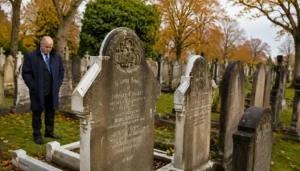
Grave reuse is another significant part of the debate, but the proposals should not be confused with an immediate change in the law.
The Law Commission published its final review of burial and cremation law in March 2026, recommending that burial grounds across England and Wales should be able to apply for powers to reuse older graves. Grave reuse is currently available to London councils and only a limited number of other cemeteries.
Under the Commission’s proposed safeguards, a grave could not be reused until at least 100 years after the last burial. Relatives would receive a year in which to object, and an objection would prevent reuse for another 25 years. Commonwealth war graves and relevant post-war military graves would receive additional protection.
Those recommendations have not themselves changed the law. Government action and legislation would be needed to implement the wider regime.
For London, that distinction is important. The draft London Plan can push boroughs towards more coordinated planning, deeper graves, reuse and potential new cemetery sites, but it cannot by itself remove the legal and practical obstacles surrounding burial provision.
With three boroughs already out of space and 17 authorities potentially reaching that position by 2040, the next decisions will centre on how quickly councils turn City Hall’s audit into local plans and whether wider burial-law reforms progress nationally.
About the Journalist
Lucy reports on London’s boroughs and the capital’s sporting community. Her coverage includes council decisions, neighbourhood developments, community issues, football, tennis, cricket and major sporting events. She focuses on stories that connect local communities and highlight the people and organisations shaping London.