UK Humanitarian Worker Monitored For Ebola At London Hospital
 Published By
Henry
Published By
Henry
Published:
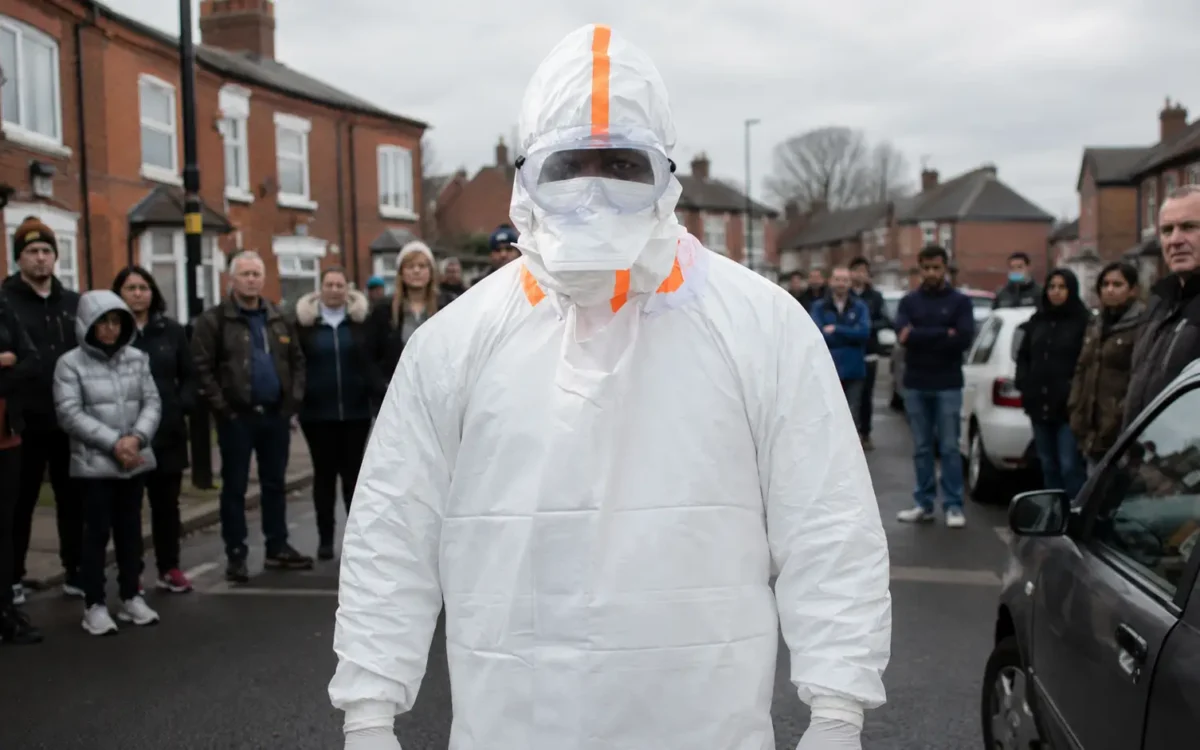
A UK resident has been placed in precautionary isolation after a possible workplace exposure while supporting the Ebola response in the Democratic Republic of the Congo. Health officials say the worker remains well and poses a low risk to the public.
A UK humanitarian worker is being assessed in isolation at a London hospital after a potential healthcare-related exposure to Ebola in the Democratic Republic of the Congo.
The unnamed individual was medically evacuated on a specially chartered flight after working with a humanitarian organisation treating patients during the country’s growing outbreak. The UK Health Security Agency announced the transfer on Tuesday 21 July, stressing that the worker has no symptoms and that there are no confirmed Ebola cases in the UK.
The individual will be monitored by infectious disease specialists throughout Ebola’s incubation period, which can last between two and 21 days. The evacuation was described as a highly precautionary measure rather than evidence that the worker has contracted the virus.
Richard Pebody, UKHSA’s director of epidemic and emerging infections, said: “The risk to the general public remains low.” He added that the worker had been transferred “out of an abundance of caution” and remained well.
London Hospital Has Not Been Identified
UKHSA has not disclosed which London hospital is caring for the worker. The Royal Free Hospital in Hampstead operates the UK’s principal high-level isolation unit for adult patients with contact-transmitted high consequence infectious diseases, including Ebola, but there has been no official confirmation that the individual was taken there.
The Royal Free unit has restricted access, a dedicated laboratory, specialist waste-decontamination facilities and controlled ventilation around patients’ beds. Government guidance also identifies the Royal Victoria Infirmary in Newcastle as another principal adult treatment centre serving the UK.
The isolation arrangements do not indicate a wider danger to other hospital patients or London residents. Ebola is not spread in the same way as airborne infections such as flu. Transmission requires direct contact with the blood or other bodily fluids of an infected person, or with contaminated objects such as needles, clothing or bedding.
UKHSA guidance says there is no evidence that people spread Ebola by coughing or sneezing. Someone displaying no symptoms poses a very low transmission risk because the amount of virus in the body is low at that stage.
Symptoms usually begin suddenly and can include fever, headache, tiredness, muscle pain and a sore throat. Vomiting, diarrhoea and impaired kidney or liver function may follow, while some patients develop internal or external bleeding.
Outbreak Has Killed More Than 960 People
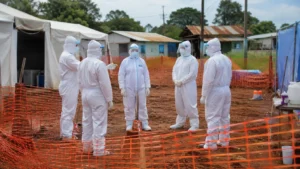
The current outbreak was declared in the DRC and neighbouring Uganda on 15 May and is being caused by the Bundibugyo species of Ebola virus.
DRC authorities had recorded 2,423 confirmed cases, 967 deaths and 469 recoveries by 19 July, according to a World Health Organization update delivered in Geneva. The outbreak has spread across parts of eastern DRC, where insecurity and population displacement are complicating surveillance, treatment and contact tracing.
Licensed vaccines used against the better-known Zaire Ebola virus are species-specific and do not provide an established vaccine option for the Bundibugyo strain behind this outbreak. The UK has committed up to £21 million to support the DRC-led response, including measures intended to protect frontline workers and vulnerable communities.
Imported Ebola infections remain extremely rare in Britain. UKHSA records four confirmed cases since 1976: one laboratory-acquired infection and three cases involving healthcare workers connected with the 2014 to 2015 West African epidemic. There have been no Ebola deaths in the UK.
The humanitarian worker will remain isolated and under observation while health officials watch for any symptoms. UKHSA said it would issue another public update should the situation change.
About the Journalist
Henry is the editorial head and lead author at Londoner. He oversees the publication’s editorial direction, article quality, source verification and corrections process. He also reviews major stories before publication to ensure they meet Londoner’s standards for accuracy, fairness and transparency.