UK EU Food Trade Deal Agreed as Britain and Brussels Move to Cut Post-Brexit Barriers
 Published By
Lucy
Published:
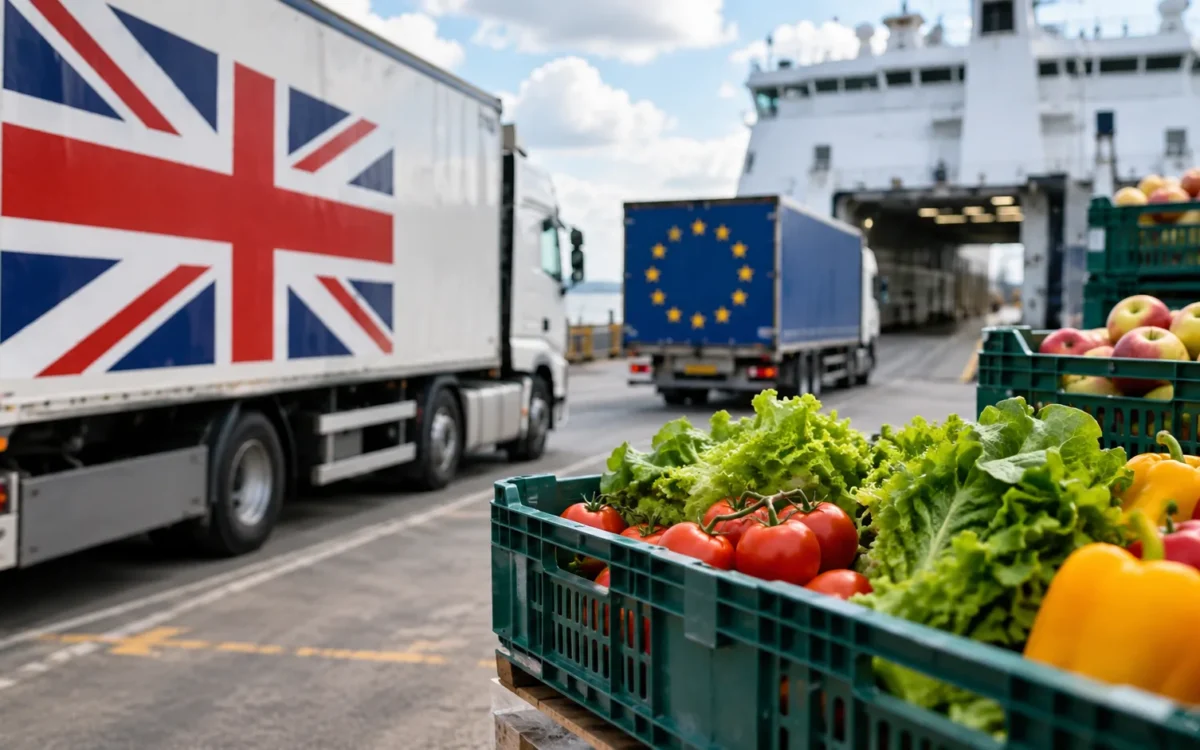
Table of Contents
Britain and the European Union have reached a major UK-EU food trade deal, marking an important breakthrough in efforts to reduce post-Brexit trading barriers, lower business costs and ease pressure on supermarket prices.
The agreement was confirmed at the UK–EU summit in Brussels on 20 November 2026, where Prime Minister Andy Burnham and European leaders backed new arrangements covering food, agricultural products, animals and plants.
The deal is expected to remove most routine health certificates and border inspections currently required for goods moving between Great Britain and the EU.
The government estimates that the agreement could add up to £5.1 billion annually to the UK economy by 2040, although the financial benefits will depend on how successfully businesses adapt to the new arrangements.
The changes are scheduled to take effect on 1 March 2028, subject to the necessary legal procedures.
What Has Been Agreed Under the UK EU Food Trade Deal?
The new agreement establishes a Common Sanitary and Phytosanitary (SPS) Area, designed to simplify trade by aligning British and European rules on food safety, animal health, plant health and agricultural products.
Since Brexit, British food exporters have faced additional documentation, inspections and certification requirements when selling products to European customers.
These barriers have increased operating costs, particularly for smaller producers dealing with perishable goods.
Under the agreement, most routine SPS checks will be removed, allowing many agricultural and food products to cross borders more efficiently.
The main changes include:
- Fewer Border Inspections: Most routine health and safety checks on eligible food shipments will disappear.
- Reduced Certification Costs: Exporters will no longer require certain health and plant certificates for most qualifying products.
- Improved Market Access: British sausages, burgers, seed potatoes and certain shellfish will regain access to European markets.
- Simpler Agricultural Trade: Farmers and producers will face fewer regulatory obstacles when exporting eligible goods.
- Easier Northern Ireland Trade: Reduced paperwork will simplify many goods movements from Great Britain to Northern Ireland.
The government estimates that removing export health certificates could save businesses up to £200 per certificate.
Eliminating certain plant health certificates could also reduce inspection and administration expenses.
However, the agreement does not abolish customs declarations or every form of border control.
Customs requirements remain separate, while targeted inspections may continue where health or security risks arise.
The breakthrough follows renewed political discussions surrounding Britain’s relationship with the EU after Brexit, with economic cooperation becoming an increasingly important priority.
How Will the UK EU Food Trade Deal Affect Supermarket Prices?
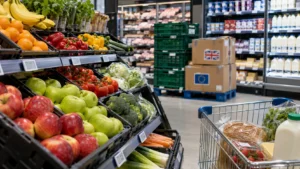
One of the biggest questions surrounding the UK EU food trade deal is whether British households will eventually benefit from cheaper groceries.
Food retailers depend heavily on international supply chains, particularly when importing fresh vegetables, fruit, dairy products and other agricultural goods from European countries.
Additional border inspections can create delays, increase transportation expenses and add administrative costs that businesses may ultimately pass on to shoppers.
The agreement aims to reduce these pressures by allowing eligible products to move more freely between Britain and the EU.
For supermarkets, the potential benefits include faster deliveries, lower certification costs and greater reliability when transporting perishable goods.
These improvements could be particularly important for fresh produce, where delays can shorten shelf life and increase waste.
However, the agreement does not guarantee immediate reductions in supermarket prices.
Retail prices depend on several factors, including energy costs, wages, transport charges, exchange rates and wholesale food prices.
Businesses must also decide whether to pass any savings to customers.
For London households already facing significant cost-of-living pressures, even modest improvements in grocery affordability could prove valuable.
Restaurants, cafés and independent food retailers could also benefit if wholesalers experience lower import costs.
The Food Standards Agency has said the agreement should make it quicker to bring fresh produce onto supermarket shelves while maintaining food safety protections.
Nevertheless, consumers should not expect significant changes before implementation begins in 2028.
The effect on actual grocery bills will become clearer once the new trading arrangements are operating.
What Does the Agreement Mean for British Farmers and Food Businesses?
British farmers, agricultural exporters and food manufacturers could become some of the biggest beneficiaries of the agreement.
The government’s November 2026 assessment indicates that UK agri-food exports to the EU have fallen by 32.5% since 2019, highlighting the difficulties experienced by businesses following Britain’s departure from the European Single Market.
Reducing certification costs and removing routine inspections could make British agricultural products more competitive in European markets.
For smaller businesses, eliminating repeated paperwork may create opportunities to resume exports that previously became too expensive or complicated.
However, the agreement introduces important responsibilities alongside its commercial benefits.
Britain will dynamically align with relevant EU food and agricultural regulations, meaning both sides will apply common requirements in the areas covered by the agreement.
These rules extend beyond imported products and may affect businesses operating exclusively within Britain.
Manufacturers could need to change ingredients, packaging, food labels or production processes to meet updated requirements.
The Food Standards Agency has warned that businesses of all sizes, including independent bakeries, butchers and major supermarkets, should prepare for possible regulatory changes.
The agreement also creates different considerations for companies importing agricultural goods from countries outside the EU.
Some non-EU imports may face additional certification, inspections or compliance requirements as Britain aligns with European import standards.
This could create extra costs for businesses sourcing ingredients internationally, even while trade with European suppliers becomes easier.
The political implications are equally significant.
Supporters argue that common standards represent a practical way to remove unnecessary trade barriers without formally rejoining the European Union.
Critics, however, question whether accepting future European regulations could reduce Britain’s independence over agricultural and food safety policy.
The government maintains that Britain will have an early opportunity to influence relevant EU rules during their development, although it will not regain the voting rights of an EU member state.
When Will the UK EU Food Trade Deal Take Effect?
The agreement is scheduled to apply from 1 March 2028, provided both Britain and the European Union complete their respective legal and approval procedures.
Until then, existing border requirements, certificates and trading arrangements will remain in place.
The government plans to introduce legislation and publish further guidance throughout 2027 to help businesses understand their responsibilities.
Transitional arrangements will also allow qualifying food and feed already on the Great Britain market before implementation to continue being sold, even where those existing products do not meet newly aligned requirements.
This should help reduce disruption and prevent unnecessary food waste during the transition.
The agreement forms part of a broader effort to improve UK–EU political and economic cooperation.
At the Brussels summit, both sides also reached understandings covering emissions trading and opportunities for young people to work, study and travel across Britain and Europe.
However, unresolved negotiations over university tuition fees remain an important complication.
For the food industry, attention will now turn towards preparing for regulatory alignment and ensuring the promised reduction in border bureaucracy becomes a practical reality.
The UK EU food trade deal represents a significant development in post-Brexit economic relations, but its success will ultimately depend on implementation, business readiness and measurable improvements in trade.
For British consumers, the central question remains whether lower trading costs will eventually translate into more affordable food.
The agreement offers a route towards that outcome, although its full economic impact will only become clear after the new arrangements take effect.
“The UK EU food trade deal could significantly reduce post-Brexit barriers, cutting costs for farmers, exporters and supermarkets, but its real success will depend on whether those savings eventually translate into lower food prices for British households.”
— Lucy, Londoner Editorial
About the Journalist
Lucy reports on London’s boroughs and the capital’s sporting community. Her coverage includes council decisions, neighbourhood developments, community issues, football, tennis, cricket and major sporting events. She focuses on stories that connect local communities and highlight the people and organisations shaping London.