UK Smart Meter 2G Shutdown Could Cost £4 Billion As Millions Face Upgrades Before 2033
 Published By
Henry
Published:
Updated:
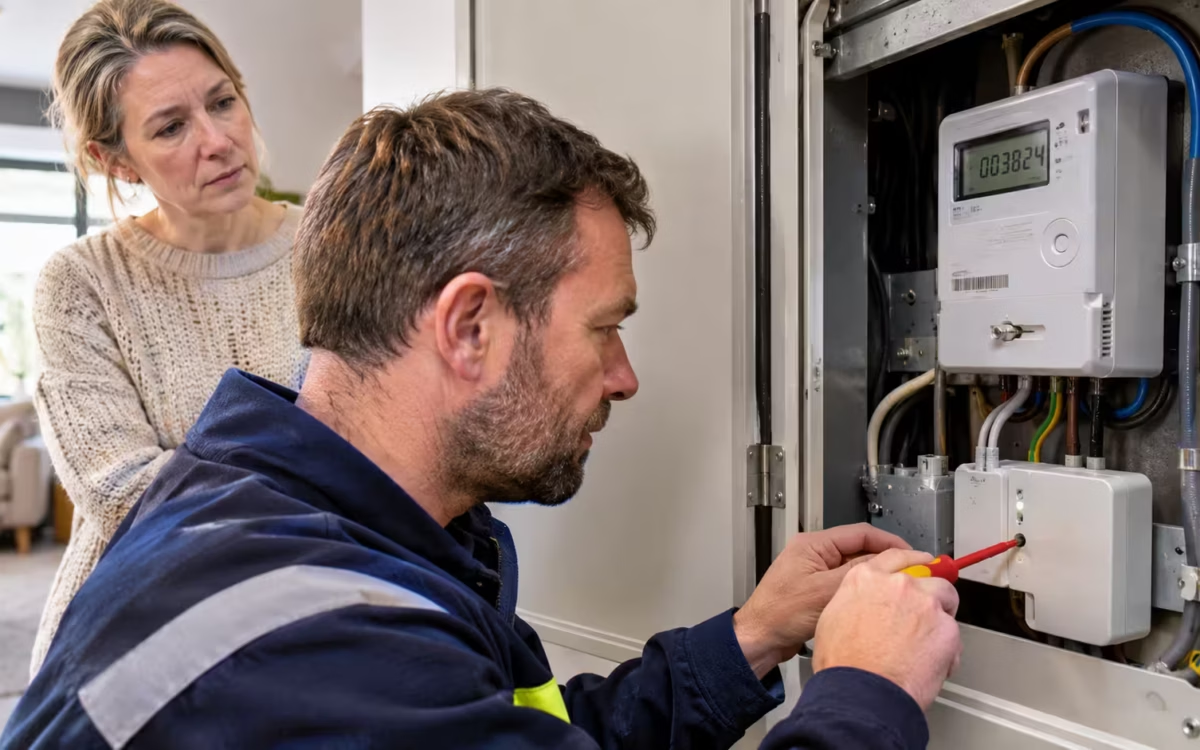
Table of Contents
Millions of British households could be affected by a major smart meter replacement programme as the UK prepares to shut down its ageing 2G mobile networks, with industry estimates suggesting the upgrade could cost around £4 billion.
New research from wireless connectivity company Wirepas, reported by The Register on 10 November 2026, has raised concerns about the cost of keeping Britain’s smart meters connected after older mobile networks are withdrawn.
Around 12 million to 13 million smart meter communications hubs are exposed to the network shutdown, according to the company’s analysis. The transition could require millions of equipment upgrades and replacements over the coming years.
Although consumers will not be charged directly for the planned replacement appointments, the potential multibillion-pound cost has renewed questions about how investment in Britain’s smart energy infrastructure is ultimately funded through household energy bills.
The shutdown is part of a wider telecommunications upgrade intended to replace older mobile technologies with faster and more reliable 4G and 5G networks.
The UK’s 3G mobile networks have already closed, while 2G services are scheduled to disappear gradually between 2029 and 2033.
Energy suppliers now face the challenge of ensuring older smart meters continue to send automatic readings, support accurate billing and provide access to modern energy tariffs.
Why Could the UK Smart Meter 2G Shutdown Cost £4 Billion?
The estimated £4 billion cost comes from industry analysis of the equipment and installation work required to replace older communications technology.
According to figures reported by The Register, approximately seven million older first-generation smart meter installations could require complete replacements because their communications hardware is integrated into the meter.
The estimated cost of replacing these installations ranges from £300 to £350 each, potentially generating expenditure of £2.1 billion to £2.45 billion.
Meanwhile, second-generation smart meters using detachable communications hubs may not need a complete meter replacement.
However, replacing their older communications equipment could still cost between £1.3 billion and £1.4 billion in associated work, before accounting for the cost of new hub hardware.
Together, these expenses place the potential replacement programme at around £4 billion, although the final nationwide cost has not been established.
Some equipment would have required replacement through normal maintenance and renewal programmes regardless of the network shutdown, meaning the gross estimate should not be interpreted as entirely additional expenditure.
The latest findings have also highlighted concerns about technology planning and the long-term costs of maintaining national infrastructure.
Teppo Hemiä, chief executive of Wirepas, said in the company’s November research announcement:
“Europe is great at tracking how many smart meters are installed, but nobody is tracking the connectivity behind them.”
His comments reflect concerns that governments and infrastructure providers can measure installation progress without necessarily having a complete understanding of future communications replacement costs.
Wirepas develops wireless connectivity solutions and has a commercial interest in alternative networking technologies, making its findings an industry assessment rather than an official government cost forecast.
Will Households Have to Pay for Smart Meter Replacements?
Despite the estimated £4 billion programme, households should not expect to receive a separate £300 or £350 invoice for upgrading their affected domestic smart meters.
Smart Energy GB confirms that the planned transition to newer smart meter equipment will be arranged by energy suppliers at no extra charge to customers.
However, the wider cost of maintaining the smart meter system is ultimately supported through the energy market, and infrastructure expenditure can contribute to costs recovered through energy bills.
There is currently no confirmed additional annual amount that individual households will pay specifically because of the 2G shutdown.
The issue has emerged against a backdrop of continuing concern about energy affordability and the reliability of existing smart meters.
Gillian Cooper, Director of Energy at Citizens Advice, previously warned:
“When smart meters fail, people pay the price.”
In its August 2026 research, Citizens Advice found that 36% of people with smart meters, representing approximately 6.7 million households, regularly had to provide manual meter readings.
The organisation also reported that 1.2 million households had experienced problems receiving accurate bills since their smart meters were installed.
These findings concern existing smart meter performance, rather than failures caused by the future 2G shutdown. Nevertheless, they underline why a successful transition matters for consumers.
A poorly managed replacement programme could leave more households relying on estimated bills, submitting readings manually or temporarily losing access to smart-meter-dependent services.
Government Sets 2033 Deadline as Energy Suppliers Face Tougher Rules
The government has already introduced requirements intended to prevent widespread failures during the transition.
Under the smart metering policy framework that came into force in May 2026, energy suppliers must take all reasonable steps to replace affected legacy communications equipment before the relevant services end.
Ofgem identifies 2026 to 2033 as the expected delivery period for upgrading older first-generation smart meters and replacing communications hubs affected by the 2G and 3G network closures.
Suppliers must also take reasonable steps to restore smart meters that have stopped operating in smart mode within 90 days of becoming aware of the problem.
The regulator has separately introduced stronger consumer protections, including automatic £40 payments in certain circumstances involving failed installation appointments, excessive waiting times or failures to provide a timely resolution plan.
Melissa Giordano, Deputy Director of Systems and Processes at Ofgem, said when announcing the protections:
“Every customer who wants a smart meter should get one quickly, and it should work from day one.”
The government maintains that smart meters deliver financial benefits by improving billing accuracy and helping consumers understand their energy use.
It estimated that households with smart meters collectively saved approximately £700 million on energy bills during 2025.
Nevertheless, the latest replacement-cost estimates have brought renewed attention to the overall economics of the rollout and whether future network changes could trigger additional expenditure.
The impact will also differ across Britain.
Second-generation meters in central and southern regions are particularly affected by the mobile network transition, while many second-generation meters in northern areas use a separate long-range radio communications system.
Older first-generation meters remain a wider nationwide replacement consideration.
What Should Smart Meter Customers Do Before the Shutdown?
Households do not need to immediately replace their existing meters or arrange private upgrade services.
Smart Energy GB advises customers that their supplier will contact them if their equipment needs updating.
Depending on the installation, an engineer may replace only the communications hub or install a newer smart meter.
Consumers should verify any unexpected contact by using the telephone number or website shown on their existing energy bill, particularly if someone requests payment for a supposedly mandatory upgrade.
If a meter has already stopped sending automatic readings, the customer should report the problem to their supplier rather than waiting for the national replacement programme.
The longer-term question is whether Britain can complete the transition before older networks disappear without creating further service problems or avoidable costs.
The latest industry estimate is not a confirmed £4 billion government bill, and households are not being asked to pay for individual replacement appointments.
But with millions of devices requiring attention and mobile operators beginning their 2G closures from 2029, the financial and operational challenge facing energy suppliers is becoming increasingly significant.
The coming years will determine whether the UK’s smart metering programme can deliver a reliable transition to 4G while protecting consumers from further disruption and unnecessary energy costs.
“Millions of UK households could need smart meter upgrades before the 2G shutdown, with replacement costs potentially reaching £4 billion. While customers won't pay directly for upgrades, the wider costs could ultimately be reflected in energy bills.”
— Henry, Londoner Editorial
About the Journalist
Henry is the editorial head and lead author at Londoner. He oversees the publication’s editorial direction, article quality, source verification and corrections process. He also reviews major stories before publication to ensure they meet Londoner’s standards for accuracy, fairness and transparency.