Andrew Mountbatten-Windsor Questioning: Former Prince Summoned to High Court Over £750,000 Fraud Dispute
 Published By
Ben
Published:
Updated:
Published: 4 November 2026 | UK News
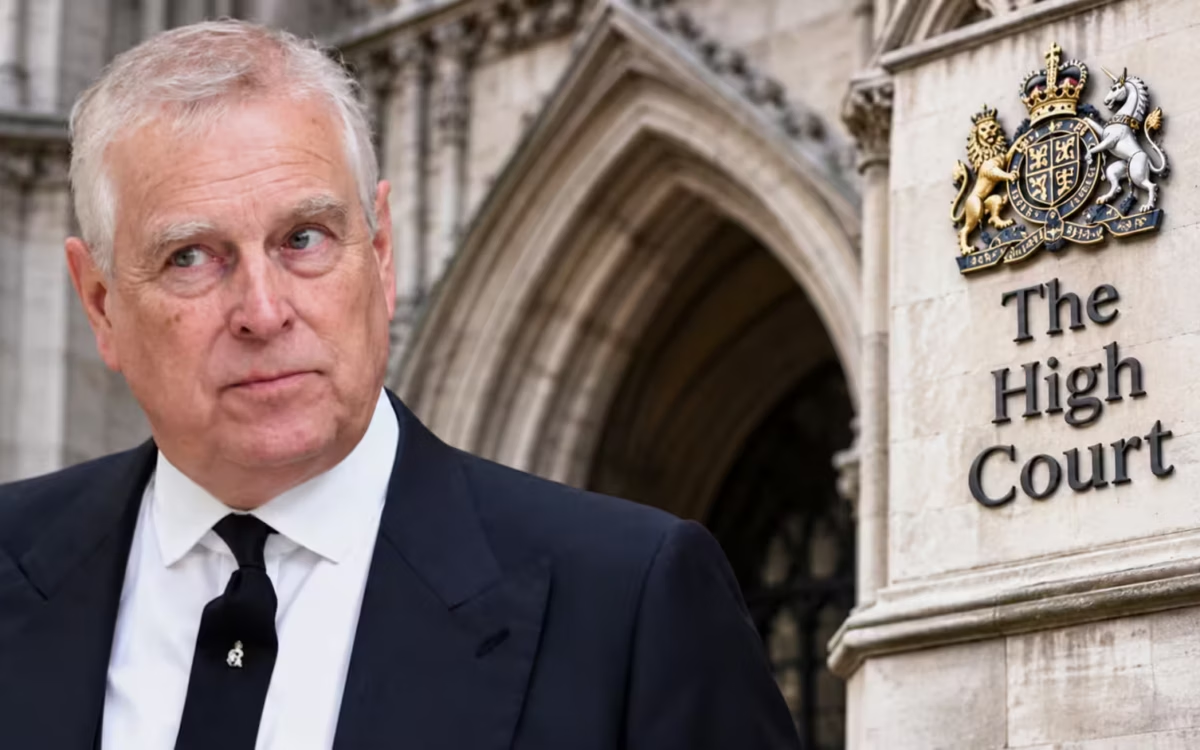
Andrew Mountbatten-Windsor is facing the prospect of his first public questioning in seven years after being served with a witness summons requiring him to give evidence in a High Court fraud trial involving a disputed £750,000 payment.
The former Duke of York, who was stripped of his royal titles in 2025, is expected to give evidence on or around 15 December 2026, either in person or by video link, according to reports published by BBC News and Sky News on 3 November.
The development marks another significant moment for the younger brother of King Charles III, who is already the subject of a separate police investigation into allegations of misconduct in public office.
However, Andrew Mountbatten-Windsor is not accused of wrongdoing in the High Court fraud proceedings, which concern allegations made by Turkish businesswoman Nebahat Evyap İşbilen against her former financial adviser, Selman Turk.
Mr Turk denies dishonesty and has sought Andrew’s testimony to support his defence against allegations that he misused substantial sums belonging to Mrs İşbilen.
The summons is particularly unusual because it is believed to be the first time since the 19th century that a member of the British Royal Family has been required to give evidence through such a court order.
If the questioning proceeds, the former prince could face detailed questions about disputed financial transactions and his dealings with individuals connected to the case.
Why Is Andrew Mountbatten-Windsor Being Questioned?
The forthcoming questioning centres on a complex civil fraud dispute involving approximately £40 million in allegedly misappropriated funds.
Mrs İşbilen claims that her former adviser, Selman Turk, exceeded his authority while managing her wealth and used some of her money for purposes she had not authorised.
Among the transactions being examined is a £750,000 payment made to Andrew Mountbatten-Windsor in 2019.
According to court documents, Mrs İşbilen alleges she was led to believe the money was connected to assistance with obtaining a passport.
Mr Turk disputes that account. His position is that the payment was made at Mrs İşbilen’s initiative to establish goodwill with the then Duke of York and was unrelated to any passport arrangement.
The £750,000 was subsequently repaid.
Another transaction under examination involves approximately £768,743 transferred from Mrs İşbilen’s account in January 2020.
Mr Turk claims this money represented a loan connected to Andrew’s purchase of a chalet in Switzerland. Mrs İşbilen contests that explanation.
These competing accounts have made Andrew a potentially important witness because his evidence could help establish the purpose of the payments and what the parties understood about the arrangements.
The former prince met Mr Turk through Pitch@Palace, the business initiative he established to support entrepreneurs and developing businesses.
Their association subsequently involved social events attended by members of their families and Mrs İşbilen.
Although the transactions involve Andrew’s financial affairs, the current proceedings do not accuse him of participating in the alleged fraud.
On 23 October, Mr Justice Adam Johnson granted Mr Turk permission to seek Andrew’s evidence.
Explaining his decision, the judge said that fairness required Mr Turk to have the opportunity to present evidence he considered relevant to his defence.
The judgment made clear that permitting the evidence did not establish whether the underlying allegations were true.
The law firm Janes Solicitors, representing Mr Turk, welcomed the ruling, saying it was important for the court to have a full evidential picture.
The firm identified the disputed £750,000 transaction and the alleged Swiss chalet loan as matters on which Andrew’s evidence could be relevant.
Reports on 3 November confirmed that the witness summons had subsequently been served.
The trial is expected to begin later in November, with Andrew’s evidence anticipated around 15 December.
His precise method of participation has not been confirmed, and the summons could still be subject to further legal proceedings.
The prospect of his questioning has attracted considerable attention because Andrew has not faced public questioning of this nature since his widely criticised BBC Newsnight interview with Emily Maitlis in November 2019.
That interview addressed his association with convicted sex offender Jeffrey Epstein and was followed by his withdrawal from public royal duties.
The December proceedings could therefore provide an unusual opportunity to hear Andrew explain financial transactions in a formal courtroom setting, although the questions will concern the issues relevant to the civil fraud dispute.
His evidence would be subject to the ordinary procedures governing witnesses, rather than the protections and presentation choices associated with a television interview.
What Have Legal Experts Said About Andrew’s Position?
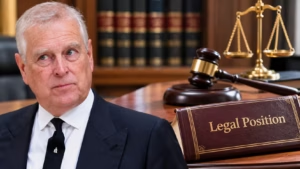
The legal significance of the case lies partly in the distinction between compelling someone to provide evidence and accusing that person of wrongdoing.
Mr Justice Adam Johnson emphasised the importance of allowing Mr Turk to present a defence to serious allegations.
In his October judgment, he stated:
“Fairness requires that Mr Turk should be afforded an opportunity of putting forward his own case.”
The decision reflects the court’s assessment that Andrew’s testimony may assist in resolving disputed facts, rather than any judicial finding against the former prince.
The unusually public nature of the summons also raises questions about the relationship between royal status and ordinary legal procedures.
Janes Solicitors noted that the comparable historical precedent was the involvement of the future King Edward VII in the Mordaunt divorce proceedings of 1870.
Separately, Andrew remains under scrutiny in an investigation concerning alleged misconduct in public office.
Dr Tom Frost, a senior law lecturer and public law specialist at Loughborough University, previously explained that prosecutions involving senior public figures can be particularly challenging.
Discussing Andrew’s arrest in February 2026, Dr Frost observed:
“Misconduct in public office remains a difficult offence to prove in relation to senior executives or senior political figures.”
His analysis concerned the separate criminal investigation, not the civil fraud proceedings in which Andrew has now been summoned as a witness.
Dr Frost also stressed the presumption of innocence and explained that an arrest does not automatically result in criminal charges.
Those distinctions remain important as Andrew’s legal situation attracts further attention.
The civil High Court case, the police investigation and the various allegations connected to his former association with Jeffrey Epstein involve different questions, legal standards and procedures.
Andrew has denied wrongdoing in relation to Epstein.
In February 2026, Thames Valley Police arrested him on suspicion of misconduct in public office following the publication of documents relating to his former role as a UK trade envoy.
He was questioned under caution and subsequently released under investigation without being charged.
The inquiry has examined allegations that sensitive official information was shared with Epstein.
The investigation remains ongoing, and the circumstances surrounding police searches of Andrew’s properties have also become the subject of legal proceedings.
On 8 October 2026, the High Court heard that Thames Valley Police accepted that search warrants used during its February operation were unlawful.
However, the ruling did not invalidate the entire criminal investigation.
Mr Justice Hilliard, addressing the consequences of the defective warrants, made clear that the investigation could continue despite the legal error.
A further hearing is expected in 2027 to determine how material seized during the searches may be retained or used.
Meanwhile, Police Scotland confirmed on 30 October that it was conducting early-stage inquiries into information relating to visits involving Andrew, Epstein and Ghislaine Maxwell at Balmoral.
Police said those inquiries were evidence-led and that it would be inappropriate to disclose operational details.
No conclusion about criminal wrongdoing should be drawn from the existence of those inquiries.
For Andrew Mountbatten-Windsor, the immediate development is the High Court summons, which could require him to answer questions about financial dealings dating back several years.
The trial is due to begin in November, with his evidence expected in mid-December.
Whether he appears personally or gives evidence remotely, the proceedings could place aspects of his financial arrangements under renewed public scrutiny.
The outcome of the civil fraud dispute remains undecided, and Andrew’s involvement as a witness must not be confused with an allegation that he committed fraud.
Nevertheless, the prospect of formal public questioning represents a significant development in the former royal’s continuing legal and public difficulties, with attention now turning to what evidence he may provide when the High Court case proceeds.
About the Journalist
Ben covers business, transport and global developments for Londoner. His reporting focuses on London’s economy, major companies, infrastructure, public transport and international stories that may affect people and businesses across the capital. He explains complex developments clearly using reliable sources and relevant context.