Prince Andrew Royal Ascot Allegation: What Police Are Investigating
 Published By
Jermaine
Published:
Updated:
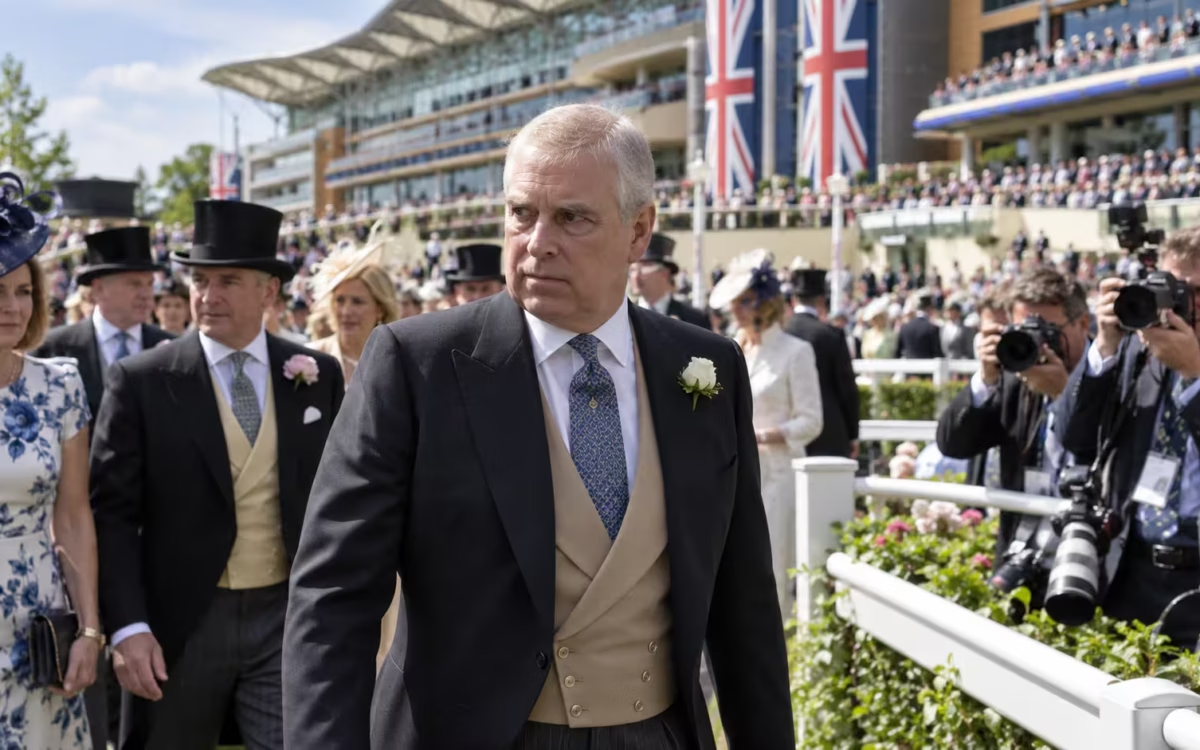
Table of Contents
Published: 26 October 2026 | Royal Family News
The Prince Andrew Royal Ascot allegation remains part of the intense scrutiny surrounding the continuing police investigation into Andrew Mountbatten-Windsor, formerly known as Prince Andrew.
The allegation concerns a claim that Andrew behaved inappropriately towards a woman at Royal Ascot in 2002, during Queen Elizabeth II’s Golden Jubilee year.
The claim was first reported by The Sunday Times in May 2026. Thames Valley Police declined to discuss individual lines of inquiry but said officers were pursuing all reasonable avenues as part of their wider investigation.
No criminal charge has been announced in relation to the Royal Ascot allegation. Andrew has denied wrongdoing in connection with the wider investigation, and the allegation itself has not been proven.
The case has attracted particular attention because the wider inquiry is not limited to questions about sensitive government information and Andrew’s former role as a UK trade representative.
Thames Valley Police has described its misconduct-in-public-office investigation as complex and said detectives are examining multiple aspects of alleged conduct.
What Is The Prince Andrew Royal Ascot Allegation?
The Royal Ascot allegation dates to the five-day racing meeting held in Berkshire in June 2002.
According to reporting first published by The Sunday Times, police are examining a claim that Andrew behaved inappropriately towards a woman during the event.
It remains unclear from publicly available information exactly what behaviour is alleged or whether the matter was reported to police at the time or raised more recently.
Those details are important because the existence of a police inquiry does not establish that an offence occurred.
Royal Ascot was particularly prominent in 2002 because it took place during Queen Elizabeth II’s Golden Jubilee year. The late Queen attended the event, while Andrew was also photographed at Ascot alongside members of the Royal Family.
When reports about the allegation emerged in May 2026, Thames Valley Police said it could not discuss specific aspects of its investigation but confirmed officers were following all reasonable lines of inquiry.
The force had already publicly explained that its misconduct investigation involved a significant amount of material received from members of the public and other sources.
Andrew has not been charged over the Ascot claim. No court has determined that the alleged incident occurred, and he remains entitled to the presumption of innocence.
How Does The Ascot Claim Fit Into The Wider Police Investigation?
The Royal Ascot allegation is being reported against the background of a much larger investigation that began following the release of material connected to Jeffrey Epstein in the United States.
Andrew was arrested on 19 February 2026 on suspicion of misconduct in public office.
He was interviewed under caution and released under investigation on the same day. His February arrest and current legal status are important to the wider story because he has not been charged and the investigation remains active.
Thames Valley Police said detectives were examining several aspects of alleged misconduct following the release of files under the US Epstein Files Transparency Act. Investigators have also worked with the US Department of Justice and sought early investigative advice from the Crown Prosecution Service.
The wider investigation has included allegations concerning whether Andrew shared sensitive information while serving as the UK’s special representative for international trade and investment between 2001 and 2011.
Police also confirmed in May that they were separately assessing reports that a woman had allegedly been taken to an address in Windsor in 2010 for sexual purposes.
The force said it had contacted the woman’s legal representative and would respect her privacy and wishes regarding any engagement with investigators.
That does not mean the Ascot claim has been substantiated or that every allegation being considered by police is at the same investigative stage.
What Has Changed Since The Royal Ascot Reports?
One of the biggest developments since the Royal Ascot allegation became public has been Andrew’s legal battle over searches carried out at properties associated with him.
On 8 October, the High Court heard that search warrants used by Thames Valley Police at Andrew’s residence on the Sandringham Estate and his former Windsor home, Royal Lodge, were unlawful.
The issue concerned the legal basis used to obtain the warrants. It was not a finding that the wider police investigation was unlawful or that the allegations being examined were false.
Andrew’s legal challenge over the police search warrants therefore resulted in an important procedural victory. However, Thames Valley Police stressed that the criminal investigation itself remains active.
Police are seeking permission to retain material seized during the searches, while Andrew is opposing that application. Further proceedings are expected to determine whether investigators can lawfully keep and potentially use the material.
For anyone following the Prince Andrew Royal Ascot allegation, that distinction matters. The October court decision did not dismiss the Ascot allegation, determine whether it was accurate or end the police investigation.
The continuing controversy has also produced consequences outside the criminal inquiry. In London, City of London officials have separately considered a legal route that could allow Andrew’s Freedom of the City to be removed.
That civic process is separate from the criminal investigation and should not be regarded as evidence that Andrew committed an offence.
What Happens Next For Andrew Mountbatten-Windsor?
As of 26 October 2026, the criminal investigation into alleged misconduct in public office remains ongoing.
Thames Valley Police has described the case as complex, while investigators continue pursuing what the force considers reasonable lines of inquiry. The High Court ruling over the February searches has created an additional legal dispute concerning evidence gathered during the investigation.
Although the original search warrants have been quashed, that does not automatically prevent the police investigation from continuing. Thames Valley Police is seeking to retain seized material, with further legal proceedings expected to address the issue.
There has been no publicly announced criminal charge arising from the Royal Ascot allegation, and police have not released detailed evidence concerning the claim.
That means suggestions that Andrew has been found responsible for criminal wrongdoing at Royal Ascot would go beyond what has actually been established.
The clearest position is that police are reported to be examining an allegation of inappropriate behaviour said to date from Royal Ascot in 2002 within the context of a much wider investigation. Andrew denies wrongdoing, and no finding of guilt has been made.
For the Royal Family, the investigation continues to attract extraordinary attention because it combines historical allegations, Andrew’s former public role, the continuing fallout from his association with Jeffrey Epstein and an unprecedented criminal investigation involving the King’s younger brother.
But the central legal distinction remains essential: an allegation is not a conviction; Andrew has not been charged over the Royal Ascot claim, and the wider investigation has not yet reached a conclusion.
About the Journalist
Jermaines covers crime, legal affairs and money-related stories for Londoner. His reporting includes police updates, court cases, consumer rights, personal finance and cost-of-living issues. He handles sensitive subjects carefully and clearly distinguishes confirmed facts from allegations, estimates and ongoing investigations.